



Picture this: you've just finished a long consultation and you're left staring at a mountain of patient notes that need an action‑oriented plan. The task of translating these notes into something actionable can feel overwhelming. Enter the Medical Code Action Plan Template — a streamlined solution to this common dilemma. Let's explore how it can transform your workflow.
What Is a Medical Code Action Plan Template?
A Medical Code Action Plan Template is designed to convert patient notes and clinical observations into a structured strategy for care. This tool serves as a bridge between diagnosis and patient management, ensuring that all team members are on the same page.
It ultimately serves as a guide for clinicians to implement consistent, transparent, and effective patient care. By using standardized coding, the template reduces the risk of miscommunication and enhances the delivery of care.
Key Components of a Medical Code Action Plan
The template contains several critical elements that aid in patient management:
- Patient Identification Information
- Diagnosis Codes
- Treatment Objectives
- Action Steps and Procedures
- Responsible Personnel
- Timeline and Review Dates
- Patient and Family Education Requirements
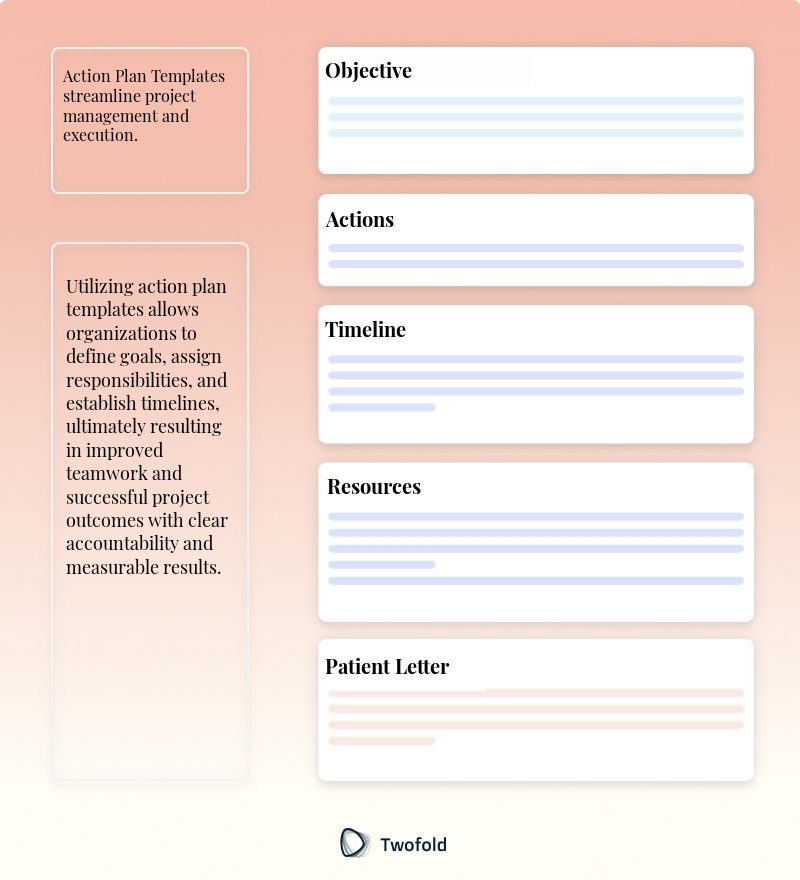
How to Use a Medical Code Action Plan Template: Step-by-Step Process
Step 1: Gather Patient Data
Collect relevant details, including patient history, current symptoms, and initial diagnosis.
Step 2: Identify and Code Diagnoses
Select appropriate medical codes for the diagnosis to ensure consistency and clarity.
Step 3: Develop Treatment Objectives
Outline clear, measurable objectives to guide the treatment process.
Step 4: Specify Action Steps
Break down objectives into actionable steps and assign responsibilities to healthcare team members.
Step 5: Set Timelines and Review Dates
Establish a timeline for action steps and schedule reviews to monitor progress.
Benefits of a Medical Code Action Plan
Benefit | Description |
|---|---|
Improved Coordination | Ensures all team members are aligned on the treatment plan, reducing errors and increasing efficiency. |
Enhanced Patient Care | Facilitates personalized care by using specific action points and codes tailored to individual needs. |
Streamlined Communication | Codified plans reduce ambiguities and simplify communication across departments. |
Effective Monitoring | Regular reviews allow for timely modifications to treatment plans, optimizing patient outcomes. |
Stakeholders in Medical Code Action Plan
Various stakeholders are instrumental in the successful implementation of an action plan:
- Doctors: They set the initial diagnosis and outline the treatment approach. For example, a family doctor pinpoints chronic conditions requiring a coordinated management plan.
- Nurses: Execute daily monitoring and support, ensuring implementation goes according to plan. A nurse might track a diabetic patient's blood sugar levels and communicate results back to the team.
- Pharmacists: Ensure medication prescriptions align with the action plan. They could identify interactions and offer alternative solutions.
- Patients and Families: Their involvement is vital for successful adherence to prescribed actions. A family member could remind the patient of dietary requirements for better health outcomes.
Example of a Medical Code Action Plan
An example of a Medical Code Action Plan involves providing a coded blueprint for cardiac rehabilitation, detailing each recovery phase to facilitate a multidisciplinary approach.