

Free for a week, then $19 for your first month
Template

Care Plan Template

Discover practical Care Plan Template to enhance your documentation efficiency.

Care Plan Template Hero Image

Hey there! You've probably found yourself grappling with the details of designing a comprehensive care plan. Maybe you're feeling the pressure of ensuring nothing crucial slips through the cracks, or perhaps you're seeking ways to streamline this essential component of patient care. Whatever brought you here, get ready to explore the world of Care Plan Templates.

What Is a Care Plan Template?

A Care Plan Template is a structured document used by healthcare professionals to outline the strategy for managing a patient's health needs. It encompasses all necessary care components, ensuring the patient receives comprehensive and coordinated care.

Care Plan Templates help streamline communication among healthcare providers, patients, and their families, serving as a living document that can adapt to changing health conditions and treatment responses.

Key Components of a Care Plan Template

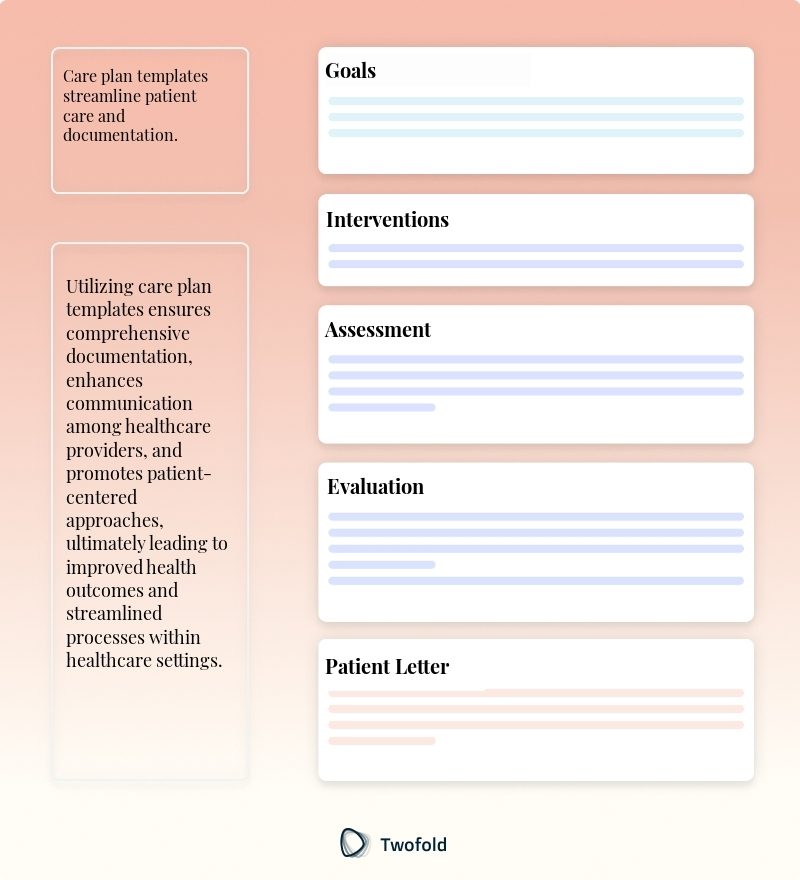
Care plans comprise several essential elements:

  • Patient Information: Basic patient data including medical history.
  • Problem List: Comprehensive list of patient issues and diagnoses.
  • Goals and Objectives: Short and long-term goals tailored to the patient.
  • Interventions: Specific actions planned to meet the objectives.
  • Outcome Evaluation: Metrics for assessing the effectiveness of interventions.
  • Review Schedule: Timelines for reviewing and updating the plan.
Key Components of Care Plan Template

How to Use a Care Plan Template: Step-by-Step Process

Step 1: Gather Patient Information

Start by collecting comprehensive patient data, including personal details, medical history, and current health status.

Step 2: Develop a Problem List

Identify all health issues and prioritize them to form a coherent problem list.

Step 3: Set Goals and Objectives

Define achievable short‑term and long‑term goals tailored to addressing specific patient needs.

Step 4: Outline Interventions

Plan specific actions and interventions designed to meet the set objectives and tackle identified problems.

Step 5: Evaluate Outcomes

Implement metrics to measure the success of interventions, and adjust the care plan as necessary based on patient progress.

Benefits of a Care Plan Template

Benefit

Description

Enhanced Communication

Facilitates seamless information sharing between healthcare providers and caregivers.

Patient-Centered Care

Ensures individual patient needs and preferences are prioritized.

Organized Documentation

Provides a structured approach to managing patient care records.

Improved Outcomes

Tracks progress effectively, leading to timely adjustments and better patient results.

Stakeholders in Care Plan Templates

Various stakeholders play pivotal roles when it comes to care plans:

  • Physicians: Direct overall care. Example: A physician leads a team meeting to adjust a patient's weekly goals.
  • Nurses: Implement daily care activities. Example: Nurses update the plan with observations from daily patient checks.
  • Patients: Express needs and preferences. Example: A patient reviews and agrees to the proposed interventions.
  • Family Members: Provide support and insights. Example: Family members attend meetings to discuss care adjustments.
  • Health Coaches: Monitor lifestyle changes. Example: A coach introduces dietary plans in coordination with clinical needs.

Example of a Care Plan Template

Consider a care plan for a diabetic patient. This plan would entail regular monitoring of glucose levels, lifestyle changes, and scheduled reviews with healthcare professionals to manage and improve their condition.

See Template Example

Real-World Use Cases: Practical Impact of the Care Plan Template

Explore how care plans make a difference in patient management and treatment:

  • A diabetic patient benefits from personalized dietary and exercise plans, leading to significant improvement in their HbA1c levels over time.
  • An elderly patient with multiple chronic diseases finds clear pathways to manage their conditions, reducing hospital visits and improving their quality of life.
  • A post-operative patient has a well-documented recovery plan that syncs the efforts of surgeons, nurses, and physiotherapists, speeding up their recovery process.
  • A pediatric patient’s care plan incorporates educational materials for the family, leading to better adherence to treatment protocols.

Conclusion

By detailing each step and critical aspect, Care Plan Templates greatly enhance the quality and coordination of patient care. These templates empower healthcare teams to document, plan, and track care efficiently, leading to improved patient outcomes. As you incorporate them, you'll likely find a transforming shift in the organization and efficacy of your patient management practices.

Disclaimer: This article is for informational purposes only and does not constitute legal or medical advice. Always consult professional guidelines and regulatory bodies for specific compliance requirements.

FAQ

Frequently asked questions

  • How should a care plan template accommodate patients with multiple comorbidities that may require conflicting interventions?

    When dealing with patients with multiple comorbidities, the care plan template should prioritize coordination and flexibility.

    Consider involving a multidisciplinary team to identify potential conflicts in interventions early on, ensuring a collaborative approach to customize care plans without compromising any aspect of treatment.

    Additionally, maintain an ongoing review mechanism to promptly adapt interventions in response to changes in any of the conditions, and engage the patient and family in decision‑making to align treatment priorities with patient preferences.

  • What are best practices for integrating technology and digital tools into a care plan template for enhanced patient monitoring?

    Incorporating technology into care plans involves using digital tools for real‑time monitoring and communication.

    Ensure that wearable health devices, mobile health apps, and electronic health records (EHR) are integrated to facilitate seamless data sharing and monitoring of patient conditions.

    Provide training for healthcare providers and patients in using these technologies, and establish security protocols to protect patient data. Creating specific protocols within the care plan for escalating data alerts to healthcare providers can also enhance timely interventions and treatment adjustments.

  • How can care plan templates effectively incorporate cultural and language considerations for a diverse patient population?

    To effectively address cultural and language needs, care plan templates should include fields for capturing patient cultural preferences and language barriers.

    Incorporate cultural competency training for healthcare providers to ensure they respect and integrate these preferences into the care plan.

    Utilize translation services and culturally tailored educational materials to ensure patients and families fully understand the plan and comply with treatment recommendations. Regularly review and adapt the template as necessary to meet the evolving demographics and needs of the patient population.