

Free for a week, then $19 for your first month
Template

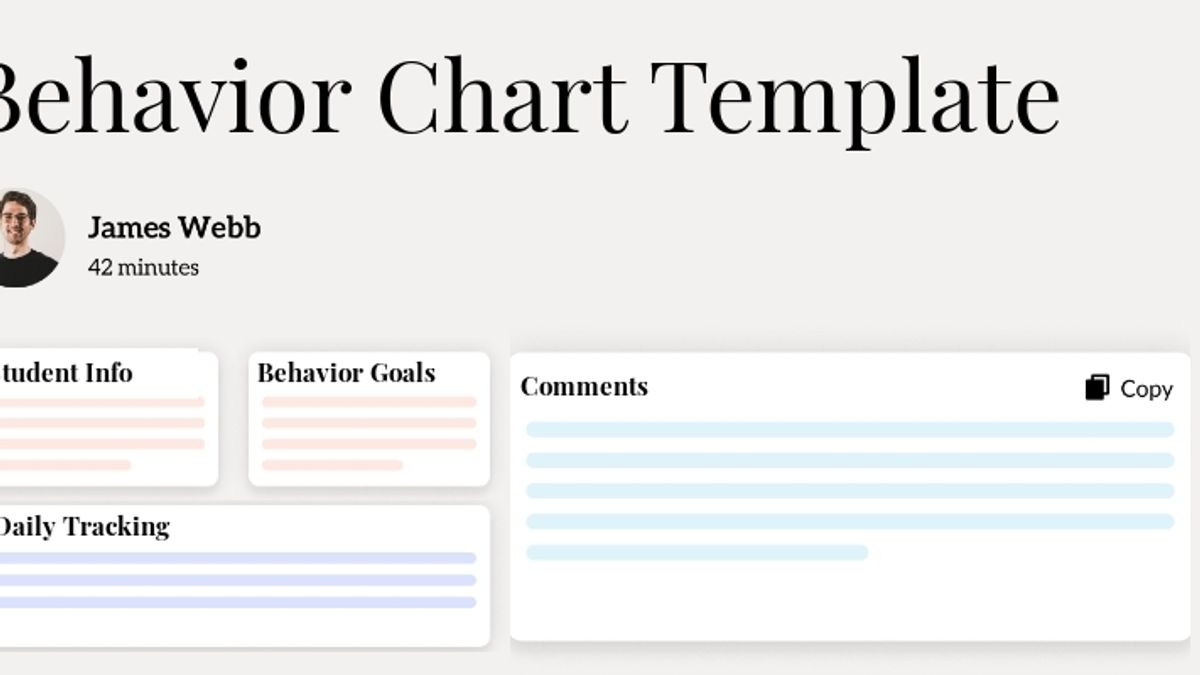
Behavior Chart Template

Discover practical Behavior Chart Template templates to enhance your documentation efficiency.

Behavior Chart Template Hero Image

We all know how challenging it is to track and document behavioral patterns accurately in medical settings. You may have tried countless methods only to find yourself buried in disorganized notes and missing data points. You're not alone! Many professionals face this exact problem, which is why you're here to explore an efficient solution—the Behavior Chart Template. Let's unravel this tool and see how it can simplify your documentation process and improve patient care.

What Is a Behavior Chart Template?

A Behavior Chart Template is a structured document designed to track and document behavioral patterns in patients. It provides a clear format to record behaviors, triggers, responses, and outcomes, helping healthcare professionals manage and analyze patient behaviors effectively.

This template is particularly useful in settings where monitoring changes in behavior is crucial to patient care, such as in psychiatric facilities, educational environments, and rehabilitation centers.

Key Components of a Behavior Chart?

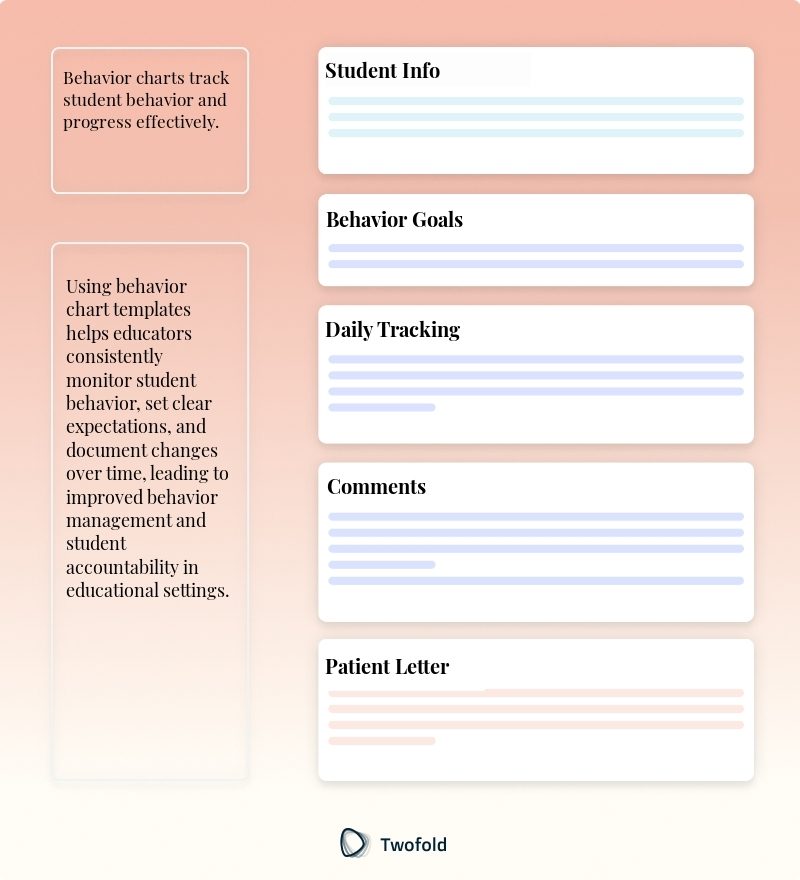
The Behavior Chart Template is composed of several integral sections:

  • Patient Information: Basic details including name, ID, and date of birth.
  • Date and Time: When the behavior was observed.
  • Behavior Description: Detailed account of the behavior exhibited.
  • Antecedents: Events or conditions preceding the behavior.
  • Consequences: Outcomes or responses following the behavior.
  • Frequency & Duration: How often and how long the behavior occurred.
  • Notes: Any additional observations or relevant context.
Key Components of Behavior Chart Template

How to Use a Behavior Chart Template: Step-by-Step Process

Step 1: Set Up the Template

Begin by filling out basic patient information and ensuring the format is ready for data entry.

Step 2: Record Observations

During patient interactions, document observed behaviors with precise descriptions and timestamps.

Step 3: Note Antecedents and Consequences

Identify and record any events or triggers preceding the behavior, as well as the immediate outcomes.

Step 4: Review and Analyze

Regularly assess collected data for patterns or shifts that can inform care plans.

Benefits of a Behavior Chart

Benefit

Description

Enhanced Tracking

Enables comprehensive recording of behavior over time.

Pattern Identification

Helps in spotting trends that may not be immediately obvious.

Improved Communication

Facilitates sharing concise behavior updates among care teams.

Data-Driven Decisions

Provides a data-rich foundation for personalized care strategies.

Stakeholders in Behavior Chart

Several key stakeholders can benefit from a well‑maintained Behavior Chart, each bringing a unique perspective to the table:

  • Healthcare Providers: Nurses and therapists use the chart to understand patient progress, identifying necessary adjustments in treatment.
  • Psychologists: They analyze behavior trends and integrate findings into cognitive-behavioral therapy practices.
  • Teachers: In educational settings, educators leverage these charts to offer tailored support to students with behavioral challenges.
  • Parents and Guardians: They gain insights into their child's progress and collaborate more effectively with healthcare professionals.

Example of a Behavior Chart PDF

Refer to a Behavior Chart PDF for a visual representation of how different elements are captured and organized efficiently.

See Template Example

Real-World Use Cases: Practical Impact of the Behavior Chart Template

Here are some strategic scenarios where the Behavior Chart Template proves invaluable:

  • A psychiatric nurse uses the chart to track a patient's mood swings, leading to a more personalized medication plan.
  • In a classroom, a teacher documents a student's behavioral improvement over months, helping to tailor educational strategies effectively.
  • A parent's collaboration with healthcare providers through the chart results in enhancing their child's behavioral intervention plan.

Conclusion

The Behavior Chart Template is a critical tool in behavioral management and assessment settings. It offers organization, clarity, and actionable insights, allowing stakeholders to make informed decisions and personalize care strategies. By integrating this template into practice, professionals can gain a more profound understanding of patient behaviors and improve care outcomes.

Disclaimer: This article is for informational purposes only and does not constitute legal or medical advice. Always consult professional guidelines and regulatory bodies for specific compliance requirements.

FAQ

Frequently asked questions

  • How should a Behavior Chart Template be adapted for patients with multiple coexisting behavioral disorders?

    When dealing with patients who have multiple coexisting behavioral disorders, it's crucial to customize the Behavior Chart Template to separate and clearly identify the manifestations of each disorder.

    Use color‑coding or separate sections to distinguish between disorders and ensure that each behavior is linked to a specific condition, helping avoid conflating symptoms.

    This allows for more accurate data analysis and better‑informed treatment adjustments, focusing on each disorder's specific complexities and their interactions.

  • What are the best practices for integrating Behavior Chart Templates with electronic health record (EHR) systems?

    To effectively integrate Behavior Chart Templates with EHR systems, consider implementing standardized data entry fields that match the EHR structure to ensure seamless data flow.

    Use cross‑compatibility software solutions that can export and import data into the EHR efficiently, automating routine updates without manual input errors.

    Additionally, ensure compliance with data privacy regulations by using encryption and user authentication protocols to protect sensitive patient information.

  • How can a Behavior Chart Template be used to effectively monitor long-term behavioral changes in research settings?

    In research settings, a Behavior Chart Template should be augmented with statistical analysis tools to track long‑term behavioral changes over extended periods.

    Incorporate advanced metrics such as baseline comparisons and control group variations to provide context for behavioral shifts.

    Ensure that data collection intervals are consistent and frequent enough to capture meaningful changes while minimizing data fatigue. Regularly catalog potential confounding factors that might affect the data integrity, thereby providing a rigorous framework for longitudinal studies.