



Have you found yourself grappling with the intricacies of nutritional documentation? Whether you're a seasoned professional or new to the field, crafting comprehensive and accurate food documentation can be quite a challenge. Today's focus is the Food Pyramid Template, designed to streamline nutritional information into a structured, easy‑to‑understand format. This blog post is your guide to mastering this valuable tool; if nutrient data leaves you puzzled, you're in the right place.
What Is a Food Pyramid Template?
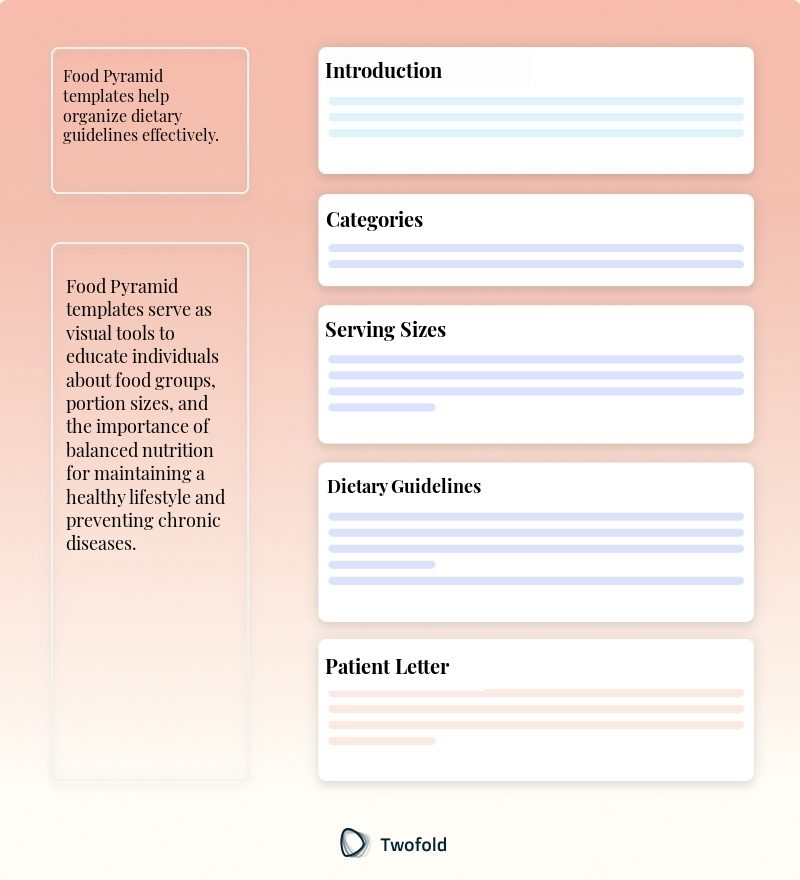
The Food Pyramid Template is a structured guide that helps organize and present nutritional information efficiently. It breaks down complex dietary data into smaller, manageable parts aligned with the broader categories of food groups.
This tool serves as an essential resource for healthcare providers, enabling them to deliver dietary advice and plans clearly and concisely. By leveraging the Food Pyramid Template, clinicians can enhance patient comprehension of dietary habits and nutritional goals.
Key Components of a Food Pyramid
Understanding the core elements is critical for effectively using this template.
- Food Groups: Encompasses categories such as fruits, vegetables, proteins, dairy, and grains.
- Serving Sizes: Provides guidance on the recommended amounts of each food category.
- Nutritional Highlights: Vitamins, minerals, and other essential nutrients important for balanced health.
- Dietary Modifications: Adjustments based on allergies, intolerances, or specific health goals.
How to Use a Food Pyramid Template: Step-by-Step Process
Step 1: Gather Nutritional Data
Start by collecting detailed information about the patient's current dietary habits and health goals.
Step 2: Categorize Foods
Align each food item with the appropriate group within the pyramid structure.
Step 3: Allocate Serving Sizes
Determine appropriate portion sizes for each food group based on standard guidelines or personalized requirements.
Step 4: Review and Adjust
Analyze the entire pyramid, making necessary adjustments for allergies or specific nutritional needs.
Step 5: Present to Patient
Share and explain the food plan with the patient, ensuring they understand each component and its importance.
Benefits of a Food Pyramid Template
Benefit | Description |
|---|---|
Structured Organization | Simplifies complex nutritional data into clear, segmented groups. |
Patient Clarity | Enhances understanding with visual aids and straightforward breakdowns. |
Time Efficiency | Streamlines documentation and reduces the time needed for dietary assessments. |
Adaptability | Easily modified to align with changing dietary guidelines or patient needs. |
Stakeholders in Food Pyramid
The Food Pyramid Template plays a pivotal role for several key stakeholders.
- Dietitians: Use the pyramid to design comprehensive meal plans. For instance, a dietitian crafting a diabetic-friendly diet can efficiently balance carbohydrate intake with the template.
- Physicians: Use it for dietary assessments during routine check-ups, offering a quick reference to discuss lifestyle adjustments with patients who have health-related dietary concerns.
- Patients: Employ the pyramid for personal dietary management, helping them visualize and adhere to recommended eating guidelines.
Example of a Food Pyramid
An illustrative example could include a pyramid divided into segments for pasta, leafy greens, dairy products, and lean meats, each with specified serving recommendations based on daily intake goals.