


Have you ever found yourself tangled in the web of health information privacy requirements? You're not alone. Crafting a comprehensive Notice of Privacy Practices (NPP) can be overwhelming—but fear not. By breaking down the essential components and practical steps, this article will guide you through effectively utilizing an NPP template. You'll be equipped to handle these documents with ease and precision.
What Is a Notice of Privacy Practices Template?
The Notice of Privacy Practices Template is a standardized document that healthcare providers use to inform patients about their privacy rights and how their health information is used. It outlines the privacy practices of the healthcare provider, addressing how information is collected, used, and disclosed.
This template serves as a legal requirement under the Health Insurance Portability and Accountability Act (HIPAA). Ensuring that patients are aware of their rights, it protects both the patient and the healthcare entity by providing transparency and clear communication.
Key Components of a Notice of Privacy Practices
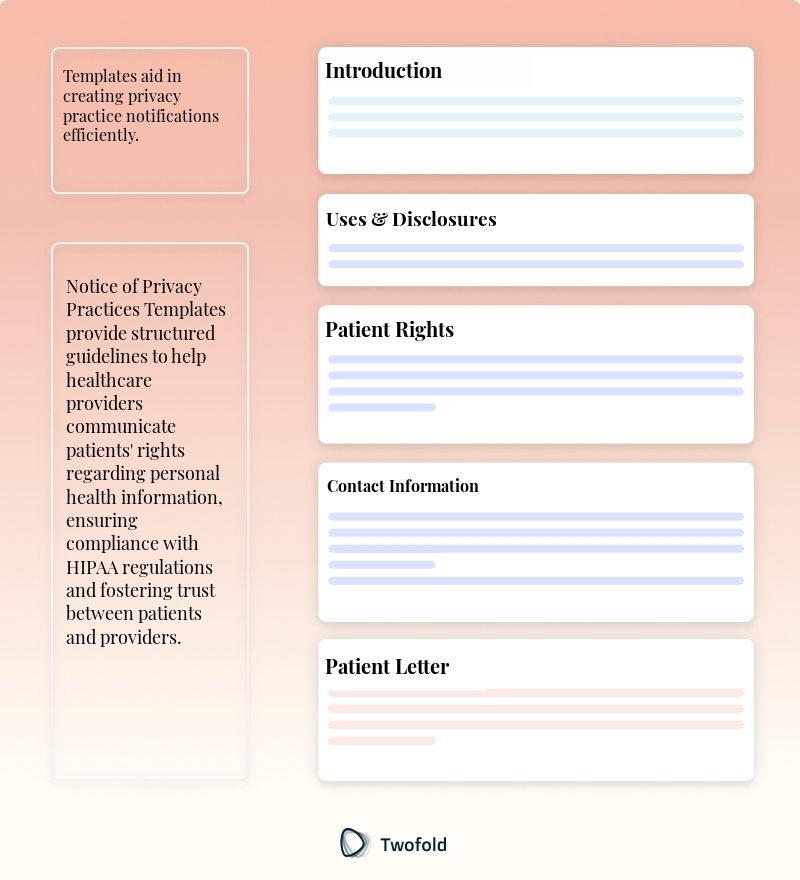
The Notice of Privacy Practices should include the following key components:
- Patient Rights: Detailed description of the patient's rights concerning their protected health information (PHI).
- Entity’s Duties: Obligations of the healthcare provider in safeguarding the privacy of health information.
- Disclosures: Situations in which the provider may disclose PHI without patient authorization.
- Complaint Procedures: Instructions on how patients can file complaints if they believe their privacy rights have been violated.
- Contact Information: Details for reaching the provider’s privacy official or department for further inquiries.
How to Use a Notice of Privacy Practices Template: Step-by-Step Process
Step 1: Customization
Modify the template to include your organization's specific details, such as contact information and unique practices.
Step 2: Review Legal Requirements
Ensure compliance with current HIPAA regulations and state laws, consulting with a legal expert as needed.
Step 3: Employee Training
Educate your staff on how to implement the NPP and answer patient questions accurately.
Step 4: Patient Distribution
Present the NPP to patients at their initial visit and ensure ongoing availability.
Step 5: Feedback and Updates
Encourage patient feedback and make periodic updates to the NPP as regulations or organizational practices change.
Benefits of a Notice of Privacy Practices
Benefit | Description |
|---|---|
Legal Compliance | Ensures the healthcare entity meets HIPAA requirements, avoiding potential fines and legal issues. |
Patient Trust | Enhances patient trust by demonstrating a commitment to protecting their health information. |
Clear Communication | Provides clear information on privacy rights, fostering better patient-provider communication. |
Risk Management | Reduces the risk of data breaches and unauthorized disclosures by outlining clear policies and procedures. |
Stakeholders in Notice of Privacy Practices
A Notice of Privacy Practices involves several key stakeholders, each playing a critical role:
- Healthcare Providers: Doctors and medical facilities that maintain compliance while safeguarding patient information. For example, a pediatric clinic distributing NPPs during registration.
- Patients: Individuals who benefit from understanding their rights and how their information is used. Consider someone who needs clarification on data sharing during a hospital stay.
- Compliance Officers: Professionals responsible for ensuring the organization's adherence to privacy regulations. An example would be a compliance officer reviewing NPP adherence during an audit.
- Legal Counsel: Provides advice and oversight to ensure the provider's practices align with legal standards, like a law firm revising the NPP after new HIPAA rules.
Example of a Notice of Privacy Practices PDF
An example NPP PDF succinctly reflects the compliance and communication goals of the document, showcasing real‑world application through clear sections and easy navigation.