


Imagine you're a mental health professional feeling overwhelmed with documenting intake assessments. Perhaps you've spent countless hours trying to make sense of patient data, only to end up with vague, unhelpful notes. This scenario might sound all too familiar. The solution? A well‑structured Mental Health Intake Assessment Template that simplifies documentation and enhances patient understanding. Let's explore how these templates can transform your practice.
What Is a Mental Health Intake Assessment Template?
A Mental Health Intake Assessment Template is a structured form used by mental health professionals to collect and document comprehensive information about clients at the beginning of their treatment journey. This template serves as a foundation for understanding the client's history, present condition, and therapeutic needs.
By following a consistent format, these templates help streamline the initial assessment process, ensuring that all pertinent details are captured systematically. Clinicians can identify key issues quicker and establish effective treatment plans.
Key Components of a Mental Health Intake Assessment
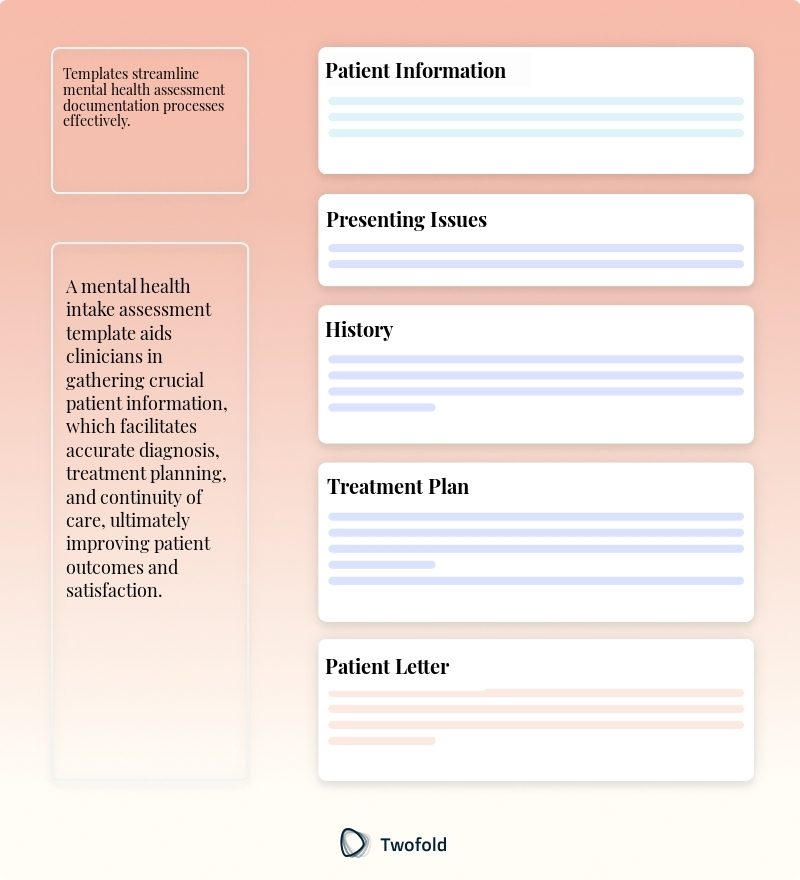
Each Mental Health Intake Assessment Template will typically include the following elements:
- Client Information: Name, contact details, and demographic data.
- Presenting Problem: Description of the client's primary concern or reason for seeking help.
- Mental Health History: Details about previous therapy, psychiatric hospitalizations, and medications.
- Medical History: Current medical conditions, medications, and hospitalizations.
- Substance Use: Information about use of alcohol, drugs, and tobacco.
- Family History: Psychiatric and medical history of immediate family members.
- Lifestyle: Details on diet, exercise, sleep, and work-life balance.
How to Use a Mental Health Intake Assessment Template: Step-by-Step Process
Step 1: Gather Basic Client Information
Begin by documenting the client's personal information including name, age, and contact details, ensuring data accuracy.
Step 2: Identify the Presenting Problem
Engage with the client to clearly understand their main issues or reasons for seeking help and note these concerns directly on the template.
Step 3: Document Medical and Mental Health History
Record comprehensive details regarding the client’s medical and psychiatric history, including medications and previous treatments.
Step 4: Explore Substance Use
Inquire about the client's patterns of substance use and include relevant history as this can impact their mental health assessment.
Step 5: Discuss Family History
Document any relevant family history, noting any psychiatric or physical health issues in relatives as this may provide context to the client’s concerns.
Step 6: Assess Lifestyle Factors
Examine daily habits such as diet, exercise, and sleep patterns, and include these insights on the template for a holistic view.
Benefits of a Mental Health Intake Assessment
Advantage | Description |
|---|---|
Time Efficiency | Quickly gather and record comprehensive client data, saving time in the assessment process. |
Consistency | Ensure uniformity in documentation, making it easier to follow and understand over time. |
Comprehensive Assessment | Cover all critical areas like medical history and lifestyle to develop a well-rounded understanding of the client. |
Improved Collaboration | Using a standardized template facilitates better communication with other healthcare professionals. |
Stakeholders in Mental Health Intake Assessment
Mental Health Intake Assessment Templates are critical for various stakeholders, each playing a unique role in the care continuum:
- Mental Health Professionals: Clinicians use the template for accurate diagnosis and treatment planning. For example, a psychologist might rely on it to track a client's progress over the course of therapy.
- Clients: Patients benefit from clear communication and understanding of their treatment process. A client may feel more engaged when their therapist uses the template to explain their care plan.
- Administrative Staff: Office staff use these templates to input data into electronic systems, ensuring records are up-to-date and accessible.
- Insurance Companies: Templates provide documentation required for claims, alleviating procedural hurdles in payment processes.
Example of a Mental Health Intake Assessment
An effective Mental Health Intake Assessment Template outlines specific information such as the client's presenting issues, therapeutic goals, and a comprehensive plan for addressing their mental health needs.