

Free for a week, then $19 for your first month
Template

Return to Work Doctors Note Template

Discover practical Return to Work Doctors Note Template templates to enhance your documentation efficiency.

Return to Work Doctors Note Template Template Hero Image

Getting back to work after a medical leave can be a challenging transition. Employees and employers alike need clear, reliable documentation to ensure everything is in place for a successful return. A well‑constructed Return to Work Doctors Note can bridge that gap, assuring both parties of the employee’s readiness to jump back into their previous responsibilities. In this article, we will explore the intricacies of creating an effective Return to Work Doctors Note Template, offering expert insights and practical tips for anyone involved in its preparation or review.

What Is a Return to Work Doctors Note Template?

A Return to Work Doctors Note Template is a document designed to communicate an employee’s ability to resume work after an absence due to illness or injury. It provides proof that a healthcare provider has evaluated the employee’s health and endorses their return to their duties.

This template plays a crucial role in ensuring that the returning employee can perform their job without risking health or safety. It may also outline any necessary adjustments or restrictions that should be observed during the transition back to work.

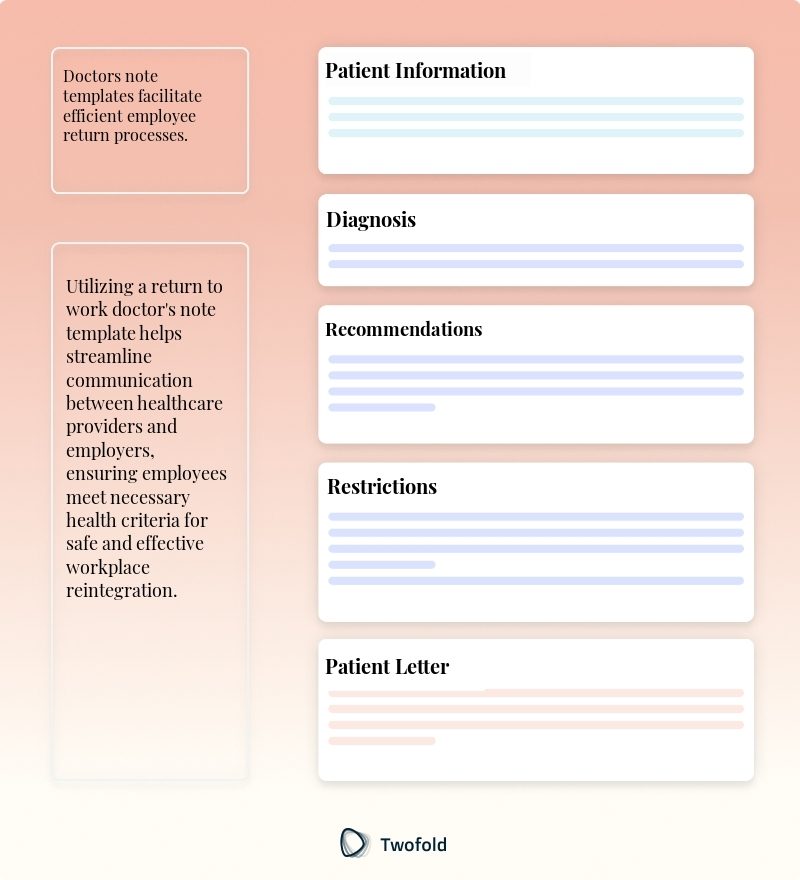
Key Components of a Return to Work Doctors Note

Understanding the essential components ensures the document serves its intended purpose effectively.

  • Employee's full name and contact information
  • Healthcare provider's details and contact information
  • Confirmation of the employee's fitness to return to work
  • Start date for returning to duties
  • Any work restrictions or accommodations required
  • Date of the note and healthcare provider’s signature
Key Components of Return to Work Doctors Note Template

How to Use a Return to Work Doctors Note Template: Step-by-Step Process

Step 1: Gather Employee Information

Collect all relevant details about the employee including their full name, employee ID, and role.

Step 2: Consultation with Healthcare Provider

The employee should visit a healthcare provider to assess their readiness to return to work post‑recovery.

Step 3: Complete the Template

Using the template, the healthcare provider fills in the necessary sections, notes any work limitations, and endorsements.

Step 4: Approval and Signature

The healthcare provider reviews the completed form for accuracy and adds their signature for validation.

Step 5: Submission to Employer

The employee submits the note to their employer and discusses any necessary accommodations.

Benefits of a Return to Work Doctors Note

Benefit

Description

Legal Compliance

Ensures that both employee and employer comply with health and safety regulations.

Health Assurance

Confirms that the employee is medically cleared to handle job responsibilities.

Clear Communication

Provides clear guidelines for both the employer and the employee regarding work capacity.

Stakeholders in Return to Work Notes

Several parties are involved in the preparation and use of a Return to Work Doctors Note:

  • Employees: John recently suffered a back injury and needs to submit a note outlining his recovery and any ongoing restrictions.
  • Employers: Sue from HR receives the note and arranges modifications to John's work station for his comfort.
  • Healthcare Providers: Dr. Lee prides on providing clear directives that align John’s return with his recovery path.
  • Legal Advisors: Mary ensures that all documentation aligns with workplace regulations.

Example of a Return to Work Doctors Note PDF

Here's a brief example illustrating how the components come together in a real‑world document:

See Template Example

Real-World Use Cases: Practical Impact of the Return to Work Template

These templates have a tangible impact on how organizations and employees manage the transition back to work. Let's explore some real‑world examples:

  • After a long flu season, Mary uses her doctor’s note to address frequent absences, ensuring her role remains secure.
  • Tom leverages his note to communicate his temporary need to work from home following ankle surgery.
  • Simon's employer provides ergonomic equipment in response to specific adjustments mentioned in his return note after a wrist operation.

Conclusion

A Return to Work Doctors Note plays a pivotal role in the successful reintegration of employees post‑medical leave. It confirms readiness, outlines critical limitations, and facilitates a smooth transition back into the workplace. By understanding and applying the insights detailed here, both employees and employers can foster clear communication and ensure compliance with health and safety standards.

Disclaimer: This article is for informational purposes only and does not constitute legal or medical advice. Always consult professional guidelines and regulatory bodies for specific compliance requirements.

FAQ

Frequently asked questions

  • How should a Return to Work Doctors Note handle multiple concurrent illnesses in an employee?

    In scenarios where an employee suffers from multiple concurrent illnesses, it is vital for the healthcare provider to carefully assess and note the impact of each condition on the employee's ability to perform their duties. The note should explicitly list each illness and the specific restrictions or accommodations needed for each.

    For instance, if an employee has both a musculoskeletal injury and a respiratory condition, the note might recommend modified duties to minimize physical strain and highlight any need for a controlled environment like air filtration. Identifying which condition takes priority, or if both conditions are interdependent, requires professional judgment.

    Providers should also consider interactions between prescribed medications and physical capabilities in the work environment when drafting the note.

  • How can a Return to Work Doctors Note accommodate fluctuating symptoms often experienced in chronic conditions?

    Chronic conditions can complicate return‑to‑work scenarios because symptoms may fluctuate over time. It is essential that the note reflects this variability by providing a range of permissible working conditions rather than fixed limitations.

    Providers could use language such as, 'The employee may require flexible working hours or intermittent breaks based on symptom severity.' Additionally, suggesting a 'review and adjust' approach to the note's recommendations can be valuable, allowing for future re‑assessment as the employee's condition evolves.

    Ensuring clear communication between healthcare provider, employee, and employer about this flexibility can help to manage expectations and adjust the work environment accordingly.

  • What are the legal implications of not specifying reasonable accommodations in a Return to Work Doctors Note when legally required treatments are omitted?

    Failing to specify reasonable accommodations or omitting legally required treatments in a Return to Work Doctors Note can have significant legal implications, potentially putting both healthcare providers and employers at risk of non‑compliance with workplace health and safety laws.

    Providers should ensure that notes explicitly mention any legal accommodations (e.g., ADA compliance in the U.S.) and associated treatments that are necessary for the employee's health and work performance. Detailed documentation can be crucial in legal disputes where the adequacy of workplace accommodations is questioned.

    It is advisable for providers to familiarize themselves with regional labor laws and cooperate with legal advisors to ensure the note aligns with statutory requirements, thus safeguarding the rights of the employee and the due diligence obligations of the employer.