

Free for a week, then $19 for your first month
Template

Discharge Planning Template

Discover practical Discharge Planning templates to enhance your documentation efficiency.

Discharge Planning Template Hero Image

You've maneuvered through countless discharge processes, and despite your best efforts, it often feels like a last‑minute scramble. The discharge planning phase is often where many healthcare professionals encounter challenges. Could a structured discharge planning template be the solution you're searching for? Take a deep breath, because this guide is about to offer you both clarity and efficiency.

What Is a Discharge Planning Template?

A discharge planning template is a systematic tool used in the medical field to outline the steps required to ensure a smooth transition from hospital to home or another care facility. This document primarily serves to coordinate care, manage follow‑up appointments, and provide medication and self‑care instructions.

These templates are essential in minimizing the risks associated with discharge, such as readmissions, by ensuring that patients receive all necessary support information before leaving a healthcare facility.

Key Components of a Discharge Planning

The discharge planning template contains several essential elements:

  • Patient Information: ID, contact details, and healthcare provider contacts.
  • Summary of Care: Summary of diagnosis, treatments, and progress notes.
  • Follow-Up Care: Scheduled appointments and referrals to specialists.
  • Medication List: Current medications, dosage, and instructions.
  • Self-Care Instructions: Home care protocols, dietary restrictions, and exercises.
  • Contact Information for Emergencies: Who to reach and when.
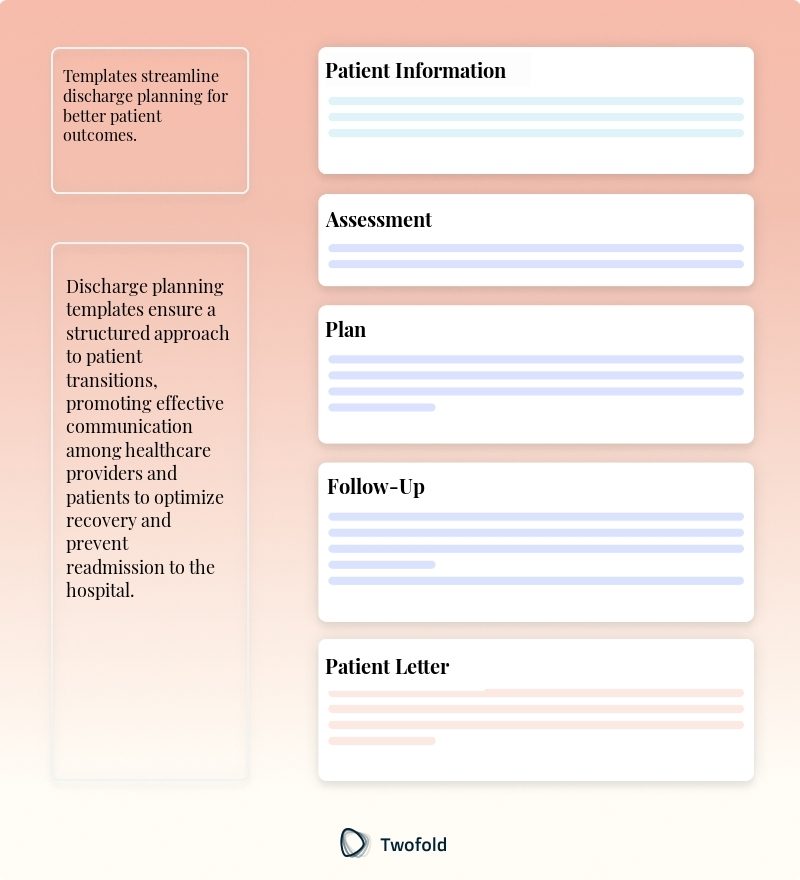
Key Components of Discharge Planning Template

How to Use a Discharge Planning Template: Step-by-Step Process

  1. Begin with gathering accurate patient data to populate the template.
  2. Enter a concise summary of the patient’s hospital stay and treatment history.
  3. List all necessary follow-up actions, including upcoming appointments.
  4. Document medication lists with clear instructions for patient compliance.
  5. Provide detailed self-care instructions for at-home recovery.
  6. Conclude with emergency contact information and resources.
  7. Review the completed template with the patient to ensure understanding and adherence.

Benefits of a Discharge Planning

Benefit

Description

Improved Continuity of Care

Streamlines communication and ensures consistent care post-discharge.

Reduced Readmission Rates

Carefully managed discharge plans reduce the likelihood of complications and rehospitalizations.

Patient Empowerment

Clear instructions boost patient confidence in managing their recovery.

Time Efficiency for Staff

A structured template saves time on repetitive documentation, allowing focus on patient-specific care.

Stakeholders in Discharge Planning

Care coordination during discharge involves various stakeholders:

  • Physicians: Provide the medical clearance and key recovery protocols. For example, Dr. Smith carefully reviews surgical discharge summaries.
  • Nurses: Clarify instructions and medications with patients. Nurse Kelly often reiterates the importance of follow-up visits to prevent negligence.
  • Social Workers: Arrange community support services when needed. Jeff, a social worker, frequently connects patients with local rehab programs.
  • Pharmacists: Ensure the accuracy of the medication list. Pharmacist Alex checks for possible drug interactions before discharge.

Example of a Discharge Planning

Below is a refined example highlighting how structured templates facilitate the discharge process:

See Template Example

Real-World Use Cases: Practical Impact of the Discharge Planning Template

The discharge planning template has significant real‑world impacts in various settings:

  • Readmissions Reductions: A busy metropolitan hospital reduced readmissions by 15% after implementing a comprehensive template, confirming that patients understood their care plans.
  • Post-discharge: A rural health center manages post-discharge care more effectively with the template, ensuring even remote patients receive follow-up through telehealth services.
  • Pediatrics: In pediatric care, the templates help parents navigate post-discharge instructions, which decreased post-operative complications in toddlers by educating caregivers.

Conclusion

This article has detailed the role of discharge planning templates in optimizing patient transitions from hospitals to home or other care facilities. By integrating key components, understanding its benefits, and recognizing stakeholders' contributions, healthcare providers can significantly improve patient outcomes and operational efficiency. Implement these strategies to revitalize discharge processes and enhance your practice's quality of care.

Disclaimer: This article is for informational purposes only and does not constitute legal or medical advice. Always consult professional guidelines and regulatory bodies for specific compliance requirements.

FAQ

Frequently asked questions

  • How do we handle discharge planning for a patient with complex, multi-disciplinary treatment needs?

    When dealing with complex cases involving multiple disciplines, creating a tailored discharge plan is crucial. Use a multi‑disciplinary team meeting to synchronize care plans, ensuring each specialty's input is captured accurately.

    Include an integrated summary of patient care and specific instructions from each provider to avoid conflicting advice.

    Consider using a case manager to coordinate communication among all parties involved, ensuring that transitions between care settings are smooth and nothing is overlooked.

  • What special considerations should be made when using discharge planning templates for patients with language or cultural barriers?

    Incorporate language support services into the discharge planning process. This might involve translation services for the documentation and interpreters for reviewing the plan with the patient.

    Culturally adapt self‑care instructions to account for different health beliefs and practices, which can influence compliance and understanding.

    Work with cultural mediators where possible to bridge any gaps in understanding and to ensure the discharge plan is both effective and respectful of the patient’s cultural needs.

  • How do discharge planning templates integrate with electronic health record (EHR) systems, and what are the challenges involved?

    Discharge planning templates can be integrated into EHR systems to streamline documentation and access. This integration involves mapping template data fields to the EHR fields to ensure consistency and accuracy.

    One challenge is ensuring interoperability between different systems and maintaining data integrity when transferring information across platforms.

    Organizations may need to customize their EHR systems to accommodate specific documentation requirements of the discharge template and train staff to proficiently merge these processes within daily operations.