


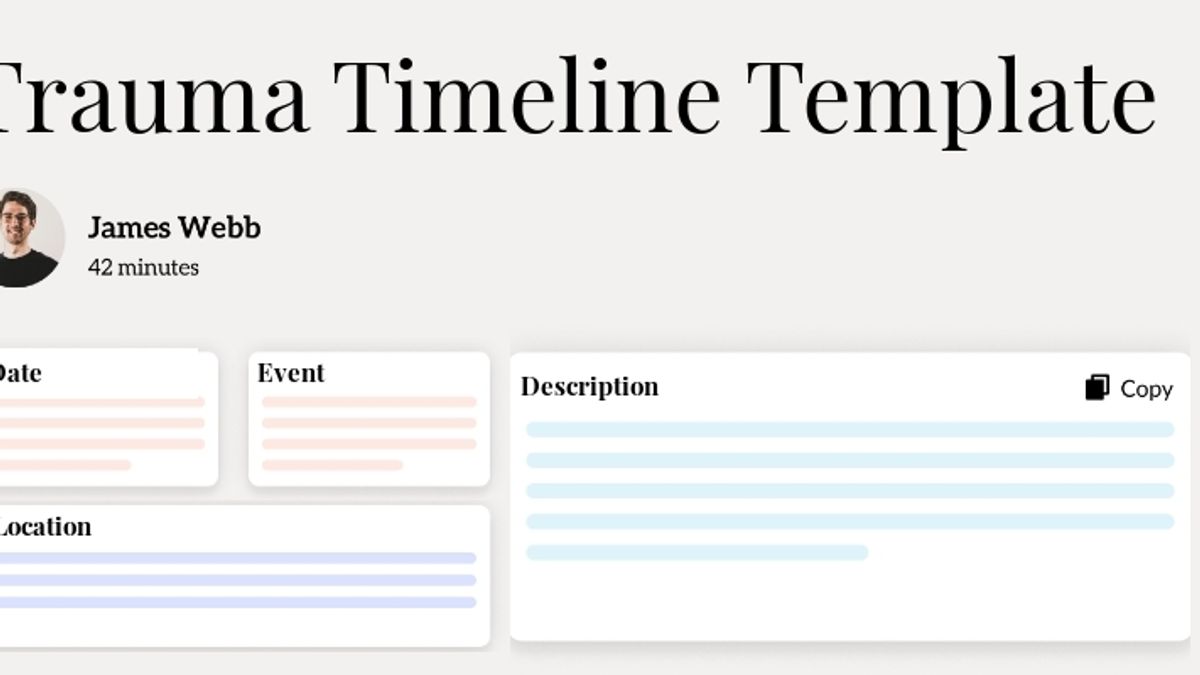
Trauma cases are often chaotic and overwhelming, and documenting the details can feel like a daunting task. Whether you’re a seasoned medical professional or just starting your career, having a structured approach to creating a trauma timeline is vital in ensuring concise and effective communication. This article breaks down how to leverage a Trauma Timeline Template for your documentation needs, addressing common pain points and providing actionable insights.
What Is a Trauma Timeline Template?
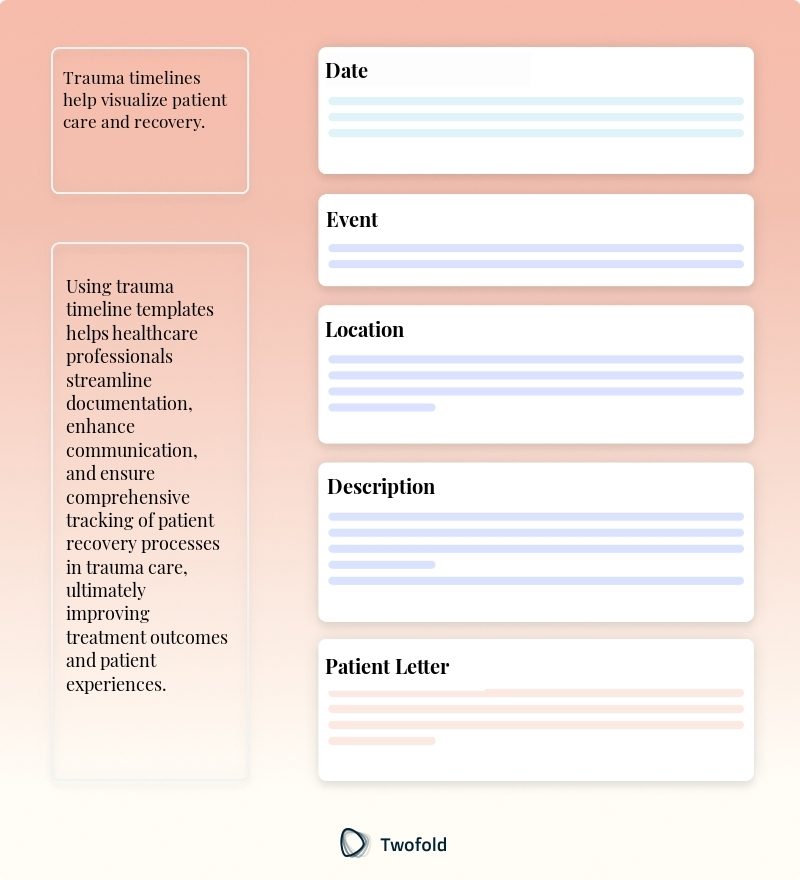
A Trauma Timeline Template is a structured format that captures the sequence and details of events surrounding a traumatic incident. It allows healthcare professionals to document critical information in a clear and organized manner.
Such templates are designed to streamline the documentation process, ensuring all relevant data is recorded systematically. This facilitates better patient care outcomes, enhances communication among providers, and supports potential legal considerations.
Key Components of a Trauma Timeline
Understanding the core elements that make up a trauma timeline is essential for effective documentation.
- Date and time of the incident
- Location of the trauma
- Direct observers and first responders
- Nature of the trauma (injuries sustained)
- Initial assessment and vital signs
- Follow-up treatments administered
- Patient's response to treatments
How to Use a Trauma Timeline Template: Step-by-Step Process
- Gather all available information about the traumatic incident from eyewitnesses and medical records.
- Determine the appropriate timeframe for documentation, ensuring accuracy in dates and times.
- Fill in the template sections with structured details including injuries, treatments, and observations.
- Incorporate any additional information that may have relevance, such as environmental factors or patient history.
- Review and verify all entries for accuracy and completeness before finalizing the document.
Benefits of a Trauma Timeline
Benefit | Description |
|---|---|
Enhanced Clarity | Offers a clear, chronological record of events, reducing confusion. |
Improved Communication | Facilitates better discussions among healthcare teams and legal entities. |
Assured Comprehensive Documentation | Captures all aspects of care and incident details, protecting against liability. |
Supports Patient Care | Enables tailored treatment plans based on documented responses and events. |
Legal Preparedness | Provides essential information for potential legal review or investigations. |
Stakeholders in a Trauma Timeline
Various parties are involved in the trauma timeline process, each playing a critical role.
- Emergency Medical Technicians (EMTs): They arrive at the scene first, documenting immediate actions taken and initial patient data.
- Surgeons: They rely on timelines for surgical decisions and evaluations based on the documented sequence of events.
- Legal Teams: Use the documentation for cases of malpractice or insurance disputes to establish a clear chain of events.
- Patient Care Coordinators: They use timelines to monitor patient recovery and adjust follow-up plans accordingly.
Example of a Trauma Timeline
Here’s a simple example of a trauma timeline entry for clarity: "On April 15, 2023, at 14:30, patient involved in a car accident, presented to the ER with a laceration on the forehead, severe abdominal pain, and ABCs triaged as stable."