


Brief Answer
Yes. Insurance companies generally accept AI generated clinical notes as long as the content meets standard medical record and billing requirements. Medicare policy treats AI scribes like any other scribe: the billing clinician must review and sign the note, and the note must accurately reflect the care provided. Medicare does not require you to say who or what transcribed the entry.
The real risk is not that AI was used. The risk is submitting notes that are inaccurate, cloned, missing medical necessity, or lacking clear assessment and plan.
The Longer Answer
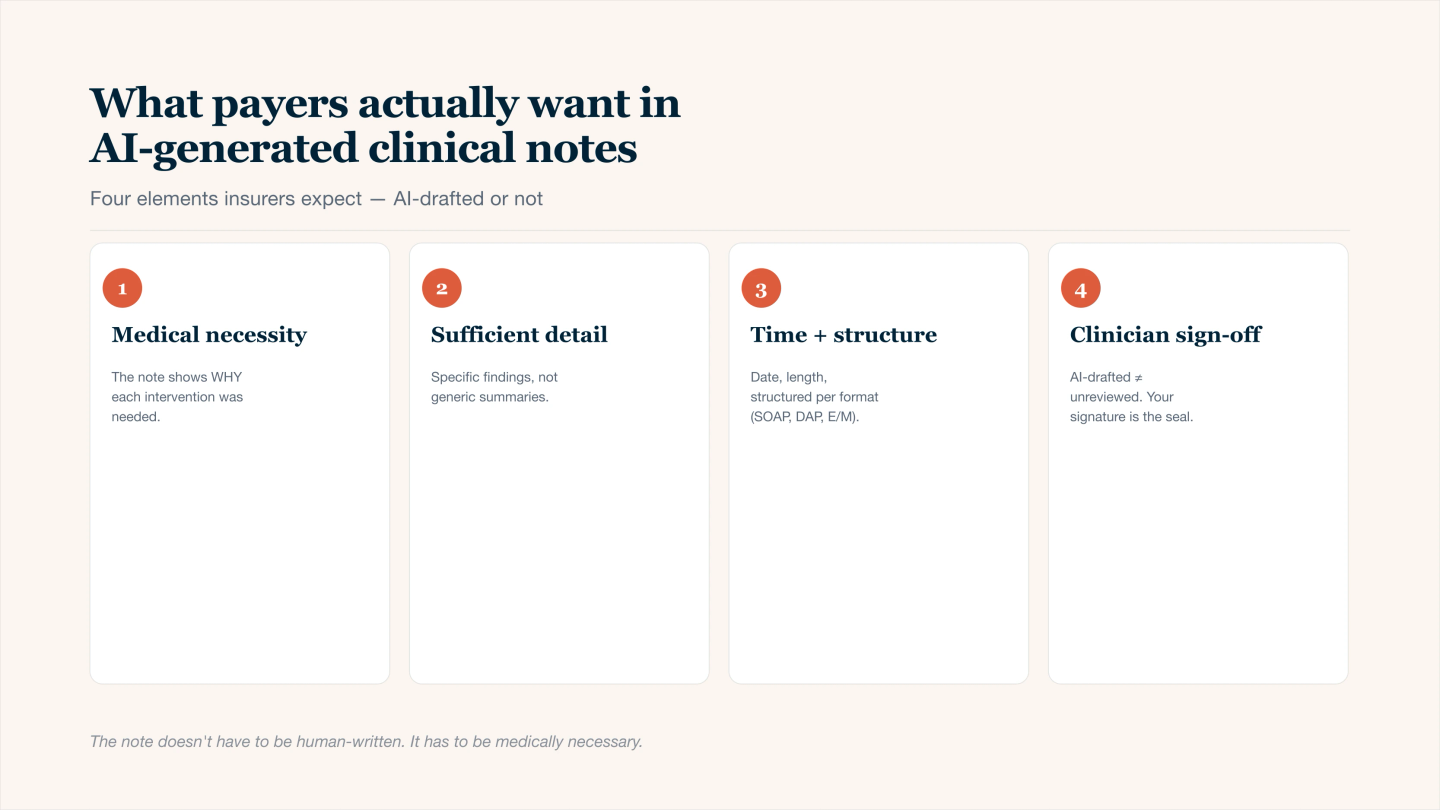
Four elements insurers expect in clinical notes — whether AI-drafted or not.
1. What payers actually look for
Payers focus on substance, not authorship. Reviewers want to see:
What gets paid | What gets denied |
|---|---|
Clear medical necessity tied to diagnosis and function | Generic or repetitive language without specifics |
Decision making and risk documented | Plans that do not explain why changes were made |
Accurate meds, orders, procedures, and follow up | Errors in dosing, labs, or missing safety steps |
Visit type and coding supported by note | MDM or time not supported for the billed level |
Medicare guidance is explicit that when a scribe is used, the treating clinician’s signature confirms the note matches the care provided, and that includes AI scribes.
2. Myth vs reality
Myth: “AI notes are automatically rejected.”
Reality: There is no blanket rule against AI documentation. If the note supports the service, it is acceptable.
Myth: “You must label every note as AI generated.”
Reality: Medicare does not require documenting who or what created the text. Commercial plans typically follow the same principle.
Myth: “Using AI removes liability.”
Reality: You are still the legal author. You must review and authenticate the note.
3. What to review every time before signing
A fast, defensible review means checking high risk areas first:
- Patient identity and visit context
- Med list and any changes
- Orders, referrals, procedures
- Risk and safety statements
- Assessment and plan per problem
Risk management groups and clinical guidance on AI scribes consistently stress that clinician review is essential to avoid harmful errors or misrepresentation.
4. When payers push back and why
If a claim is denied after using AI, it is almost always because of content issues:
- Missing medical necessity
- Overly templated or cloned phrasing
- No clear intervention or clinical decision documented
- Data reviewed or risk not shown for higher level coding
- Contradictions between history, exam, and plan
This is the same denial pattern seen with human scribes or copy forward notes. The tool is not the trigger. The note quality is.
5. Compliance basics you should have in place
To keep AI notes payer safe:
- Use a HIPAA compliant vendor with a Business Associate Agreement.
- Get patient consent when required by your state or clinic policy.
- Keep a human in the loop and sign each note.
- Avoid cloned notes by anchoring each session to today’s specifics.
- Label late entries correctly if finishing after the encounter.