


Brief Answer
Treat documentation as part of the visit, not an afterthought. Use a tight pediatrics template that is problem oriented for sick visits and checklist based for well visits. Capture a 20 to 40 second in room summary or use an AI scribe, then finalize in a two to three minute micro block. Protect a short midday and end of day closure block. Keep notes focused on decision making, anticipatory guidance, orders, and return precautions. Most solo pediatricians who do this close charts same day even at 30 visits.
The Longer Answer
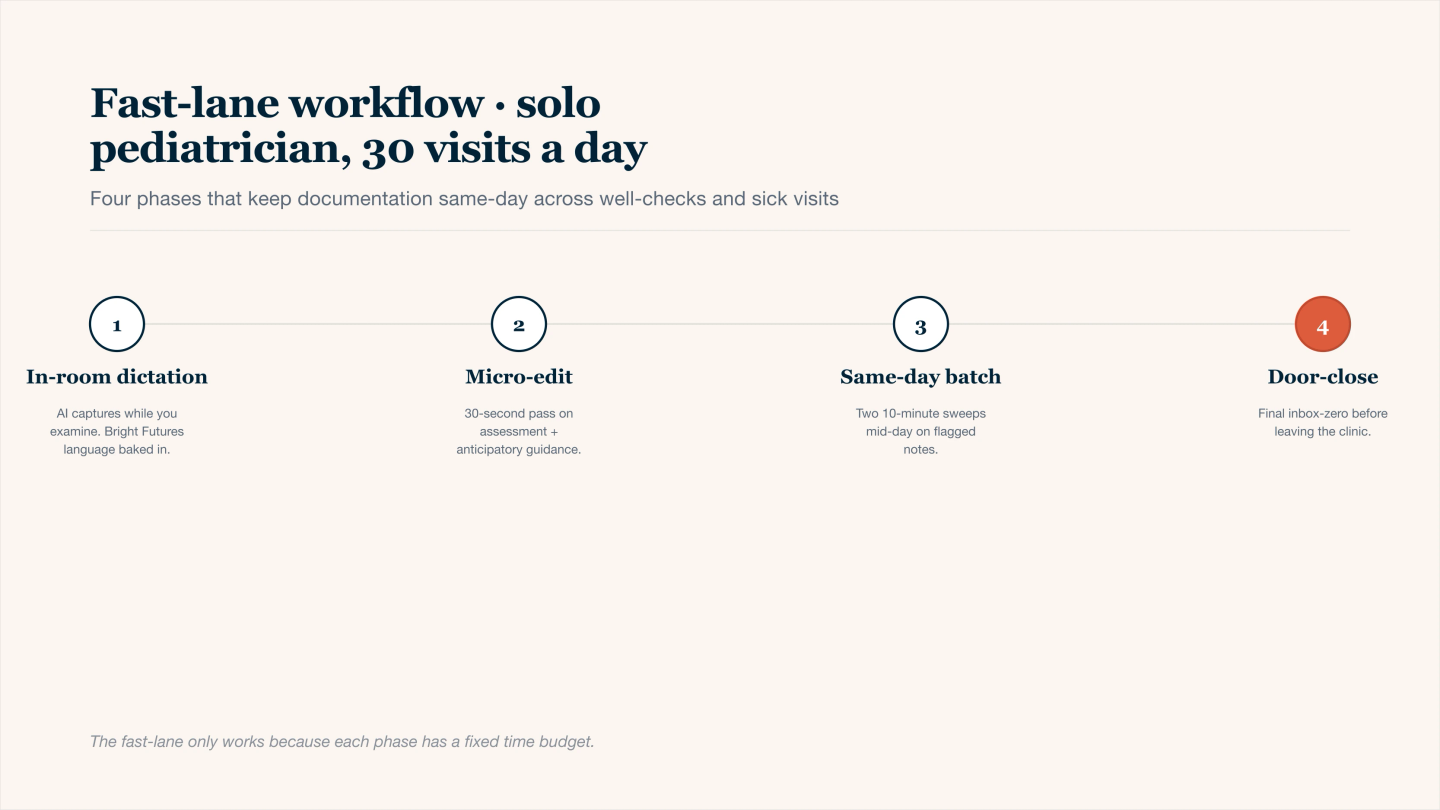
Four-phase fast-lane workflow — 30 kids a day, same-day notes, a life.
What good looks like in pediatrics
Use two core patterns and apply them consistently.
A. Sick visit, problem oriented
- Reason for visit and duration
- Focused history and exam positives and negatives
- Data reviewed or tests ordered
- Assessment and plan per problem
- Home care, return precautions, school note if needed, follow up
B. Well visit, age based checklist
- Interval history and concerns
- Growth and vitals reviewed
- Developmental and behavioral screens
- Vaccines given or due, VIS discussed, consent documented
- Anticipatory guidance topics personalized to age
- Clearance for sports if applicable and follow up
Fast lane workflow for a 30 visit day
Think in three moves and repeat all day.
- In room capture
During the last 30 to 45 seconds, speak a short clinical summary that covers problems, key findings, decisions, orders, and precautions. This becomes the draft backbone. - Micro block finalize
After every second or third patient, take two to three minutes to finalize those drafts. Sign and move on. - Two closures
Ten to fifteen minutes at lunch to finish morning charts. Fifteen to twenty minutes before leaving to close everything from the afternoon.
Minimum content that supports quality and coding
Section | Pediatric specifics to include | One line example |
|---|---|---|
Reason for visit | Sick vs well and parent concern | Fever and cough for 3 days |
Growth and vitals | Percentiles or flags if abnormalPercentiles or flags if abnormal | Weight 45th percentile, afebrile now |
Focused exam | Pertinent positives and negatives | Clear lungs, mild pharyngeal erythema, no retractions |
Data reviewed | Rapid tests, prior notes, imaging | Rapid strep negative, no prior asthma history |
Assessment and plan | Decision with rationale and safety | Viral pharyngitis. Fluids, antipyretics. Return if breathing effort or dehydration |
Vaccines and meds | Given, due, consent, VIS | Gave Hep A dose 2. VIS discussed. Tylenol weight based dose reviewed |
Instructions and follow up | Parent friendly plan and timing | Phone check in 48 hours if persistent fever. Well visit in 6 months |
Sample daily structure that solo pediatricians use
Block | What you do | Time target |
|---|---|---|
Pre clinic huddle | Scan schedule, flag vaccines due and forms | 10 minutes |
Morning patients 1 to 10 | In room summaries, micro finalize after every third patient | 2 to 3 minutes per micro block |
Midday closure | Finish remaining morning charts and top portal messages | 15 minutes |
Afternoon patients 11 to 30 | Same pattern as morning | 2 to 3 minutes per micro block |
End of day closure | Finish all notes and sign forms | 15 to 20 minutes |
Pediatric shortcuts that save time without losing quality
- Use weight based dosing macros for acetaminophen and ibuprofen so you never retype them
- Pre load anticipatory guidance bullets by age and uncheck what you did not discuss
- For ADHD med checks, keep a three line structure
- Target symptoms and school function since last visit
- Med dose, adherence, appetite, sleep, BP and pulse
- Decision and follow up window
- For sports physicals, attach clearance statement and list any restrictions in one line
Pitfalls that create late nights
- Waiting until evening to write the first word of a note
- Long narrative for simple viral syndromes rather than a short decision line and clear precautions
- Well visit notes without growth percentiles, screens, or vaccine status
- No protected closure blocks on the calendar
Tiny case example
Day with 32 visits. Two clusters of three sick visits each are summarized in room. Each cluster is closed in a five minute micro block. Lunch closure clears the morning. Afternoon repeats the pattern. End of day closure signs the remaining two notes. Charts are closed by departure and no weekend work is needed.