


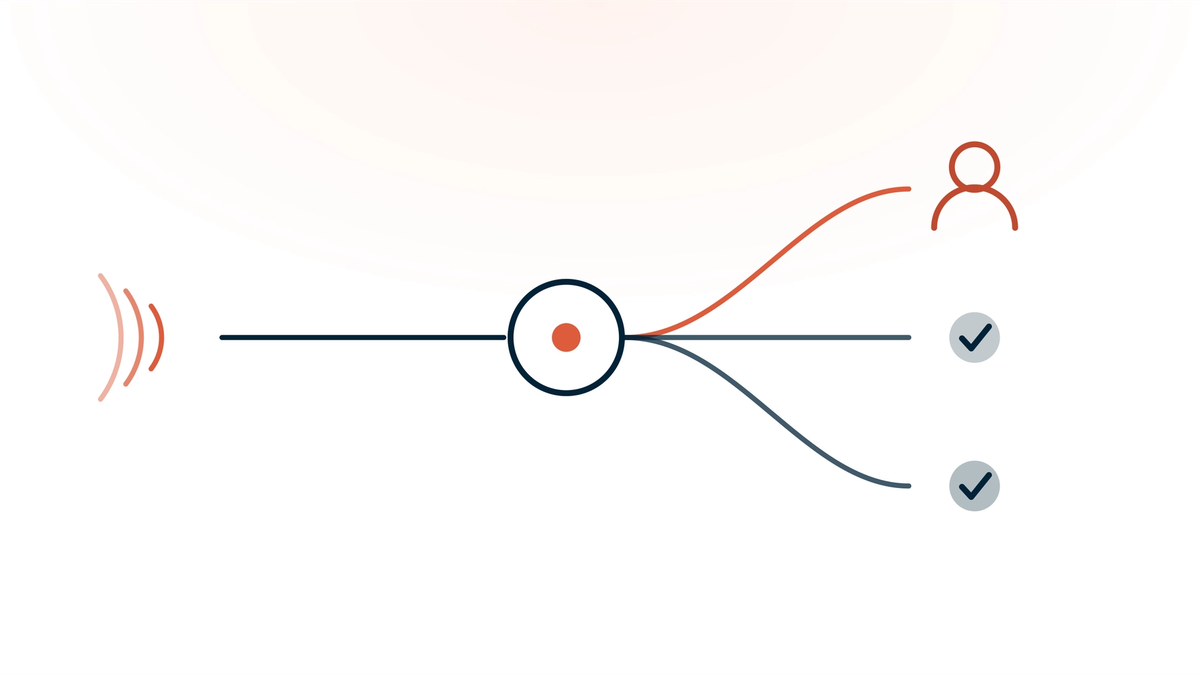
In 2026, medical staff burnout and rising patient expectations demand a new solution: the AI receptionist. This article educates practice managers on what works now, including cost comparisons against human staff and answering services, HIPAA‑compliant call handling, and implementation tips. Additionally, learn key features and patient experience benefits. By the end, you'll fully understand how to leverage AI to reduce overhead, improve access to care, and enhance patient satisfaction.
What is an AI Receptionist in 2026?
An AI receptionist is a conversational software agent that handles patient phone calls, scheduling, and inquiries using generative AI and Natural Language Processing (NLP). Today's AI receptionists engage in natural, human‑like dialogue, understand context, and perform basic admin tasks.
Core Capabilities
- Appointment Scheduling: Books, reschedules, and cancels appointments in real-time.
- Patient Triage: Routes urgent calls to nurses and emergencies to 911.
- FAQ Handling: Answers questions about hours, location, insurance, and providers.
- Prescription Requests: Collects refill information and forwards it to the appropriate staff.
- Multilingual Support: Communicates with diverse patient populations.
How It Works
The AI connects to your practice management system and EHR. When a patient calls, the AI answers instantly, identifies the caller's needs, and takes action, whether that's booking an appointment or transferring to a human for complex issues.
The Financial Reality: Cost Analysis
This section breaks down the costs of two staffing models: human receptionists and AI receptionists.
Feature | Human Receptionist | AI Receptionist |
|---|---|---|
Cost | $35,000–$55,000 per year, fully loaded | $59–$500+ per month ($700–$6,000+ per year) |
Availability | 8 hours/day, weekdays | Varies by plan |
Sick Days/PTO | 10–15 gap days/year | N/A |
Scalability | Hire more staff | Upgrade plan |
Human receptionists cost $17–$24 per hour before benefits, with full costs exceeding $55,000 annually when payroll taxes, insurance, and coverage gaps are included. AI receptionists operate on predictable flat subscriptions, delivering lower costs for busy practices.
The financial benefits extend beyond call handling. When paired with an AI medical scribe, practices see compounding efficiencies, as AI scribes also work to reduce the documentation burden and burnout.
Key Features That Work in 2026
Not all AI receptionists are the same; the difference between a frustrating experience and a seamless patient interaction lies in the underlying technology. Here are the features that define effective AI receptionists in 2026.
Natural Language Processing (NLP)
- Contextual Understanding: The AI grasps intent, not just keywords. A patient saying "I need to see the doctor about my back" triggers the same scheduling flow as "I'd like to book an appointment for back pain."
- Handles Interruptions: Patients can change their minds mid-sentence. The AI adapts without requiring the caller to start over.
- Accent and Dialect Recognition: Trained on diverse voice datasets, today's AI understands callers regardless of accent or speech pattern.
- Emotional Intelligence: Advanced systems detect frustration or confusion in a caller's tone and adjust responses accordingly, or escalate to a human supervisor.
EHR Integration and Real-Time Scheduling
An AI receptionist is only as valuable as its ability to take action.
- Bi-Directional Sync: The AI reads and writes directly to your EHR (Epic, Cerner, Athenahealth, and others). It sees real-time availability and books instantly.
- Autonomous Rescheduling: Patients can cancel and rebook without human intervention.
- Insurance Verification: The AI collects and confirms insurance details before the visit, reducing claim denials.
- Patient History Access: Repeat callers are recognized, and the AI references their preferences and past appointments.
Smart Triage and Clinical Routing
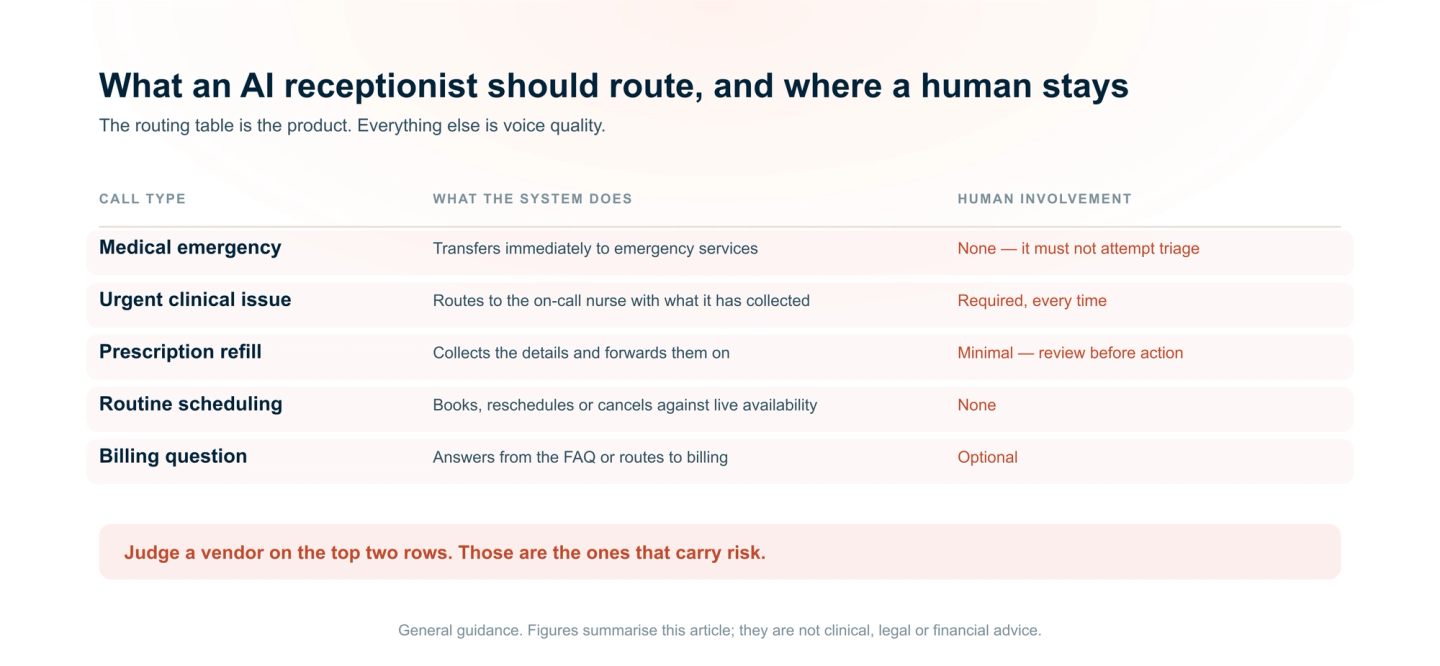
The most critical feature for medical offices is the ability to distinguish between routine and urgent needs.
Call Type | AI Action | Human Involvement |
|---|---|---|
Medical Emergency | Immediate transfer to 911 | None |
Urgent Clinical Issue | Route to on-call nurse | Required |
Prescription Refill | Collect details, forward to pharmacy | Minimal |
Routine Scheduling | Book directly via EHR | None |
Billing Question | Answer FAQ or route to billing | Optional |
This triage capability ensures that life‑threatening situations receive immediate attention while routine tasks are handled autonomously.
Ambient AI Scribe Integration
The most advanced practice is pairing AI receptionists with AI medical scribes. While the receptionist handles intake, the scribe captures clinical documentation during the visit.
- Pre-Visit Data Capture: The receptionist collects chief complaints and history before the appointment.
- Handoff: This information flows directly into the clinical note, saving the provider time.
- Compounding Efficiency: Together, these tools reduce administrative burden.
Analytics and Continuous Improvement
What gets measured gets improved.
- Call Volume Patterns: Identify peak hours and staffing needs.
- Common Patient Inquiries: Understand what patients are asking and adjust FAQs or website content.
- Conversion Tracking: See how many calls result in booked appointments.
- Sentiment Analysis: Gauge patient satisfaction with every interaction.
Critical Compliance: HIPAA and AI
The convenience of AI receptionists comes with a non‑negotiable obligation: protecting patient data.
HIPAA Rules for Call Handling
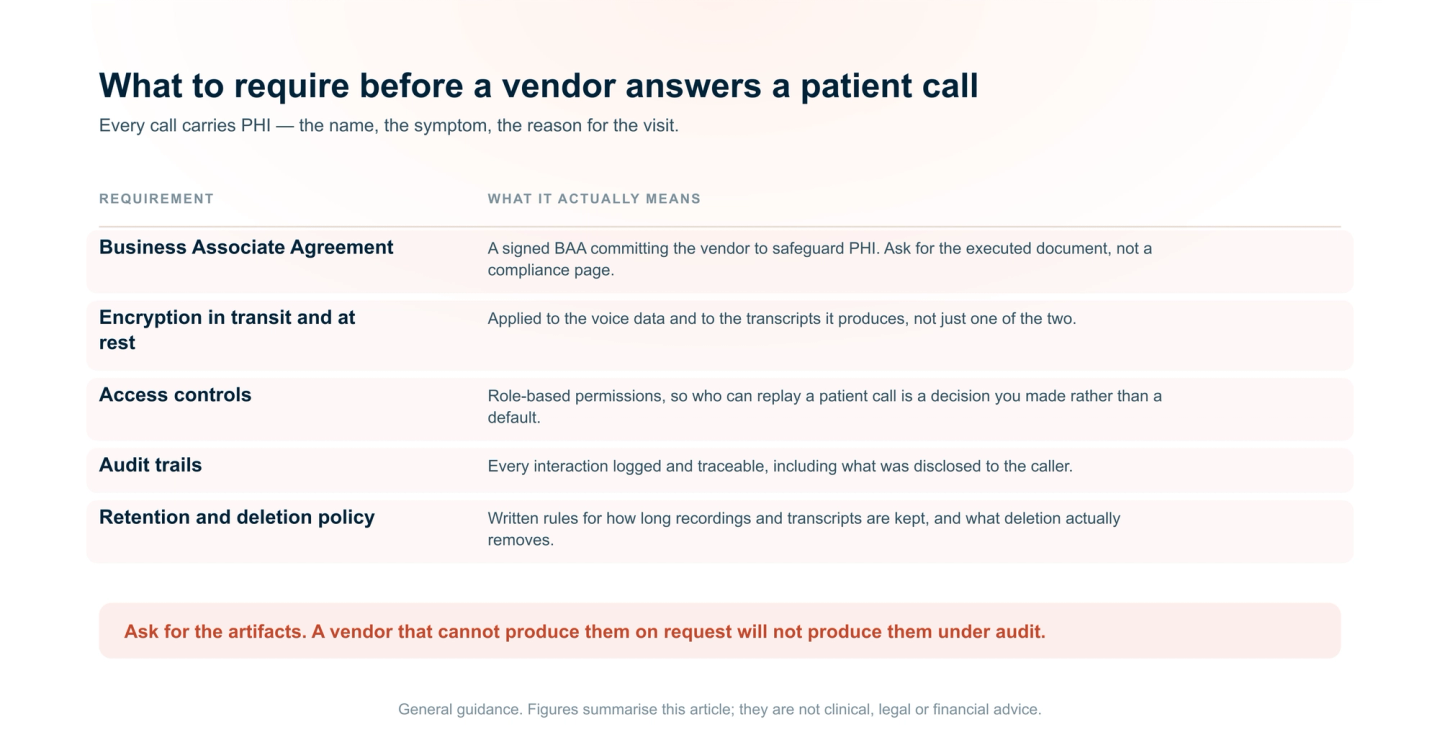
AI receptionists handle Protected Health Information (PHI) with every call. Patient names, symptoms, insurance details, and appointment reasons all fall under HIPAA protection. Here is what your AI vendor must provide.
Requirement | What It Means |
|---|---|
Business Associate Agreement (BAA) | Vendor legally commits to safeguarding PHI |
End-to-End Encryption | Voice data and transcripts are encrypted in transit and at rest |
Access Controls | Role-based permissions limit who can view patient data |
Audit Trails | Every interaction is logged and traceable |
Data Retention Policies | Clear rules for how long data is stored and when it's deleted |
HIPAA compliance is not optional. Before implementing any AI receptionist, verify the BAA, confirm encryption standards, and establish clear escalation protocols.
Patient Experience Benefits
Here are three ways AI receptionists transform the patient experience.
- Zero Wait Times: Patients might abandon calls after an average hold time of just 60 seconds. An AI receptionist answers on the first ring, every time.
- 24/7 Access to Care: The AI books appointments, answers questions, and triages concerns around the clock, transforming your practice from an 8-hour operation into an always-available resource.
- Consistent, Compassionate Communication: Human receptionists have difficult days. They get overwhelmed, rushed, or distracted. An AI receptionist delivers the same courteous, patient tone on every single call.
Conclusion
The AI receptionist is no longer just a concept; it is a practical addition for medical practices in 2026. Patients expect instant, 24/7 access to care, and practices need efficient, scalable solutions. AI receptionists deliver both. Practices that adopt early will capture more patients, reduce staff burnout, and improve satisfaction scores. The question is no longer whether to implement AI receptionists, but how quickly you can implement them.