


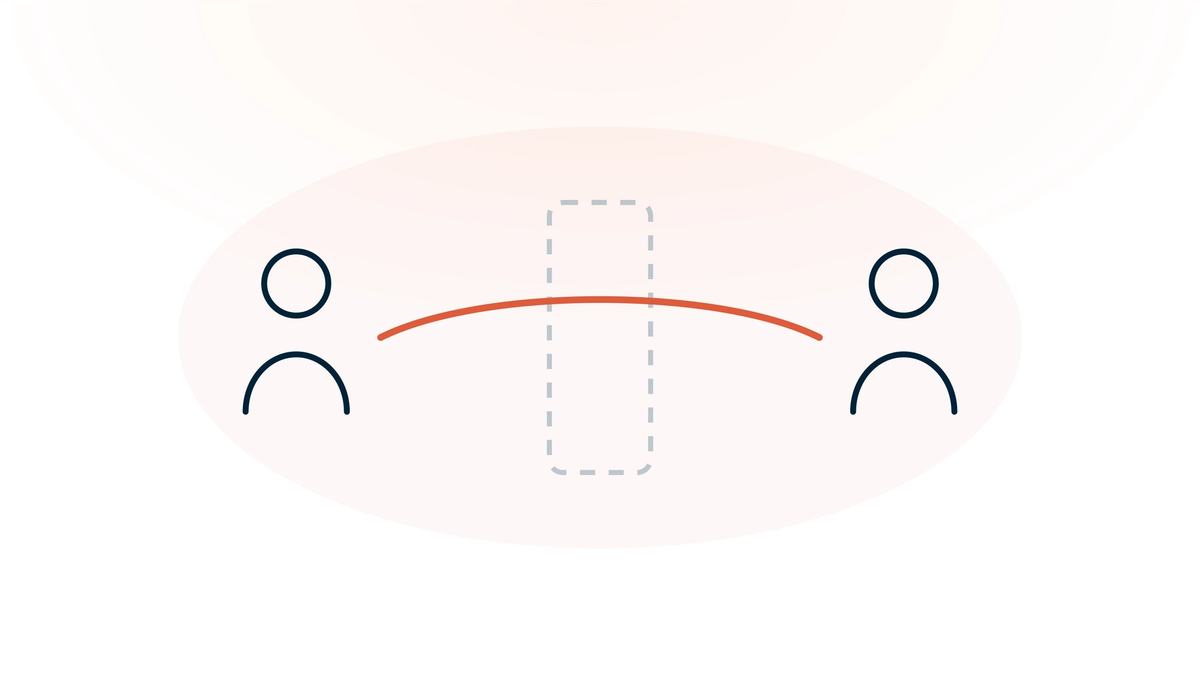
For social workers, the administrative demands of clinical documentation often consume the time and mental energy reserved for client interaction. AI medical scribes, leveraging ambient intelligence, offer a solution by automatically generating structured, SOAP‑formatted drafts from session audio. By liberating the clinician from the screen, explore how this technology aims to restore the importance of human connection.
The Cost of Paperwork in Social Work
Documentation is indispensable for legal compliance, continuity of care, and inter‑agency communication. However, the cumulative demands of regulatory and reimbursement requirements have transformed documentation into a persistent operational strain.
The Impact of Administrative Overload
The administrative burden from clinical sessions imposes a toll on the social work workforce:
- Extended Work Hours: The documentation workload frequently exceeds scheduled session time, compelling workers to complete case notes during evenings and weekends, which compromises professional boundaries and work-life balance.
- Workforce Strain: Excessive administrative demands are consistently identified as a primary factor in professional dissatisfaction and turnover.
- Mental Interference: The mental effort required to transcribe and structure notes during active sessions limits attention, reducing the capacity for nuanced clinical assessment and crisis intervention.
The "Screen Barrier"
Beyond the administrative burden, there is also a risk of weakening the therapeutic relationship, a phenomenon recognized as the "screen barrier":
- Divided Attention: Positioning a laptop between worker and client signals divided focus, undermining the client's perception of being fully heard and validated.
- Loss of Clinical Data: Eye contact, micro-expressions, and shifts in vocal tone are essential clinical indicators that are sacrificed to the keyboard.
- Relational Importance: In social work, the therapeutic relationship itself is the primary mechanism for change. When the clinician's gaze is fixed on a screen, the implicit message prioritizes systemic legibility over human connection.
What is an AI Scribe? Redefining Documentation
To appreciate the transformative potential of this technology, one must first understand what an AI scribe actually is. An AI medical scribe is an ambient documentation tool designed to alleviate the administrative burden of clinical note‑taking.
Beyond Simple Voice-to-Text
The distinction between a basic transcription tool and an AI scribe is significant:
- Transcription vs. Structuring: While voice-to-text software merely converts spoken words into text, an AI scribe processes that text to extract clinically relevant information. It identifies speakers, recognizes key themes, and organizes content into structured formats such as SOAP (Subjective, Objective, Assessment, Plan), BIRP (Behavior, Intervention, Response, Plan), or DAP (Data, Assessment, Plan) notes.
- Clinical Language Generation: The AI generates draft notes using appropriate clinical terminology, distinguishing between subjective client reports and objective clinical observations. It does not interpret or diagnose but rather organizes the information for the clinician's review.
- Ambient Functionality: The term "ambient" refers to the technology operating in the background, allowing the clinician to remain fully present with the client without actively engaging with a screen or recording device during the session.
The Human-Centric Impact: Empowering Empathy with AI
While administrative relief is valuable, the deeper benefit lies in what becomes possible when documentation no longer competes for the clinician's attention. This section explores how AI scribes empower social workers to reclaim the core of their practice.
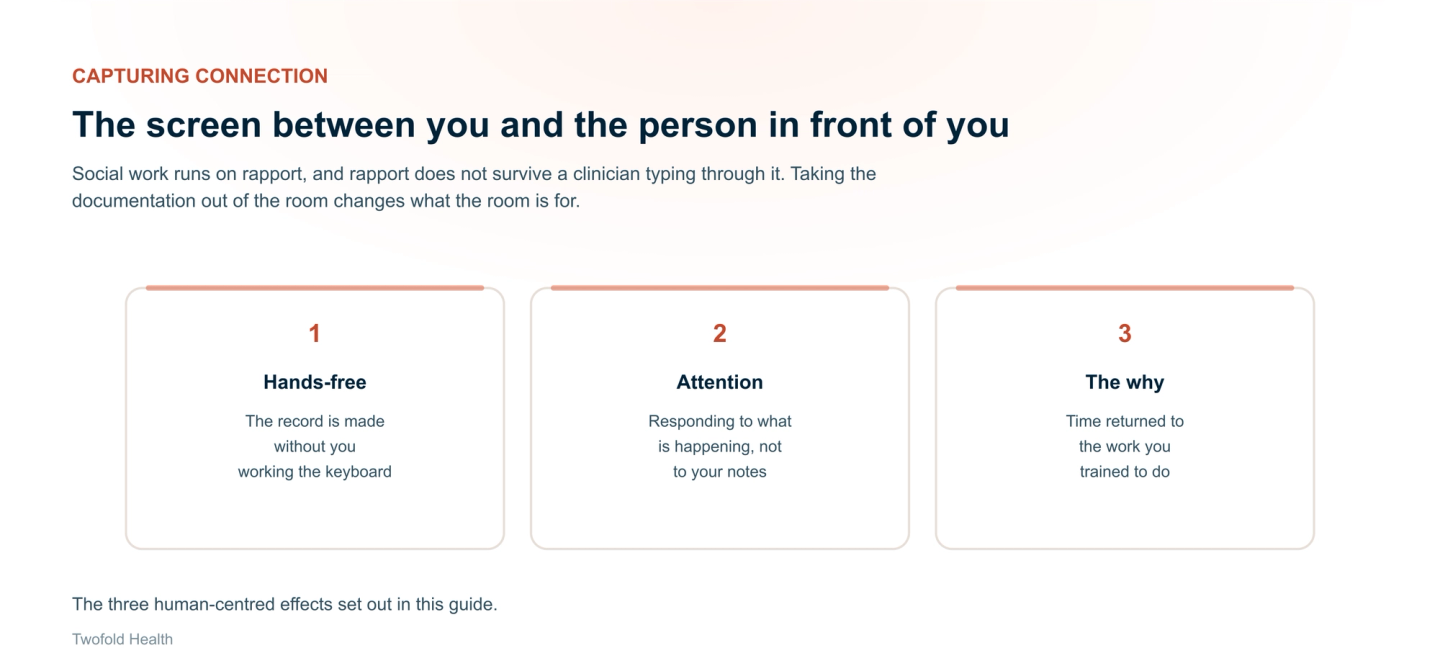
Hands-Free Documentation
The promise of ambient AI is the liberation of the clinician's gaze:
- Uninterrupted Eye Contact: When the AI captures session content, the social worker can maintain consistent eye contact with the client. This simple act communicates presence, respect, and undivided attention.
- Open Body Language: Hands-free documentation allows for natural gestures, leaning forward, and other non-verbal cues that convey being fully present.
- Clearer Thinking: When the mind is not simultaneously processing content for documentation, it can focus entirely on listening, not just to words, but to tone, hesitation, emotional inflection, and the spaces between speech. This deep listening is foundational to effective social work practice.
Attention and Responsiveness
Social work is fundamentally relational, requiring the clinician to remain attuned to the client's emotional state in real time:
- Reading Micro-Expressions: Facial expressions that flash momentarily (fear, sadness, anger) are significant clinical data.
- Tracking Vocal Changes: Shifts in pitch, pace, and volume often signal emotional shifts that may not be articulated verbally. Full auditory presence allows the clinician to notice and respond to these changes as they occur.
- Responding in the Moment: Documentation-free sessions enable the clinician to follow the client's lead, explore emerging themes spontaneously, and respond to emotional needs as they arise, rather than waiting for a pause to record the last observation.
Recapturing the "Why" of Social Work
Beyond the practical benefits, the integration of AI medical scribes addresses a deeper professional need:
- Renewed Professional Fulfillment: When social workers are able to focus on the relational aspects of their work, they are more likely to experience the meaning and purpose that drew them to the profession.
- Sustained Compassion: Reducing the burden of documentation helps preserve emotional capacity for genuine empathy.
- Alignment with Values: The social work profession emphasizes the dignity and worth of the person. Removing distractions that interfere with genuine connection aligns practice more closely with these ethical commitments.
Conclusion
The integration of AI medical scribes into social work practice signifies a reclamation of the profession's relational heart. By liberating clinicians from the mental burden of documentation, this technology creates space for what matters most: sustained eye contact, attuned listening, and genuine human connection. As social work continues to evolve, the most impactful innovations will be those that empower practitioners to do what they do best: be fully present for those they serve.