


AI-generated SOAP notes are thorough and organized, but they're also prone to errors. Hallucinations, transcription mistakes, and reasoning errors can slip through unnoticed. The physician who signs an AI‑assisted note bears full legal responsibility for its accuracy. Without a structured QA process, efficiency gains come with risk. This article outlines a three‑stage review workflow and compliance best practices to ensure your AI documentation is both time‑saving and defensible.
Why AI SOAP Notes Need a Different QA Approach
Large language models don't "know" medicine; they predict statistically probable text. This distinction demands a QA shift from editing to re‑verifying.
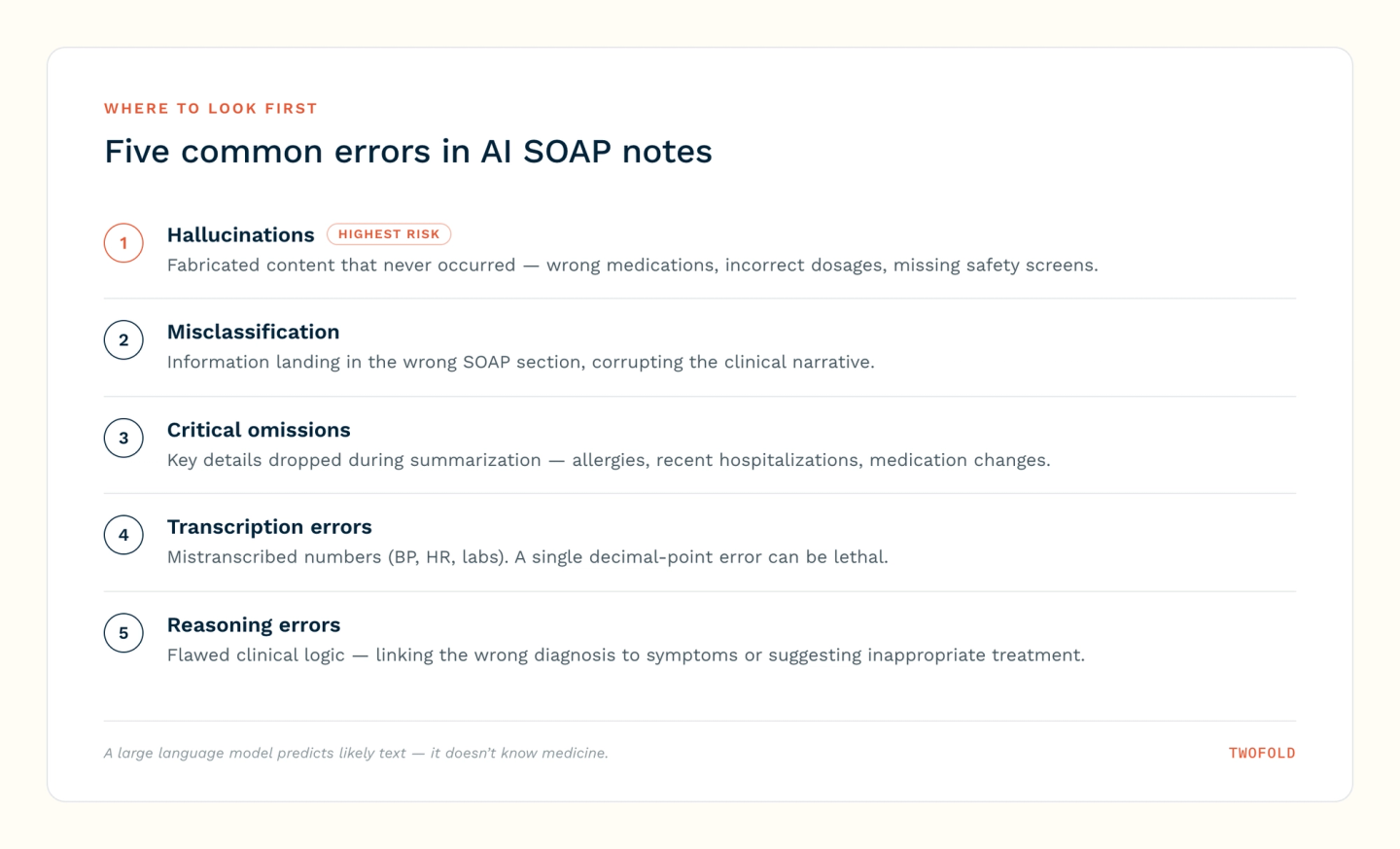
Five Common Error Types
Knowing what typically goes wrong tells you where to look:
- Hallucinations: Fabricated content that never occurred: wrong medications, incorrect dosages, missing safety screens. The highest medicolegal risk.
- Misclassification: Information landing in the wrong SOAP section, corrupting the clinical narrative.
- Critical Omissions: Key details dropped during summarization: allergies, recent hospitalizations, medication changes.
- Transcription Errors: Numerical data (BP, HR, labs) are most commonly mistranscribed. A decimal point error can be lethal to the patient.
- Reasoning Errors: Flawed clinical logic linking the wrong diagnosis to symptoms or suggesting inappropriate treatments.
A New QA Mindset
QA for AI notes means source verification, confirming every data point against what was actually observed, discussed, and ordered. You're fact‑checking an algorithm, so this structured approach is a professional obligation once you've implemented AI into your workflow.
Building a Three-Stage Review Workflow
The goal is to make every second count. This three‑stage workflow systematically targets the highest‑risk areas first, ensuring nothing slips through.
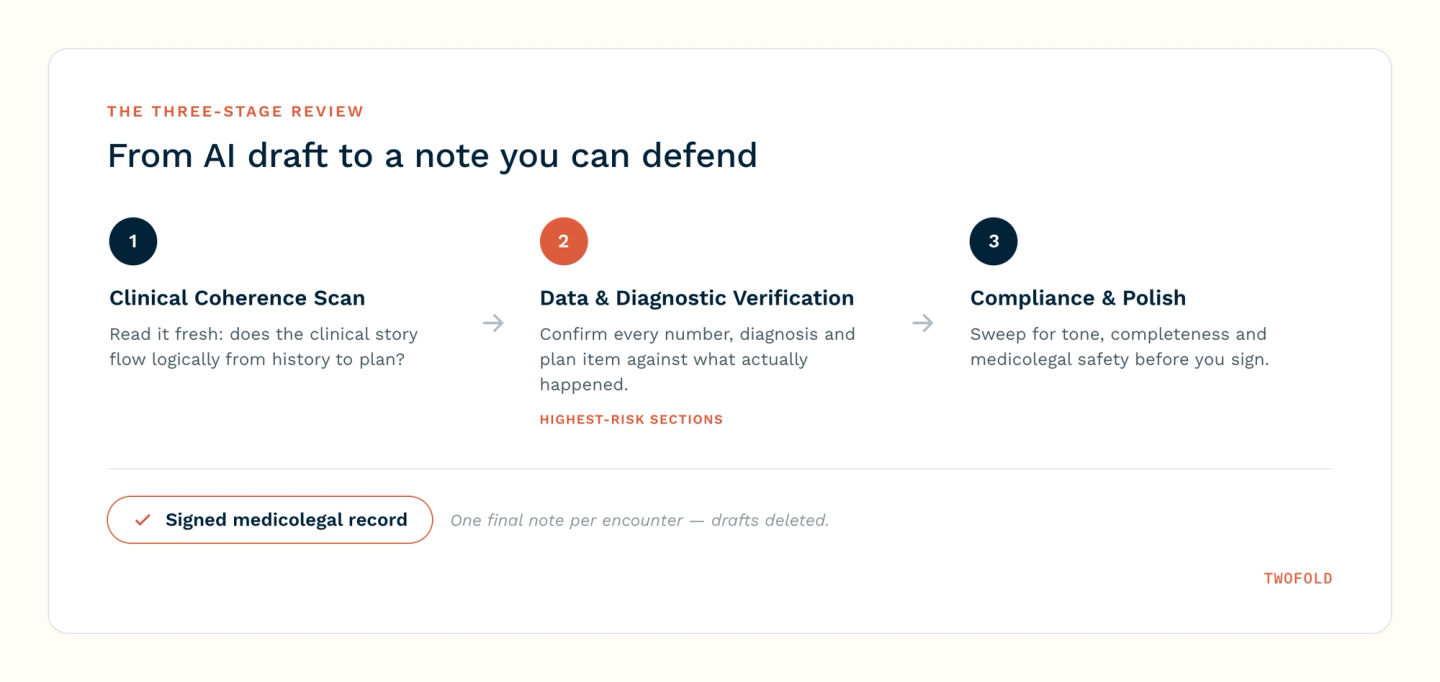
Stage 1: The Clinical Coherence Scan
- Goal: Read the note as if seeing a new patient's chart for the first time. Does the clinical story make sense?
What to Verify:
- Does the narrative flow logically from History to Plan?
- Does the Assessment directly address the presenting complaint?
- Spot-check one critical detail (e.g., pain location, symptom onset) against your memory
Stage 2: Data and Diagnostic Verification
- Goal: Focus on objective data and clinical reasoning: the highest-risk sections.
What to Verify:
- Vitals & Numbers: Confirm every numerical value (BP, HR, labs, dosages). Transcription errors are most common here.
- Assessment Precision: Does the medical reasoning accurately reflect your diagnosis? Check for flawed logic or inappropriate treatment suggestions.
- Plan Intent: Does the draft capture every prescription change, referral, or test you ordered?
- SOAP Integrity: Ensure information sits in the correct section (subjective vs. objective vs. assessment vs. plan).
Stage 3: Compliance and Polish
- Goal: Sweep for tone, completeness, and medicolegal safety.
What to Verify:
- Subjective vs. Objective Clarity: Patient reports are clearly separated from your interpretations.
- Required Elements: Follow-up instructions and chronic care plans are present.
- Professional Tone: Personalize the note to reflect your voice and documentation style.
Final Scan: Catch any typos, formatting issues, or inconsistencies.
The Sign‑Off: Legal and Compliance Considerations
The Sign-Off: Legal and Compliance Considerations
Your signature carries the same legal weight whether the note was typed manually or generated by AI. The final sign‑off marks the point at which clinical documentation becomes a medicolegal record.
Key Compliance Requirements:
- Review Every Draft: Signing an AI-generated note without review is malpractice.
- One Final Record: Only one signed note should exist per encounter in the patient record. Delete or archive all drafts.
- Patient Consent: Inform patients that the encounter is being recorded and obtain proper consent before using AI scribes.
- HIPAA-Compliant Infrastructure: Your vendor must have a signed Business Associate Agreement (BAA) and must not use patient data to train models.
Conclusion
AI SOAP notes offer efficiency, but efficiency without accuracy is a liability. A systematic QA process transforms AI drafts into defensible clinical records. The three‑stage workflow: coherence scan, diagnostic verification, and compliance sign‑off ensures documentation that protects both patients and providers. With a repeatable workflow and ongoing clinician review, you can reclaim hours each week without compromising quality.