


A substance abuse progress note that only says “client attended group; reported sobriety” tells a reviewer nothing about why this level of care is still warranted. The six ASAM dimensions give the note its structure and its justification. This article provides two complete notes, one outpatient and one intensive outpatient, each organized dimension by dimension so the level‑of‑care reasoning is visible on the page. It also covers how to document readiness for change and a lapse using clinical language rather than moralizing language.
The Six ASAM Dimensions
Below is an overview of what the six dimensions cover.
Number | Dimension | What the Note Must Show |
|---|---|---|
1 | Intoxication/withdrawal | Current status, risk, need for monitoring |
2 | Biomedical conditions | Medical complications, pregnancy, medications |
3 | Emotional/behavioral/cognitive | Co-occurring symptoms, psychiatric stability |
4 | Readiness to change | Stage, motivation, ambivalence |
5 | Relapse/ continued use potential | Triggers, craving, prior attempts, lapse history |
6 | Recovery/ living environment | Housing, support, exposure to use |
Example 1: Outpatient (Level 1)
Dimension 1-3
- D1: No withdrawal risk; last use 22 days ago; no acute intoxication.
- D2: No medical complications; annual physical completed.
- D3: Mild anxiety, managed without medication; no SI/HI.
Dimensions 4-6
- D4: Action stage- attends all scheduled sessions; states, “I need to change for my kids.”
- D5: Two prior quit attempts, both under 2 weeks; triggers identified as Friday evenings and conflict with partner; craving 2/10.
- D6: Sober partner, stable housing, no household use, attends one mutual-support meeting weekly.
Level-of-Care Reasoning
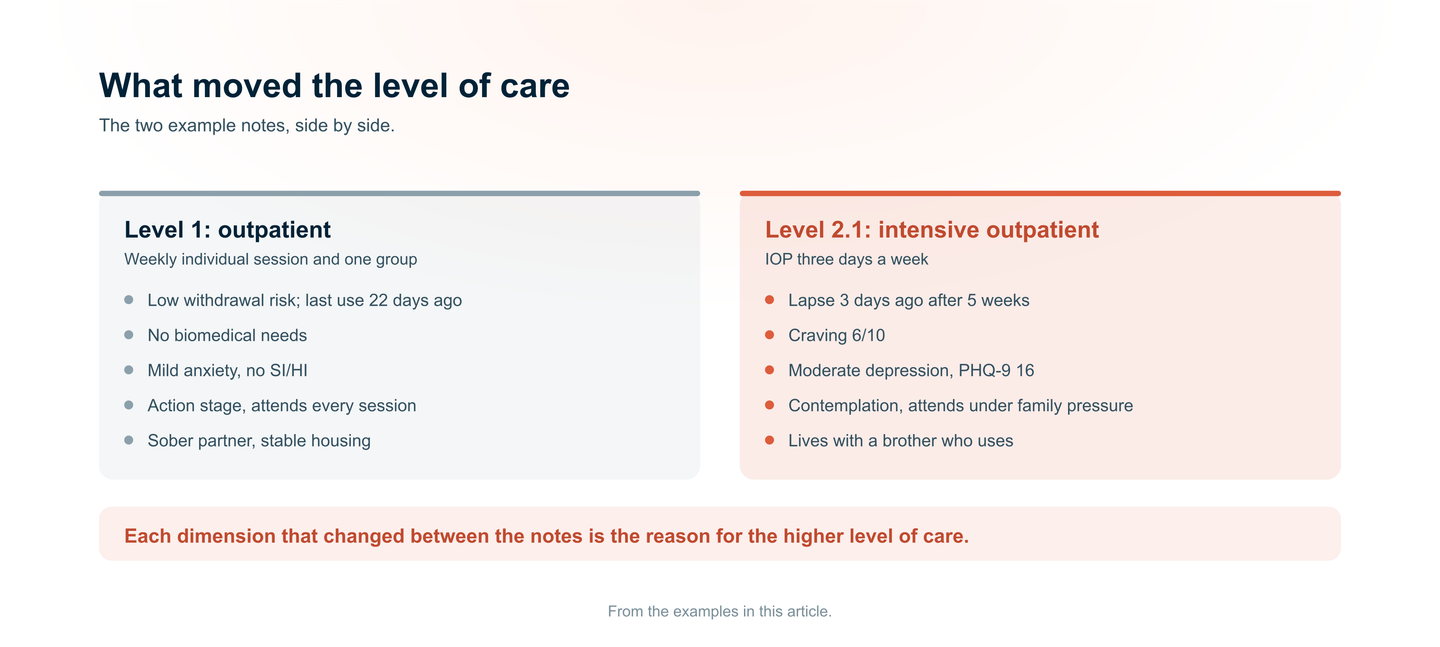
- Why Level 1: Low withdrawal risk, no biomedical needs, stable psychiatric status, active engagement, and a supportive environment.
- Continue: Weekly individual and one group; reassess in 30 days.
Example 2: Intensive Outpatient (Level 2.1)
Dimensions 1-3
- D1: Last use 3 days ago; mild tremor and insomnia resolving; CIWA tracked, no medication required.
- D2: Elevated liver enzymes noted by PCP; follow-up scheduled.
- D3: Depressive symptoms moderate; PHQ-9 16; on sertraline; no SI/HI.
Dimensions 4-6
- D4: Contemplation- attends under family pressure; ambivalent about abstinence versus moderation.
- D5: Lapse 3 days ago after 5 weeks; trigger was job loss; craving 6/10; prior IOP completion one year ago.
- D6: Lives with brother who uses; limited sober support network.
Level-of-Care Reasoning
- Why Level 2.1: Recent lapse, elevated craving, co-occurring depression, and an unsupportive living environment warrant structured programming beyond weekly outpatient.
- Plan: IOP three days weekly; psychiatric follow-up; address housing exposure in sessions.
Documenting Readiness and Lapses Without Moralizing
Readiness
- Name the Stage: “Contemplation- ambivalent, attending under family pressure” instead of “unmotivated”.
- Cite Evidence: What the client said or did that supports the stage.
Lapses
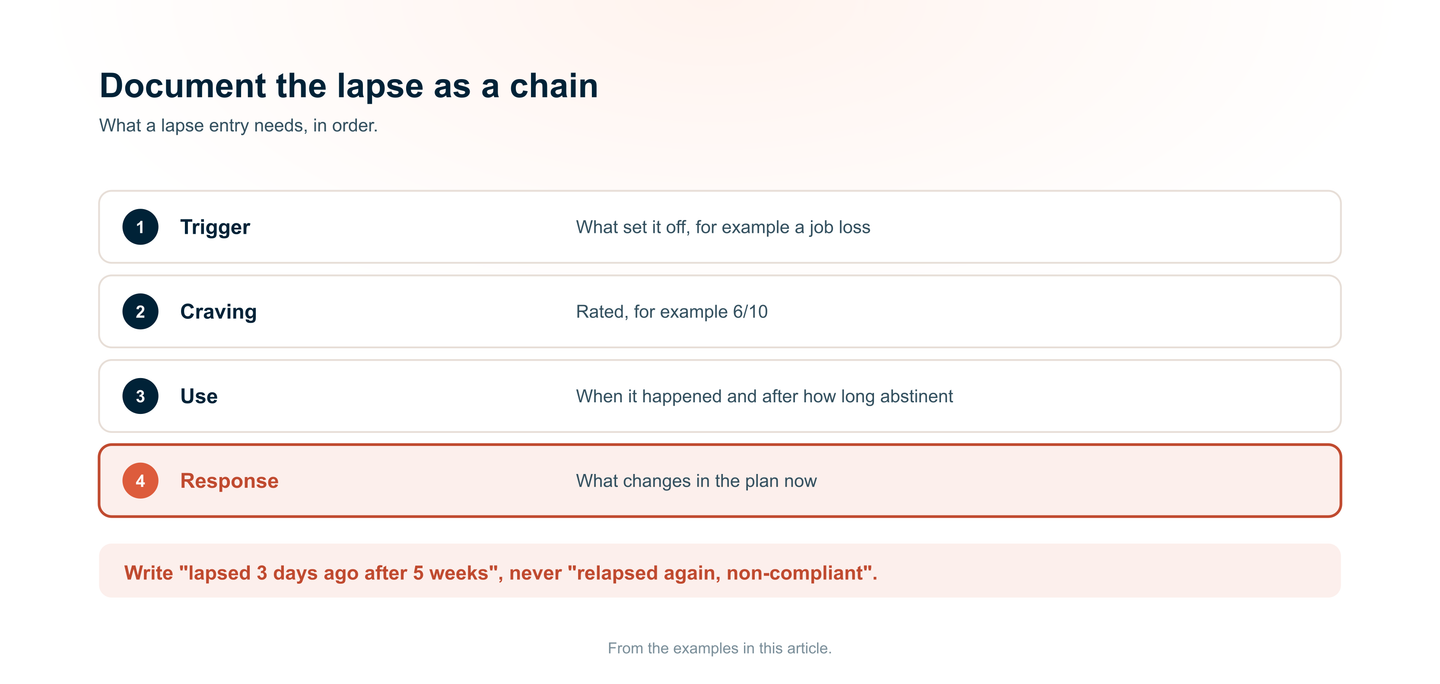
- Use “Lapse”, not “Failure”: “Lapsed 3 days ago after 5 weeks of abstinence” is clinical; “relapsed again, non-compliant” is a judgment.
- Include the Chain: Trigger, craving, use, and response. That is what drives the next intervention.
- Keep the Plan Forward-Facing: What changes now, not what the client did wrong.
Conclusion
Dimension‑organized notes do two things at once: they show a reviewer why the current level of care is justified, and they keep a lapse clinical rather than moral. Document what changed, name the readiness stage with evidence.
Structure intake with the substance abuse intake assessment form template, and plan with the relapse prevention plan template.