


Patients are actively searching for healthcare providers online. Google Ads can put your practice directly in front of them at the exact moment of need. This guide provides a clear, actionable framework for Google Ads for doctors. We will break down some of the real costs by specialty, explain the policies you must follow, and walk you through a compliant campaign setup.
The Opportunity: Why Google Ads Works for Healthcare
Patients searching for terms like "dentist near me" or "best cardiologist in [city name]" have high intent, which also means they are ready to book. Google Ads captures this demand and directs it to your practice, turning searches into appointments.
Healthcare Policy Restrictions: What Google Blocks
Google has specific policies for healthcare and medicines. Violating them can lead to account suspension.
Restricted Healthcare Categories
- Prescription Drugs: Advertising prescription medications directly to consumers is heavily restricted.
- Addiction Treatment: Requires specific certification and adherence to strict guidelines.
- Clinical Trials: Must meet specific disclosure requirements.
- Telehealth: Must comply with local laws and Google's policies.
Prohibited Content
- Misleading Claims: Promises of guaranteed cures or results are not allowed.
- Unapproved Treatments: Promoting experimental or unproven treatments is prohibited.
- Counterfeit Goods: Selling fake medical devices or products is banned.
The Certification Requirement
For certain categories like addiction treatment and online pharmacies, Google requires certification. This process involves verifying your credentials and demonstrating compliance with local guidelines.
Google Ads Costs: Average Cost-Per-Click by Specialty
The table below provides the average cost‑per‑click for the provided specialties in 2026.
Specialty | Average CPC (USD) |
|---|---|
Physical therapy | $4.95 |
Mental Health | $4.22 |
Primary Care | $5.47 |
Plastic & cosmetic surgery | $5.75 |
How to Launch a Compliant Campaign
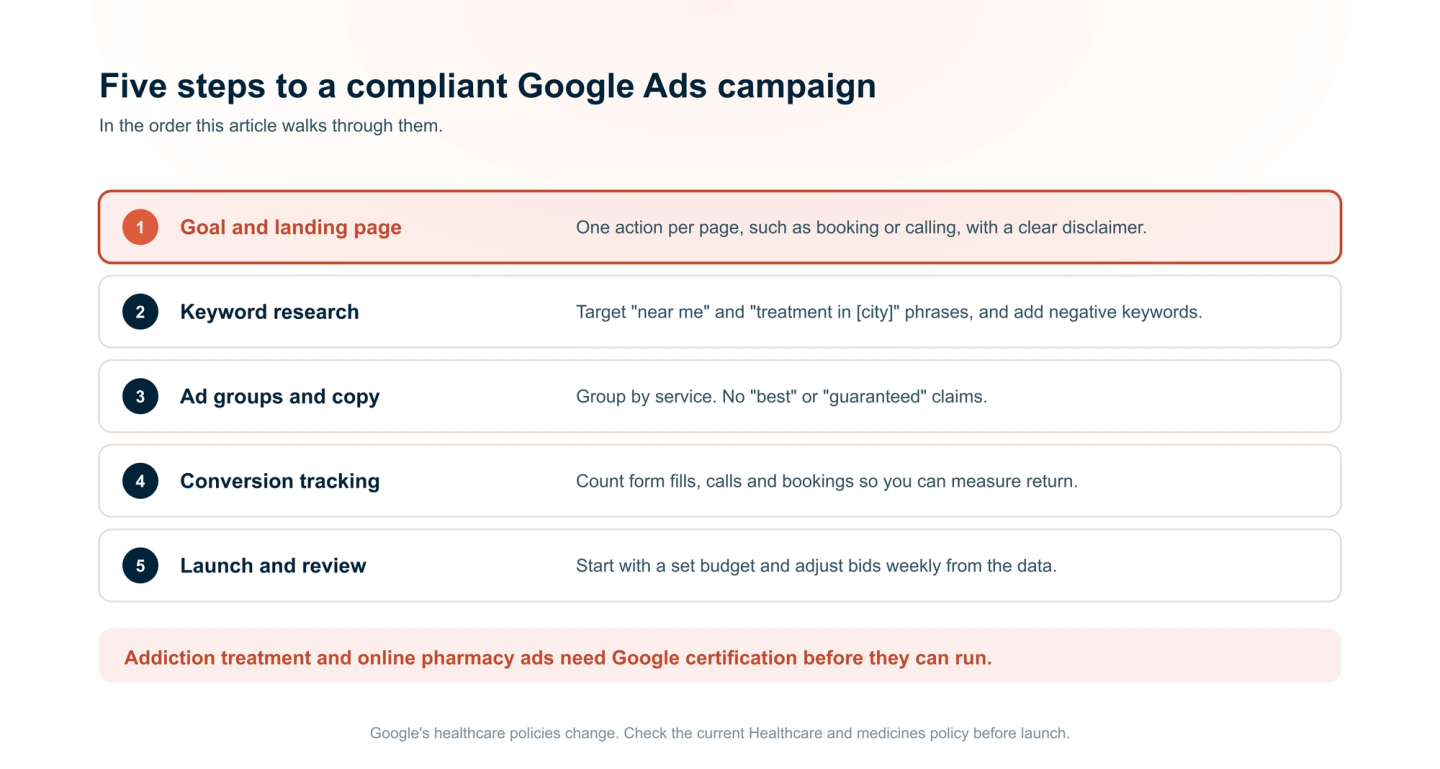
- Define Your Goal and Landing Page: Decide what action you want patients to take (e.g., book an appointment, call your office). Create a dedicated landing page that is compliant, includes a disclaimer, and has a clear call to action.
- Conduct Keyword Research: Target high-intent phrases like "[service] near me" and "[condition] treatment in [city] or [suburb]". Use negative keywords to exclude irrelevant searches like "free" or "jobs".
- Build your Ad Groups and Write Compliant Ads: Organize campaigns into ad groups. Avoid superlatives like "best" or "guaranteed". Focus on benefits and include a clear call to action.
- Set Up Conversion Tracking: Without tracking, you cannot measure ROI. Set up goals in Google Analytics to track form submissions, phone calls, and appointment bookings.
- Launch and Monitor: Start with a set budget and review your campaign weekly and adjust bids on performance data.
Conclusion
Google Ads can bring a practice new patients, but it only works if you follow strict healthcare policies and understanding real CPC benchmarks. A compliance‑first approach, combined with a well‑structured campaign, can deliver a strong return on investment.