
Free for a week, then $19 for your first month
Template

Case Notes Template

Discover practical Case Notes templates to enhance your documentation efficiency.

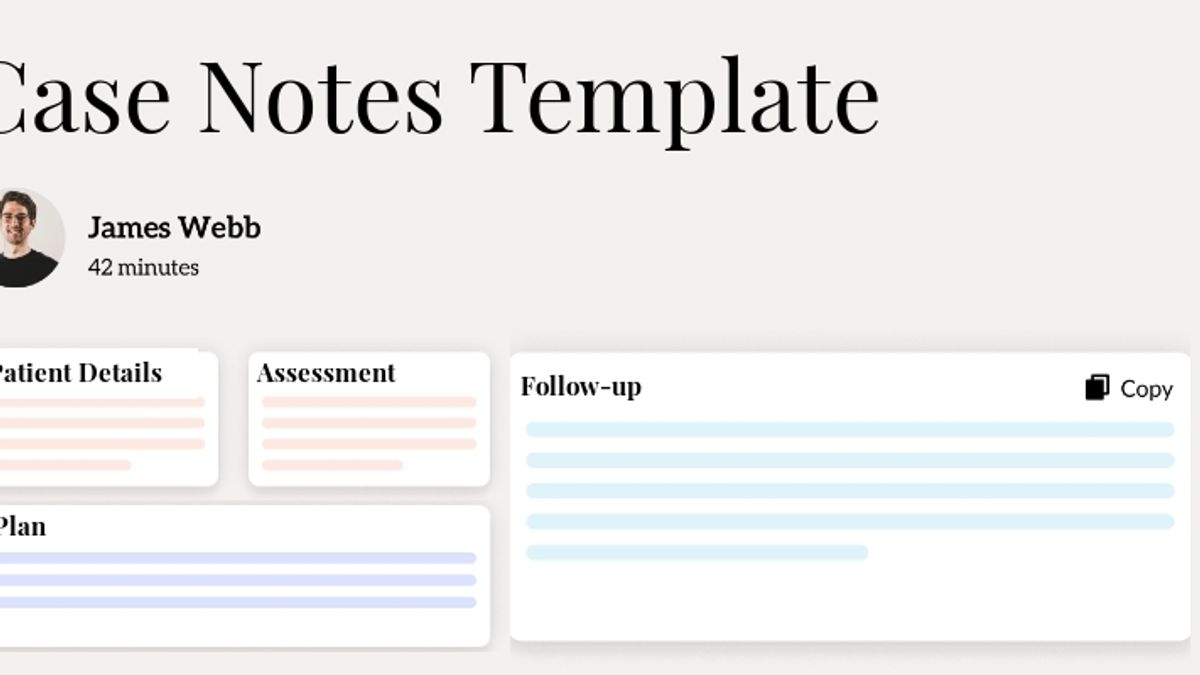
Case Notes Template Hero Image

Are you tired of sifting through endless pages of disorganized medical records? You’re not alone. The chaos of scattered notes can make even the most seasoned healthcare professional feel overwhelmed. Thankfully, the Case Notes Template is here to bring order to the chaos, ensuring that all essential information is at your fingertips. Get ready to transform your documentation process and see how this template can make your life easier.

What Is a Case Notes Template?

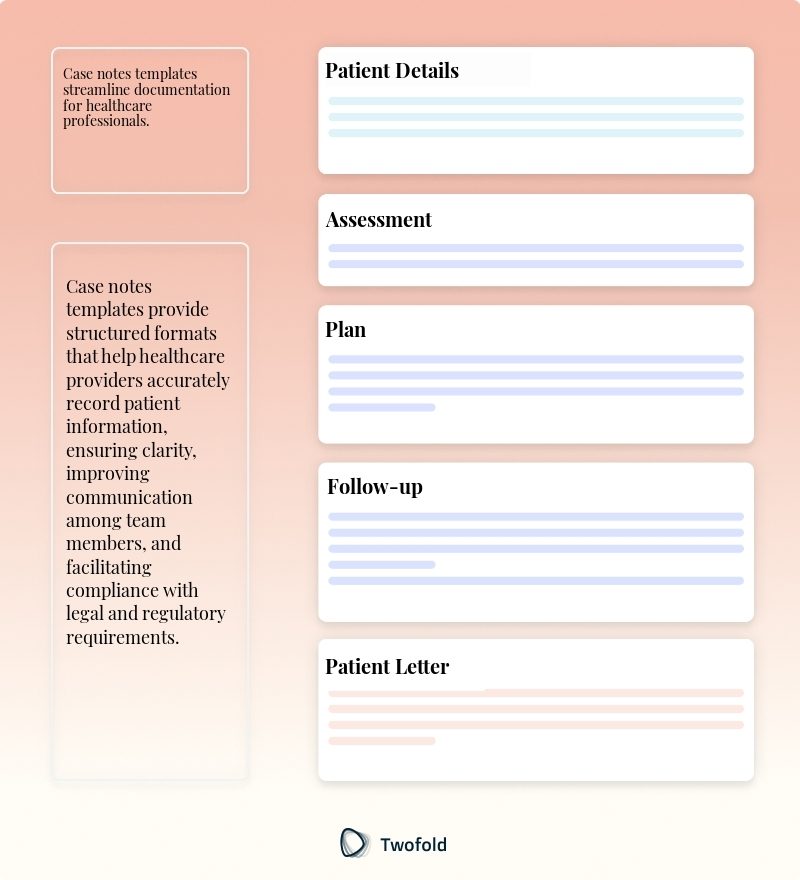
A Case Notes Template is a structured format used by healthcare professionals to document patient interactions, treatments, and progress. It acts as a consistent framework, ensuring that vital information is recorded systematically and efficiently.

These templates are designed to streamline the documentation process in clinical settings, helping practitioners maintain clarity and continuity in patient care. They improve communication among healthcare team members and ensure compliance with legal and medical standards.

Key Components of a Case Notes Template

The Case Notes Template features several key components that encompass the essential details of patient care:

  • Patient Identification Information
  • Date and Time of Encounter
  • Reason for Visit
  • Observations and Findings
  • Diagnosis and Assessment
  • Treatment Plan and Interventions
  • Outcome and Follow-Up Recommendations
Key Components of Case Notes Template

How to Use a Case Notes Template: Step-by-Step Process

  1. Enter the patient’s identification details at the top of the template.
  2. Record the date and time of the encounter to establish a timeline.
  3. Document the reason for the patient’s visit succinctly.
  4. Note down any observations and clinical findings.
  5. Provide a clear diagnosis and assessment based on findings.
  6. Outline the treatment plan and any interventions applied.
  7. Conclude with the outcome of the visit and recommendations for follow-up.

Benefits of a Case Notes Template

Benefit

Description

Consistency

Uniform structure ensures consistent documentation across encounters.

Efficiency

Reduces time spent on documentation, allowing more focus on patient care.

Communication

Enhances communication clarity within healthcare teams through standardization.

Compliance

Ensures adherence to legal and medical documentation standards.

Improved Patient Care

Facilitates quick review of patient history, leading to better care decisions.

Stakeholders in Case Notes

Several stakeholders benefit from well‑structured case notes:

  • Healthcare Providers: For instance, a physician relies on detailed notes to provide consistent and informed care to their patients.
  • Patients: Patients gain assurance knowing that their care is meticulously documented, ensuring continuity across visits.
  • Regulatory Bodies: Accurate notes help satisfy legal documentation requirements, as seen when auditors review patient records for compliance.
  • Insurance Companies: Insurance claims are processed efficiently with clear and complete information in case notes.

Example of a Case Notes Template

Here’s an illustrative breakdown of how a Case Notes Template can be structured for clarity and ease of use.

See Template Example

Real-World Use Cases: Practical Impact of the Case Notes Template

The Case Notes Template plays a vital role in real‑world healthcare settings:

  • General Medicine: A general practitioner in a bustling clinic uses the template to quickly jot down critical points during a hectic day, significantly improving their efficiency.
  • Emergency Room: An emergency room nurse finds that these structured notes help streamline patient handovers, reducing errors and enhancing care quality.
  • Hospice: A hospice care worker leverages the template to ensure family members are informed consistently about the patient's care journey.

Conclusion

The Case Notes Template offers a clear, organized approach to medical documentation. It enhances efficiency, consistency, and compliance, all while improving patient care delivery. By following the expert tips and using the structured format, healthcare professionals can maximize the benefits of this invaluable tool, ensuring seamless communication and documentation across medical settings.

Disclaimer: This article is for informational purposes only and does not constitute legal or medical advice. Always consult professional guidelines and regulatory bodies for specific compliance requirements.

FAQ

Frequently asked questions

  • How should a Case Notes Template be customized for multidisciplinary teams?

    When customizing a Case Notes Template for multidisciplinary teams, consider incorporating sections that accommodate input from various specialties, ensuring that each professional can capture role‑specific details.

    Add fields that track collaborative decisions, shared goals, and integrated care plans, allowing for seamless coordination among team members.

    Implement customizable tags or headers that identify contributions from different disciplines to maintain clarity and accountability in complex cases.

  • What are the best practices for documenting telemedicine consultations in a Case Notes Template?

    For telemedicine consultations, ensure your Case Notes Template includes a section to record the mode of communication (e.g., video, phone), and technical considerations or challenges faced during the session.

    Detail peculiarities of non‑physical examination findings, such as visual assessments or patient‑reported outcomes, and clearly annotate limitations encountered due to remote diagnosis.

    Include additional consent verification steps specific to telehealth, ensuring compliance with evolving regulatory standards for virtual care.

  • How can a Case Notes Template accommodate complex care plans involving multiple chronic conditions?

    When documenting complex care plans for patients with multiple chronic conditions, design your template to prioritize comprehensive yet concise summaries of each condition and its current management status.

    Integrate sections for tracking medication regimens, interactions, and adherence across diseases, and provide space for long‑term management goals and periodic reassessment intervals.

    Embed alerts or reminders for follow‑up on critical interventions or updates, and use visual aids like charts or timelines to help visualize the multidisciplinary approach to such intricate care management.