

Free for a week, then $19 for your first month
Template

Medical Release Form Template

Discover practical Medical Release Form templates to enhance your documentation efficiency.

Medical Release Form Template Hero Image

Have you ever found yourself tangled in the complexities of obtaining or granting permission to access medical records? The medical release form template is often an unsung hero in keeping healthcare processes seamless, yet many struggle with using it effectively. Let's explore the nuances that will make your documentation experience smooth and straightforward.

What Is a Medical Release Form Template?

A medical release form template is a pre‑structured document that facilitates the consent process for disclosing a patient's medical information. It serves as a bridge between healthcare providers and patients, ensuring compliance with privacy laws like HIPAA.

This template standardizes the way data is shared, offering a form that both patients and institutions can trust. It embodies legal and ethical guidelines, streamlining the authorization process.

Key Components of a Medical Release Form?

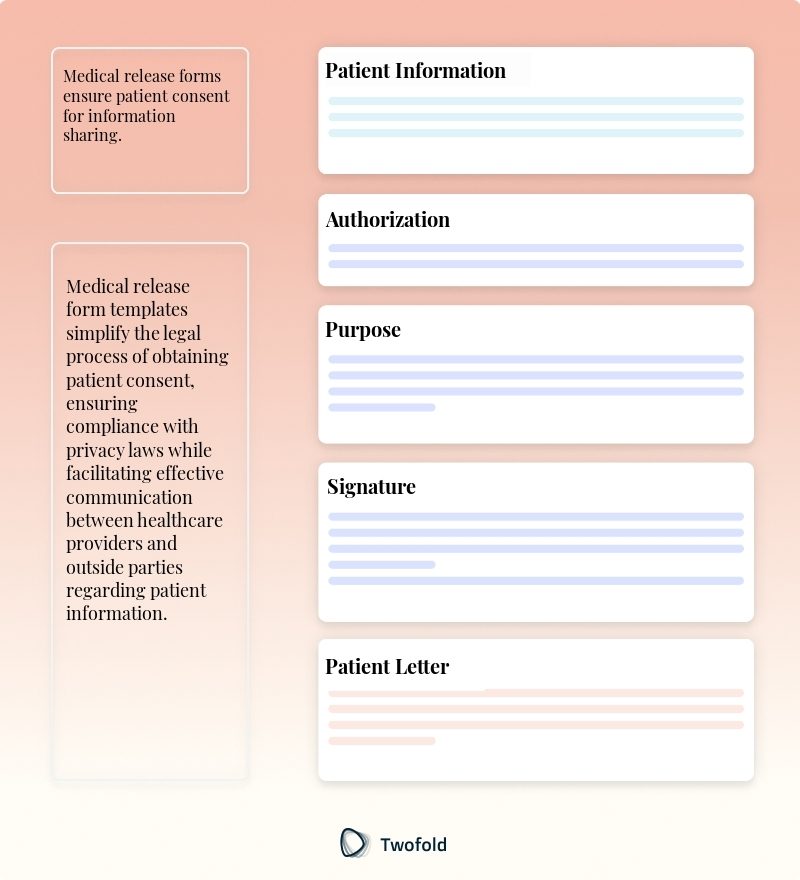
Each section of a medical release form provides vital information:

  • Patient Information: Full name, address, and contact details.
  • Recipient Information: Details of the entity authorized to receive the information.
  • Information to be Disclosed: Specific data or medical records being shared.
  • Purpose of Disclosure: Reason for sharing the information, like medical care or insurance.
  • Expiration Date: Date upon which the consent is no longer valid.
  • Signatures: Patient's or legal representative's authentication of consent.
Key Components of Medical Release Form Template

How to Use a Medical Release Form Template: Step-by-Step Process

Step 1: Download the Template

Begin by downloading a reputable medical release form template that aligns with your needs.

Step 2: Fill Out Patient Information

Enter the complete and accurate details of the patient, ensuring that this section is free of errors.

Step 3: Specify Information to be Disclosed

Clearly outline the medical information or records that the form covers, leaving no room for misinterpretation.

Step 4: Declare the Purpose

State explicitly why the information is being shared to ensure clarity and consent.

Step 5: Set an Expiration Date

Define when the permission will expire to maintain legal and ethical boundaries.

Step 6: Authenticate the Form

Both patient and recipient must sign the form. Consider using digital signatures for speed and security.

Benefits of a Medical Release Form

Benefit

Description

Legal Compliance

Ensures adherence to privacy laws like HIPAA.

Process Efficiency

Streamlines the documentation process, saving time.

Error Reduction

Prevents miscommunication between parties involved.

Patient Trust

Enhances trust through transparent and regulated procedures.

Stakeholders in Medical Release Form

Various stakeholders benefit from the structured use of a medical release form:

  • Patients: John, a patient, needs to authorize his doctor to share records with his new healthcare provider seamlessly.
  • Healthcare Providers: Dr. Amy uses the form to quickly get access to a patient's previous medical history, aiding in faster diagnosis.
  • Insurance Companies: Jane at HealthCare Insurance requires authorization forms to process claims accurately.
  • Legal Representatives: Mark, a lawyer, helps clients safeguard their information with proper documentation in legal disputes.

Example of a Medical Release Form

This template serves as a foundational document that can be tailored for both routine procedures and specialized circumstances.

See Template Example

Real-World Use Cases: Practical Impact of the Medical Release Form Template

These scenarios highlight the template's impact in healthcare settings:

  • Emergency Situations: Maria's quick access to her previous medical conditions prevented potential allergies during urgent treatment.
  • Family Care Coordination: Tom's consent allowed his daughter to manage his health records, ensuring continuity in care as he aged.
  • Educational Context: A student studied abroad and needed medical records to move seamlessly into a new healthcare system internationally.

Conclusion

The medical release form template is an essential tool that maintains order and compliance in healthcare. It reduces paperwork errors and enhances trust through clear, standardized processes. With its thoughtful application, patients and providers achieve smoother communication and enhanced healthcare delivery.

Disclaimer: This article is for informational purposes only and does not constitute legal or medical advice. Always consult professional guidelines and regulatory bodies for specific compliance requirements.

FAQ

Frequently asked questions

  • How do you handle medical release forms when there are multiple caregivers involved in a patient's treatment?

    In scenarios where multiple healthcare providers are involved, a comprehensive strategy is necessary to maintain clarity and prevent data fragmentation.

    Consider implementing a centralized consent management system where updates can be made seamlessly visible to all involved parties. This ensures that all caregivers have the same access to the authorized data, promoting a unified care approach.

    Additionally, stipulate in the form the specific circumstances under which each provider can access the data, and ensure regular updates to everyone's access rights to reflect changes in the care team composition.

  • What is the best practice for managing expired or revoked consents in medical release forms?

    Expired or revoked consents should be systematically tracked and managed to ensure compliance with legal requirements and patient privacy expectations.

    Implement a periodic review system that automatically flags and alerts relevant parties when a consent's expiration date is nearing or has passed. This helps in reassessing the need for continued access or renewals if necessary.

    For revoked consents, maintain a log that records the date and reason for revocation, and immediately halt data access while informing all parties to prevent unauthorized access.

  • How do you address discrepancies when a patient's intended recipient of information disagrees with the information outlined in the medical release form?

    Discrepancies between the patient’s intentions and the recipient’s understanding can lead to significant issues and delays in care.

    Before execution, ensure a verbal or documented agreement on what will be disclosed, minimizing the risk of disagreements. A pre‑release consultation can facilitate this alignment.

    Should a conflict arise, utilize a mediation process involving a patient advocate or legal counsel to resolve misunderstandings and re‑affirm consent specifications. Documentation of all interactions can serve as a reference to prevent such mismatches.