


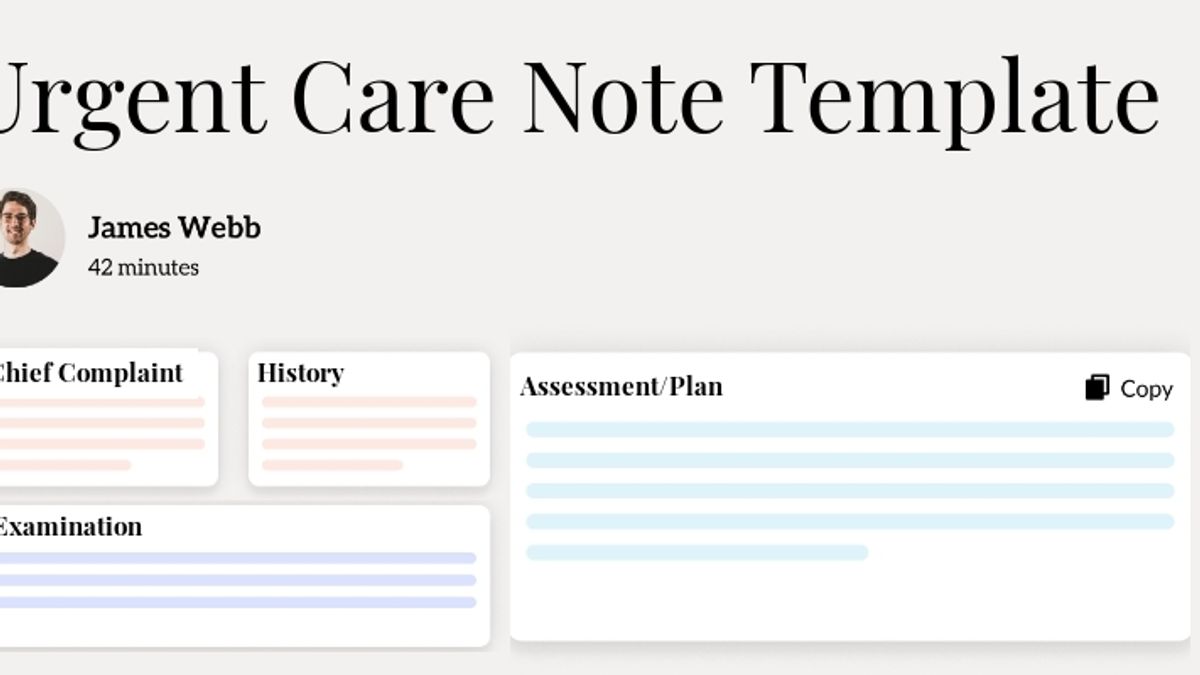
Welcome to the world of medical documentation, where each note can make the difference between clarity and confusion. Today, we'll explore the Urgent Care Note Template, a powerful tool in a clinician's arsenal. If you've ever wondered how to improve the efficiency and accuracy of your urgent care documentation, you're in the right place. This tool helps streamline the complex process of capturing critical patient data quickly.
What Is an Urgent Care Note Template?
An Urgent Care Note Template is a structured guide used by healthcare professionals to document patient visits efficiently in urgent care settings. It provides a uniform structure that ensures no essential information is missed during or after a consultation.
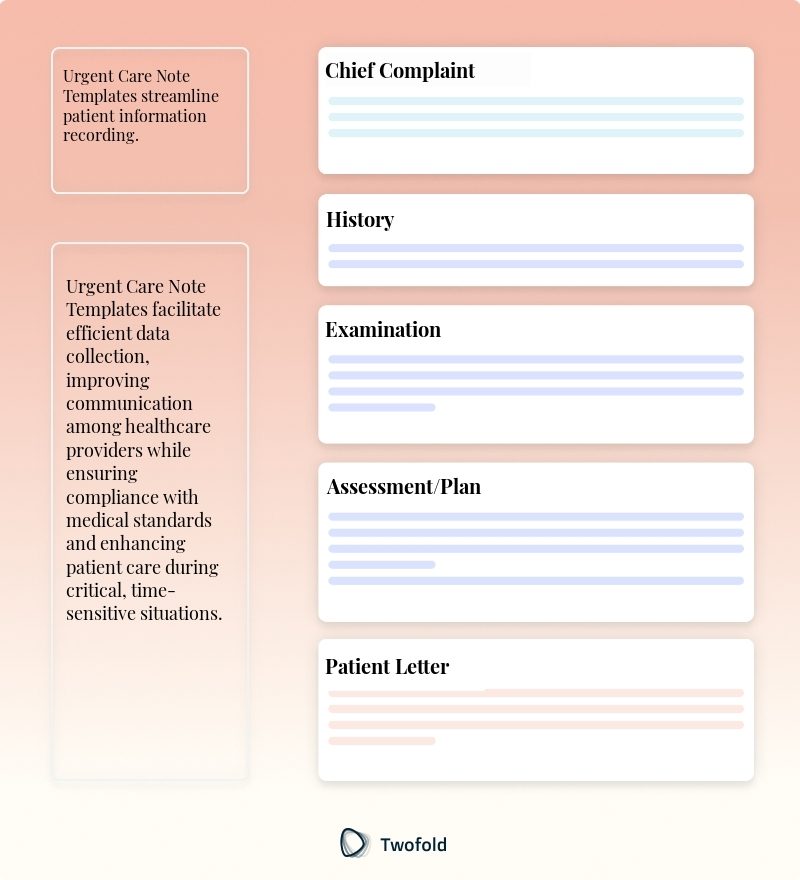
The template typically includes sections such as patient information, presenting complaint, medical history, examination findings, and treatment plans. By maintaining a consistent format, it ensures continuity of care and helps other providers quickly understand a patient's medical narrative.
Key Components of an Urgent Care Note
To effectively capture patient encounters, an Urgent Care Note must include:
- Patient Information: Basic demographic and identifying data.
- Chief Complaint: The primary reason for the visit.
- Medical History: Relevant health history that informs current conditions.
- Physical Examination: Observations and findings from the examination.
- Assessment and Plan: Diagnosis and subsequent treatment plans.
- Discharge Instructions: Guidance provided to the patient upon discharge.
How to Use an Urgent Care Note Template: Step-by-Step Process
- Gather Patient Information: Collect demographic and contact details before the consultation begins.
- Record the Chief Complaint: Note the patient's main reason for seeking urgent care.
- Update Medical History: Ask about recent health issues and pertinent history.
- Conduct Physical Examination: Perform and document physical exam findings.
- Provide Assessment and Plan: Document your clinical assessment and outline the treatment or intervention.
- Draft Discharge Instructions: Provide clear post-visit guidance tailored to the patient’s needs.
Benefits of an Urgent Care Note
Benefit | Description |
|---|---|
Efficiency | Speeds up the documentation process, allowing more time for patient interactions. |
Consistency | Provides a uniform structure for records, aiding clarity and understanding across medical teams. |
Compliance | Helps meet documentation standards and legal requirements. |
Continuity | Ensures seamless patient care with comprehensive, accessible records. |
Stakeholders in Urgent Care Note
Various professionals rely on well‑documented urgent care notes for effective patient management:
- Doctors: Use the notes to quickly review patient history, ensuring informed diagnoses. For example, Dr. Smith uses these notes to track a patient's recurring symptoms accurately.
- Nurses: Rely on detailed notes for administering proper follow-up care. Nurse Lopez checks them before administering medication to verify allergies.
- Administrative Staff: Ensure records are complete and coded for billing processes. Admin assistants use them to verify that all necessary billing codes correspond with documented treatments.
- Patients: Benefit from clear discharge instructions that promote understanding of their care plan. Ms. Johnson reads her discharge notes precisely to manage her prescription regimen.
Example of an Urgent Care Note
Urgent care notes typically begin with the patient's reason for visit, followed by history and physical examination findings to conclude with an assessment and plan.