



Picture this: you're staring at an empty workout planner template, and you're wondering how on earth you'll fit all those medical codes into a comprehensive plan. Confused and overwhelmed by the myriad of codes, it feels like an unsolvable puzzle. You're not alone; many healthcare professionals face this same challenge when managing their workout documentation. That's why you're here, and you're in luck—this blog holds the key to turning your tangled coding conundrum into a seamless, organized system.
What Is a Workout Planner Template?
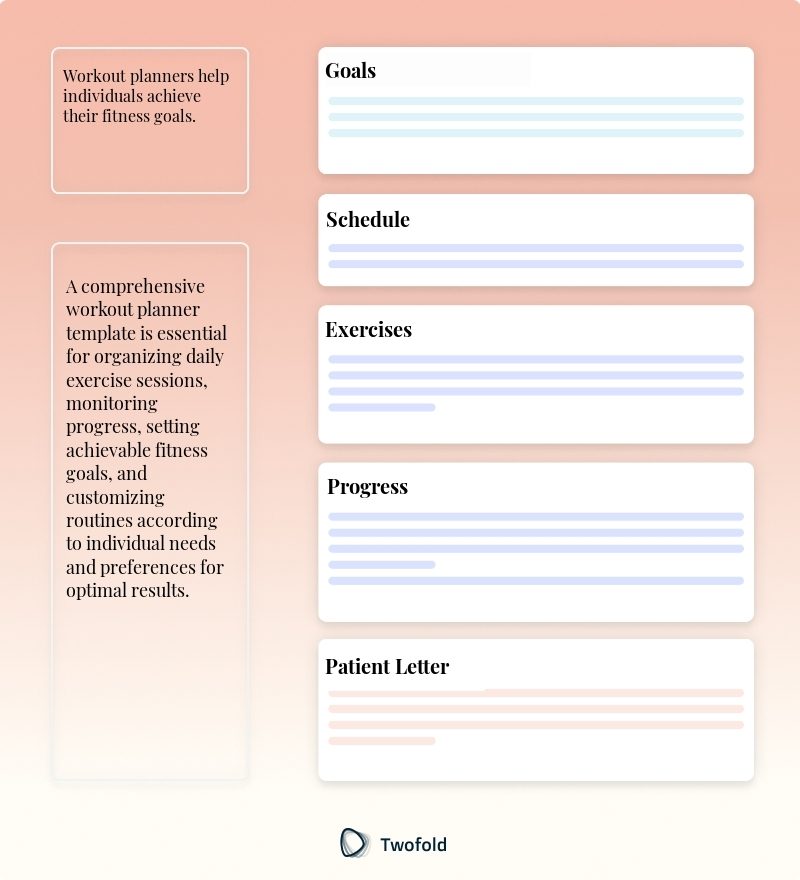
The Workout Planner Template in medical coding is a structured document used to organize and track the exercises prescribed to patients or clients. It encompasses essential codes that relate to various physical activities and their relevance to health outcomes.
This template enables healthcare professionals to document workout regimens systematically, ensuring standardized recording and reporting. Using this template, practitioners can effectively communicate exercise plans to colleagues and stakeholders.
Key Components of a Workout Planner
The key components of a Workout Planner include crucial fields necessary to record specific workout plans.
- Patient Information: Name, age, and contact details.
- Exercise Codes: Codes linked to specific physical activities.
- Exercise Schedule: Frequency, duration, and timing of workouts.
- Health Indicators: Measurements like heart rate or calorie count.
- Special Considerations: Any adjustments based on patient health conditions.
- Notes: Space for additional comments or observations.
How to Use a Workout Planner Template: Step-by-Step Process
Step 1: Input Basic Patient Information
Start by entering the patient's basic information to personalize the workout plan.
Step 2: Select Appropriate Exercise Codes
Choose codes that align with the prescribed workouts, consulting coding manuals if necessary.
Step 3: Create an Exercise Schedule
Plan out the exercise frequency and duration to fit within the patient’s constraints and goals.
Step 4: Monitor Health Indicators
Record any pertinent health measurements to track the impact of the workout regimen.
Step 5: Add Additional Notes
Include specific instructions or modifications tailored to the individual's requirements.
Benefits of a Workout Planner
Benefit | Description |
|---|---|
Efficiency | Streamlines the workout planning process, saving time. |
Consistency | Ensures all professionals follow the same protocol. |
Accuracy | Reduces errors in reporting exercise codes. |
Communication | Improves clarity of instructions for patients and caregivers. |
Stakeholders in Workout Planner
Various stakeholders are involved in a workout planner, each with a unique role and perspective.
- Healthcare Providers: Such as physiotherapists, who use these templates to document exercise routines for recovering patients.
- Fitness Trainers: Develop targeted workout plans based on medical conditions for their clients.
- Patients: Provide input on personal precautions and preferences, ensuring personalized care.
- Insurers: Use the documented codes to verify exercise-related claims, like rehabilitation programs.
Example of a Workout Planner
Below is a basic example to illustrate the utility of a workout planner in medical coding.