


Ever found yourself tangled in the web of insurance verification? It's a common snag many healthcare professionals encounter. But fear not, because today we're going to untangle those threads with an inside look at the Insurance Verification Form Template. This tool is designed to streamline the verification process, reducing errors and saving time. Let's dive into its ins and outs and discover how you can utilize it effectively.
What Is an Insurance Verification Form Template?
An Insurance Verification Form Template serves as a structured guide for collecting necessary insurance information. It ensures that all aspects of a patient's insurance are confirmed before medical services are rendered.
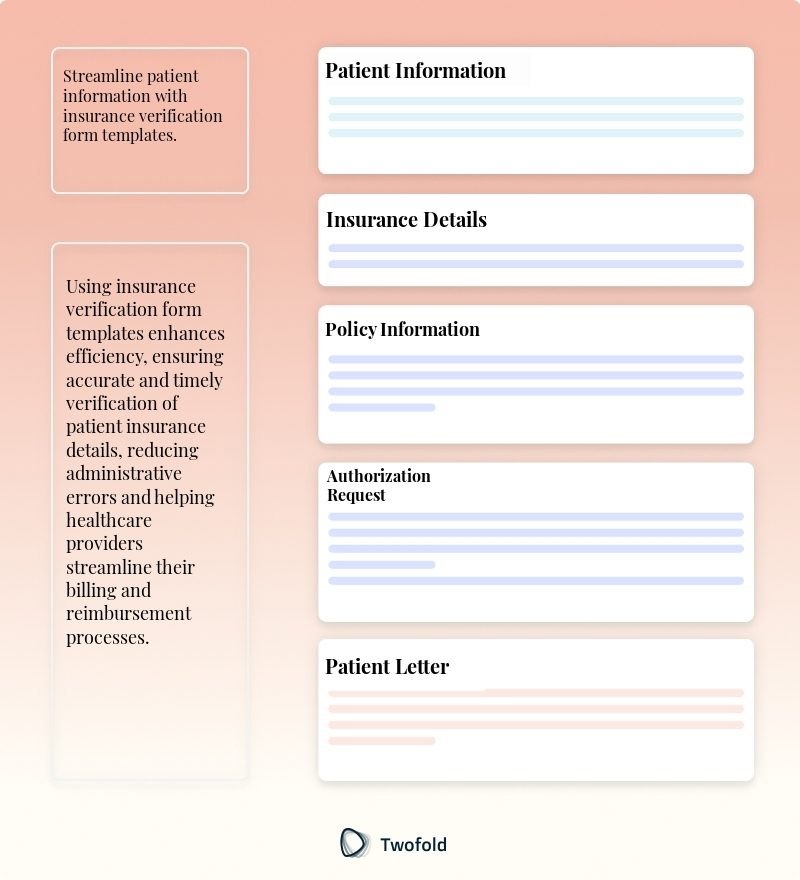
This template aids in the accurate and efficient verification of patient insurance details. By standardizing the process, healthcare providers can reduce errors and optimize their workflow, ensuring patients receive the coverage they are entitled to.
Key Components of an Insurance Verification Form
These components ensure that all necessary insurance details are captured:
- Patient Information: Name, contact details, and identification number
- Insurance Provider Details: Provider name, contact information, and policy number
- Coverage Information: Types of coverage, limits, and exclusions
- Effective Dates: Start and end date of the insurance policy
- Authorization Requirements: Pre-authorization needs and contact for authorization
- Notes and Special Instructions: Any additional information needed for verification
How to Use an Insurance Verification Form Template: Step-by-Step Process
- Gather the patient's basic information and their insurance card.
- Fill in patient details at the beginning of the form.
- Contact the insurance provider using the provided information.
- Verify the extent of coverage, including deductible and co-pay details.
- Document authorization requirements and initiate if necessary.
- Review filled information for accuracy and complete any additional fields.
- Store the completed form securely in the patient's record.
Benefits of an Insurance Verification Form
Benefit | Explanation |
|---|---|
Time-Saving | Reduces the time spent on verifying each patient's insurance manually. |
Error Reduction | Minimizes mistakes by providing a structured format for data entry. |
Standardization | Ensures that all verifications follow the same process, increasing consistency. |
Improved Billing | Facilitates accurate billing by confirming coverage details upfront. |
Enhanced Patient Communication | Allows for better clarity when discussing coverage and potential out-of-pocket costs with patients. |
Stakeholders in Insurance Verification Form
Several key players rely on the accuracy of these forms:
- Healthcare Providers: They depend on accurate insurance verification to ensure proper reimbursement. For example, a physician might reduce unnecessary treatment delays with verified coverage details.
- Patients: Save on unexpected expenses when their coverage details are confirmed. Imagine a patient being informed upfront of their deductible, preventing surprise bills.
- Insurance Companies: Ensure claims are valid and reduce fraudulent claims through consistent verification processes. Insurers use this data for accurate claim assessment.
- Administrative Staff: Streamline workflow and reduce workload with a standardized process. A medical secretary can swiftly handle verifications with readily available templates.
Example of an Insurance Verification Form
When you receive an insurance card and fill out the verification fields, you're actively using this form to confirm coverage efficiently.