


Brief Answer
Use one primary note format, write inside a five minute timer, and capture high signal details while the session is fresh. Document three things well every time: what changed, what you did, and what happens next. A short spoken summary or transcript segment can feed an AI scribe so you edit a complete draft rather than start from zero.
The Longer Answer
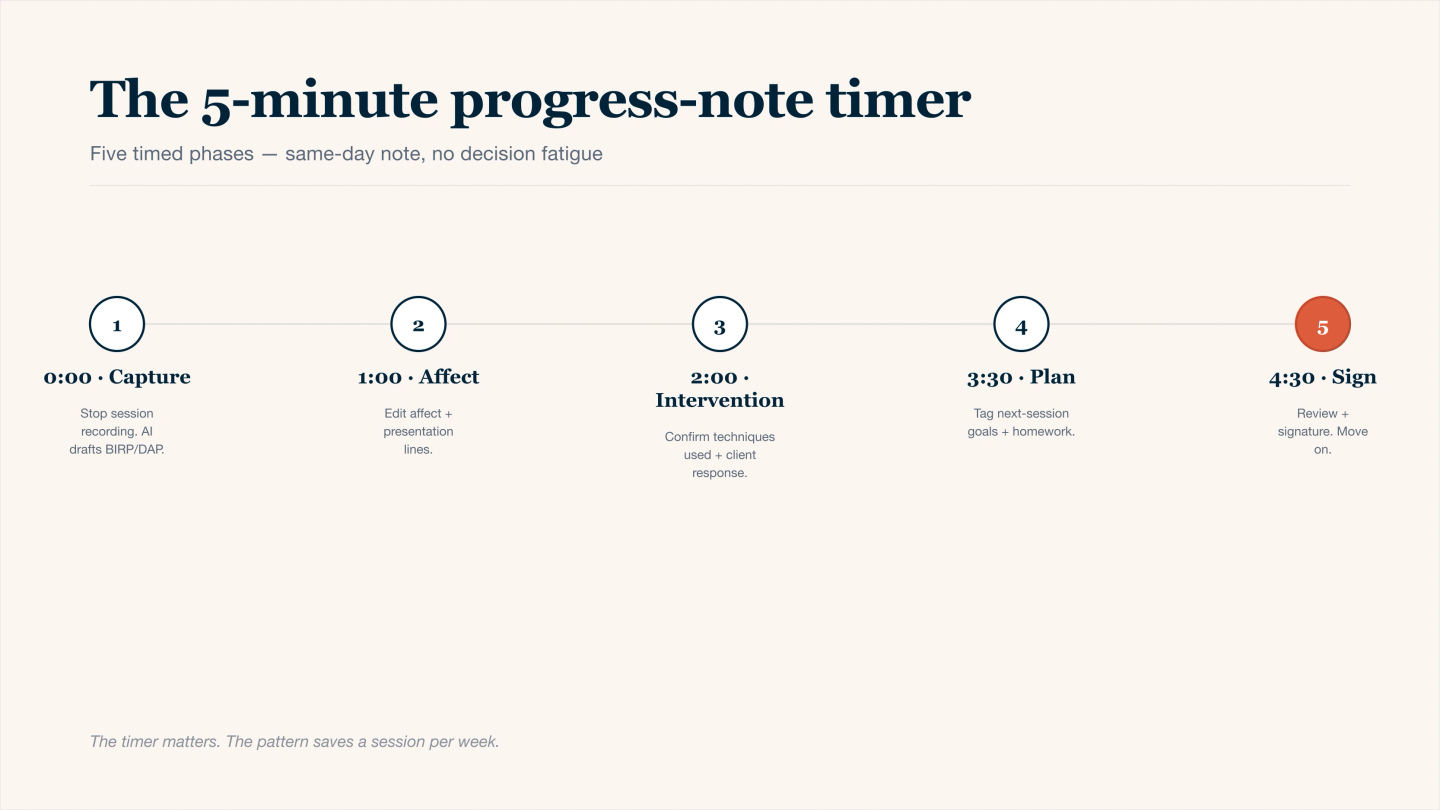
Five-minute progress-note timer — same-day notes, no decision fatigue.
A. The five minute timer checklist
Start the timer. Move top to bottom. Stop when done.
Order | What to fill | One line example |
|---|---|---|
1 | Reason for visit and change since last | "Weekly CBT for MDD. Mood slightly better. Sleep still fragmented." |
2 | Risk screen | "Denies SI or HI. No self harm urges. Safety plan reviewed." |
3 | Interventions this session | "Cognitive restructuring on guilt thought. Behavior activation plan for mornings." |
4 | Response and progress vs goals | "Engaged. Identified distortions independently. Tracking steps toward goal of improved morning routine." |
5 | Medical necessity tie in | "Symptoms continue to impair work attendance. Psychotherapy remains indicated." |
6 | Plan and homework | "Daily 15 min walk before work. Thought record x3. Next session: exposures for avoidance." |
Target: 3 to 6 crisp sentences. If an intake or crisis, allow a longer block.
B. Choose one primary structure and stick to it
Pick SOAP, DAP, or BIRP and keep the same order across clients.
SOAP example micro template
- Subjective: symptom change, function, risk
- Objective: MSE highlights and observable behavior
- Assessment: clinical formulation, progress, medical necessity
- Plan: interventions used, homework, next focus, follow up
BIRP example micro template
- Behavior: key quotes and observable conduct
- Intervention: specific methods used today
- Response: client engagement and effect in session
- Plan: tasks, coping skills, next steps, risk instructions
Save these as pinned templates so you never face a blank page.
C. Phrases that reduce decision friction
Keep a small library of lines you personalize on the fly.
- Medical necessity
"Symptoms continue to impair sleep and work function. Ongoing psychotherapy is indicated to reduce avoidance and improve coping." - Interventions
"Practiced thought challenging on [theme]. Reviewed grounding. Assigned behavior activation with graded steps." - Progress
"Partial progress toward goal. Increased insight into triggers. Maintains use of coping plan during conflicts." - Risk
"Denies SI and HI. No plan or intent. Protective factors include partner support and employment."
D. What not to spend time on
- Long narratives of dialogue
- Rewriting a new tone each week for the same client
- Vague labels like "supportive therapy provided" without linking to goals
- Delaying notes past the same day which multiplies time per note
E. A same day micro workflow
- Last 45 seconds of session: summarize aloud for the client which doubles as your outline.
- Immediately after: open template and drop in three items first
- symptom change and risk
- the main intervention you used
- the homework or next step
- If using AI, paste a short summary or use the capture. Review for accuracy and tighten to five or six lines.
- Sign the note. No carry over.