


On the criteria that matter for psychiatry — mental status exam capture, structured psychiatric notes, EHR fit, and compliance — Twofold ranks first overall for most outpatient psychiatrists and PMHNPs; JotPsych is strong where you need psychiatry‑only template depth, and Mentalyc suits therapy‑leaning practices.
Disclosure: Twofold Health publishes this comparison and is included in the ranking. Tools were last reviewed in June 2026, and we flag where a competitor is the better fit.
How we built this psychiatrist-only list
Between July 2024 and 2026, we scraped every post and comment that mentioned an AI scribe inside r/Psychiatry, r/medicine, r/Residency, and r/therapists. Marketing promos were tossed; only first‑hand, psychiatry‑specific reviews survived. Every quote below links back to its original Reddit thread, so you can verify the context before you demo a product.
How the seven tools score at a glance:
Rank | Tool | Score (/10) | Strength for psychiatry |
|---|---|---|---|
1 | Twofold Health | 9.3 | MSE-ready structured notes, fast drafts |
2 | Freed AI | 8.4 | Fast HPI capture, med-list support |
3 | Nabla Copilot | 8.1 | Real-time transcript with auto-MSE |
4 | Upheal | 7.8 | Session recording with affect timeline |
5 | Mentalyc | 7.6 | Privacy-first upload workflow |
6 | Abridge | 7.5 | Enterprise Epic integration |
7 | DeepScribe | 7.2 | Human-QA accuracy net, slower |
Scores (out of 10) are a weighted blend of note quality, format coverage, EHR fit, HIPAA compliance, and price — weighted for this comparison's criteria. See each tool's section for the detail behind its score.
1. Twofold Health — Built for the Mental-Status-Exam generation
One comment by a Twofold user on the relevant subreddit:
"Twofold Health is a great tool. Very behavioral-health oriented, super easy to get started..." – u/Fit-Astronaut6464
Why does it land at #1 for psychiatrists
- Dedicated MSE fields (appearance, mood, thought content, risk).
- <30-second turnaround—even on clinic Wi-Fi.
- Flat $49/mo (annual) with instant BAA; recordings erased after processing.
- Templates for med-management, psychotherapy, intake, and 99214 follow-up.
- Very customizable note format
- Used by many PMHNP and psychiatrists daily
Caveats
- No direct Epic/Cerner plug-in (copy-paste or PDF export).
- No native tablet support
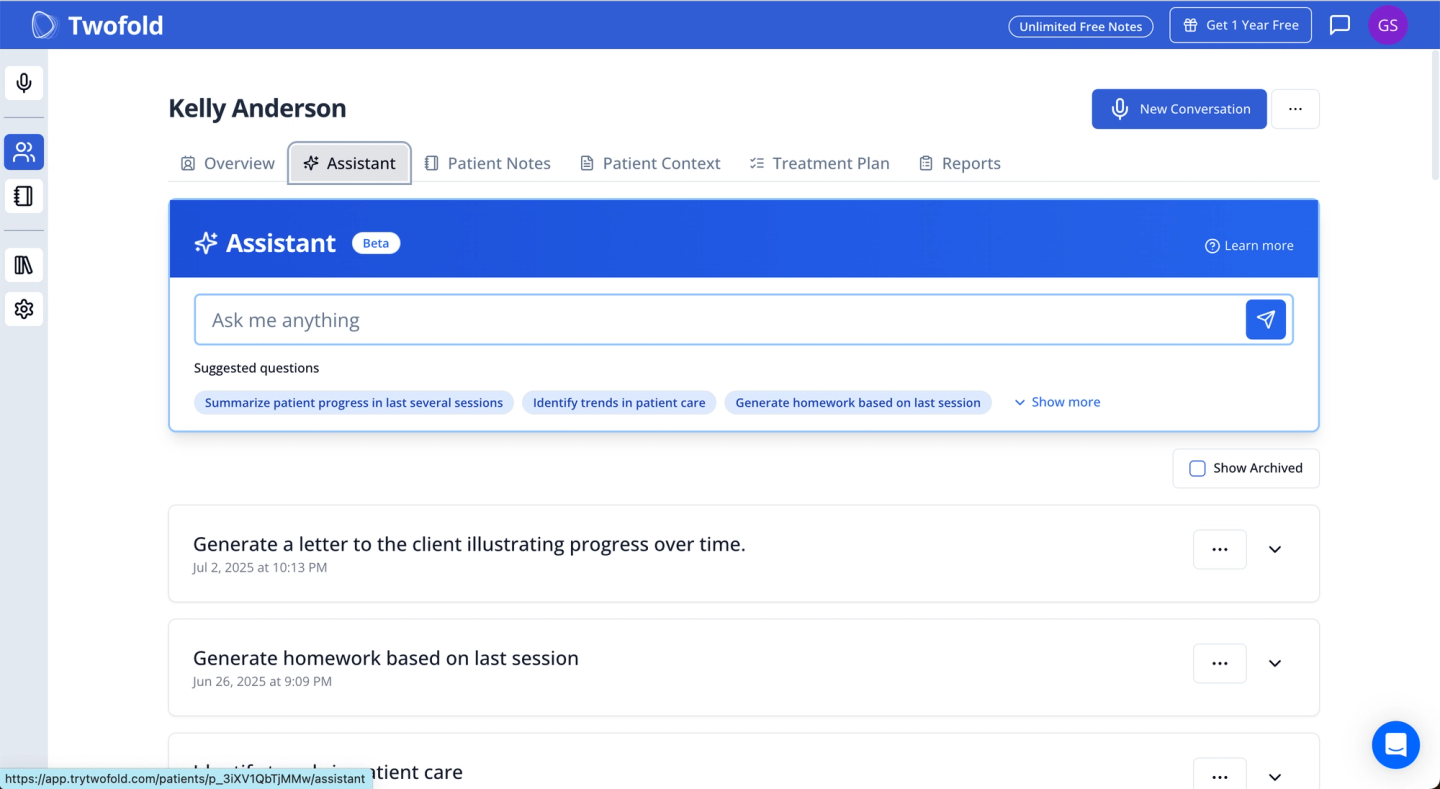
2. Freed AI — Fast HPI capture, decent med-list support
Freed review:
"Freed ... gives a better HPI than Nabla ... basically never attempts to write an MSE if there isn't enough data." – u/gdkmangosalsa
Caveats
- Narrative voice changes between visits, so you'll re-polish.
- Free tier minute cap; no offline capture.
- Slow during peak hours
- Support not responsive
Psychiatry perks
- Medication reconciliation template with dosage fields.
- Flat subscription, no per-minute charges.
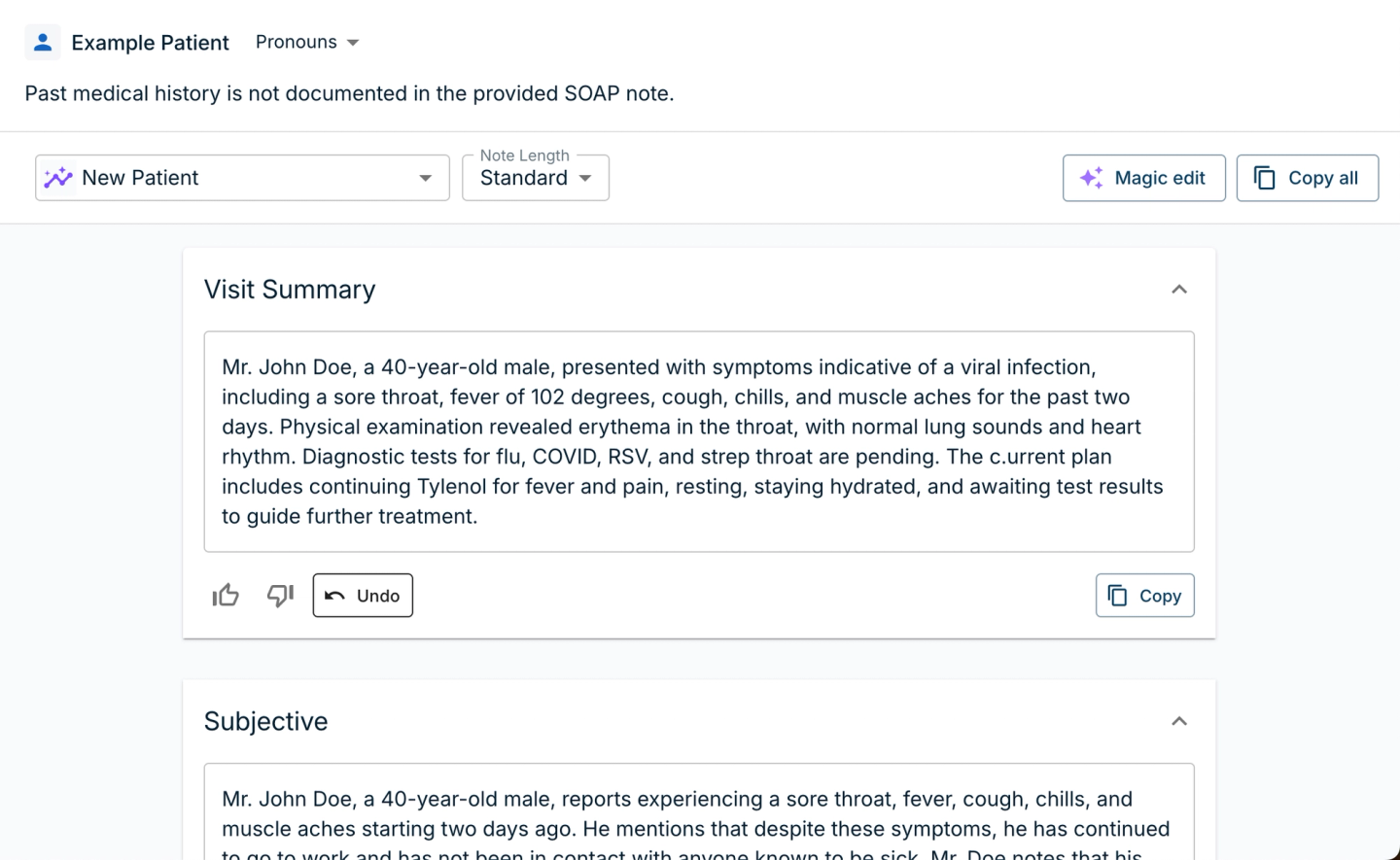
3. Nabla Copilot — Real-time transcript with auto-MSE (needs edits)
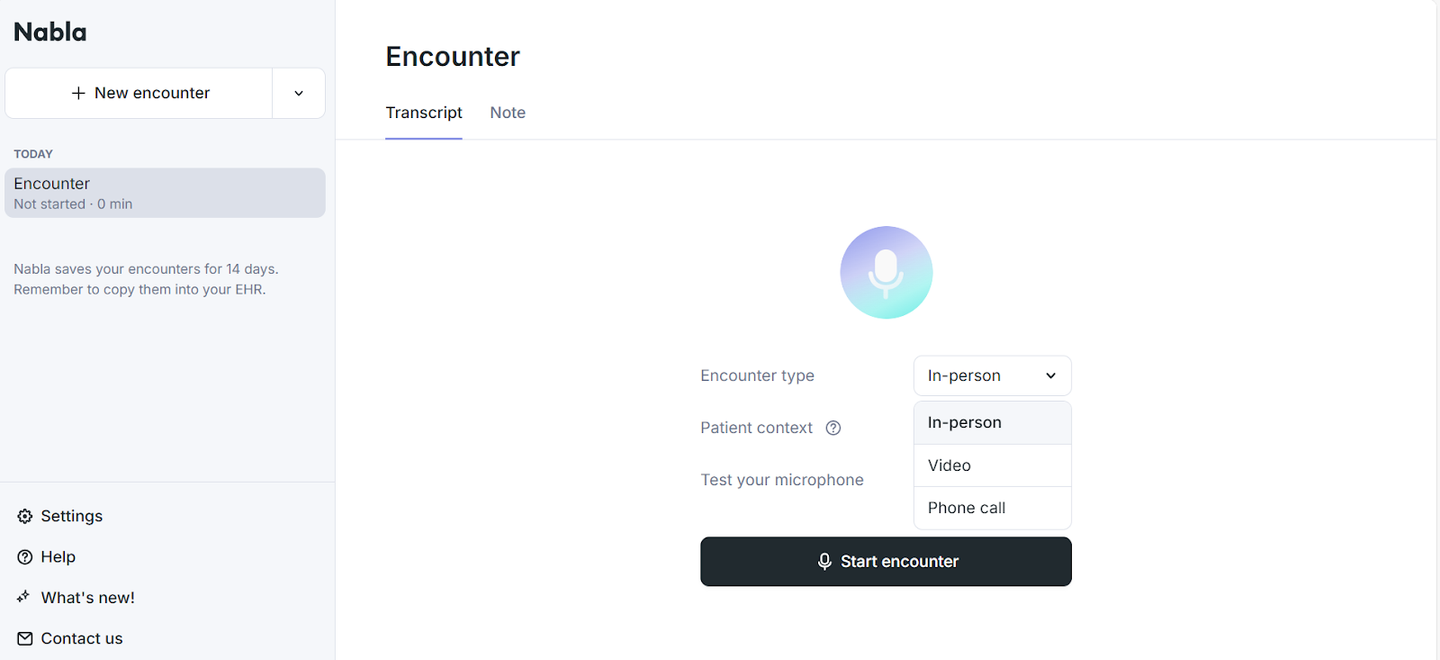
"Nabla shows you a live transcription ... plus a gender-neutral HPI and mental status exam." – same thread
Caveats
- Auto-generated MSE often needs heavy rewriting for nuance.
- Free tier lacks a BAA → HIPAA coverage starts on the paid plan.
- Prompt field clips very long sessions
Psychiatry perks
- Live transcript you can mark up during the encounter.
- Zero-cost starter, great for residents.
- One-click "Generate Note" workflow.
4. Upheal — Session recorder with affect timeline
"I've been using Upheal ... records sessions and spits out SOAP, GIRP, DAP." – u/mindful_therapist
Caveats
- Requires continuous recording and explicit patient consent.
- 10–15 min processing for a 50-min visit.
Psychiatry perks
- Speaker-specific sentiment graph—useful for mood tracking.
- Exports SOAP, BIRP, DAP; therapists and psychiatrists can share one platform.
- Zoom integration for tele-psych.
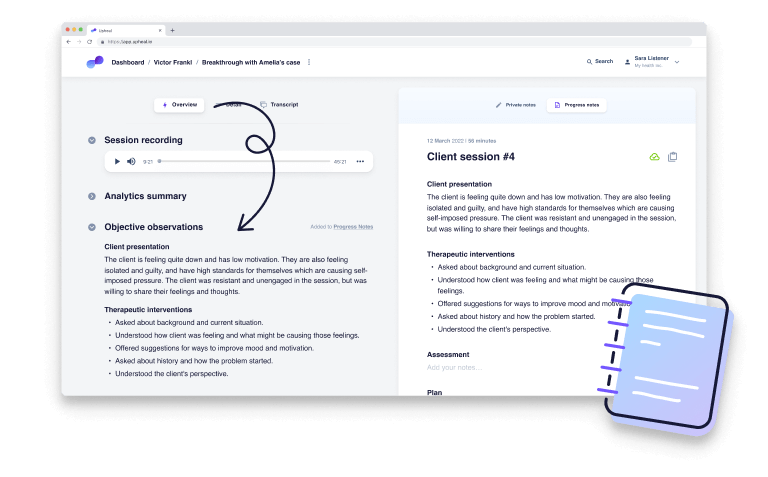
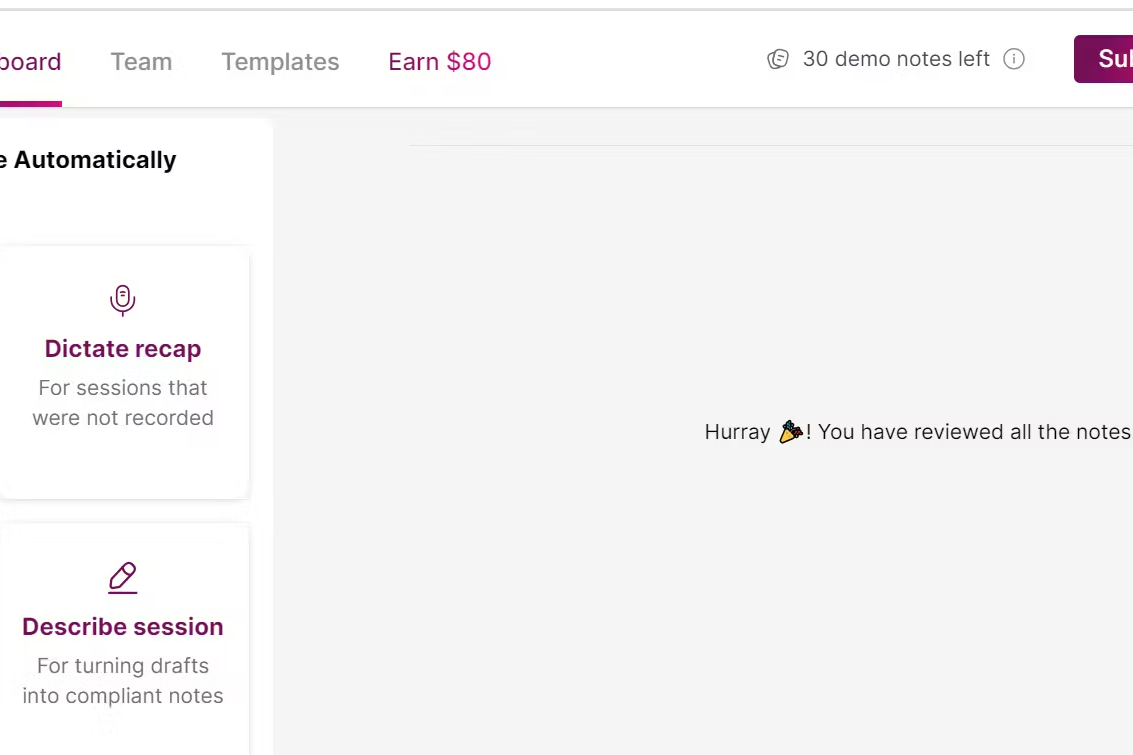
5. Mentalyc — Privacy-first upload for risk-averse prescribers
One Mentalyc users claims:
"I use Mentalyc (≈ 8 months). Overall, I like it. ... it saves me time." - u/EveningPatient4895
Caveats
- Long sessions need file-splitting or an extra fee
- Templates are fixed—limited space for custom MSE headings.
Psychiatry perks
- Audio is anonymised and purged after processing.
- BAA on every paid tier.
- Handy consent template for risky populations.
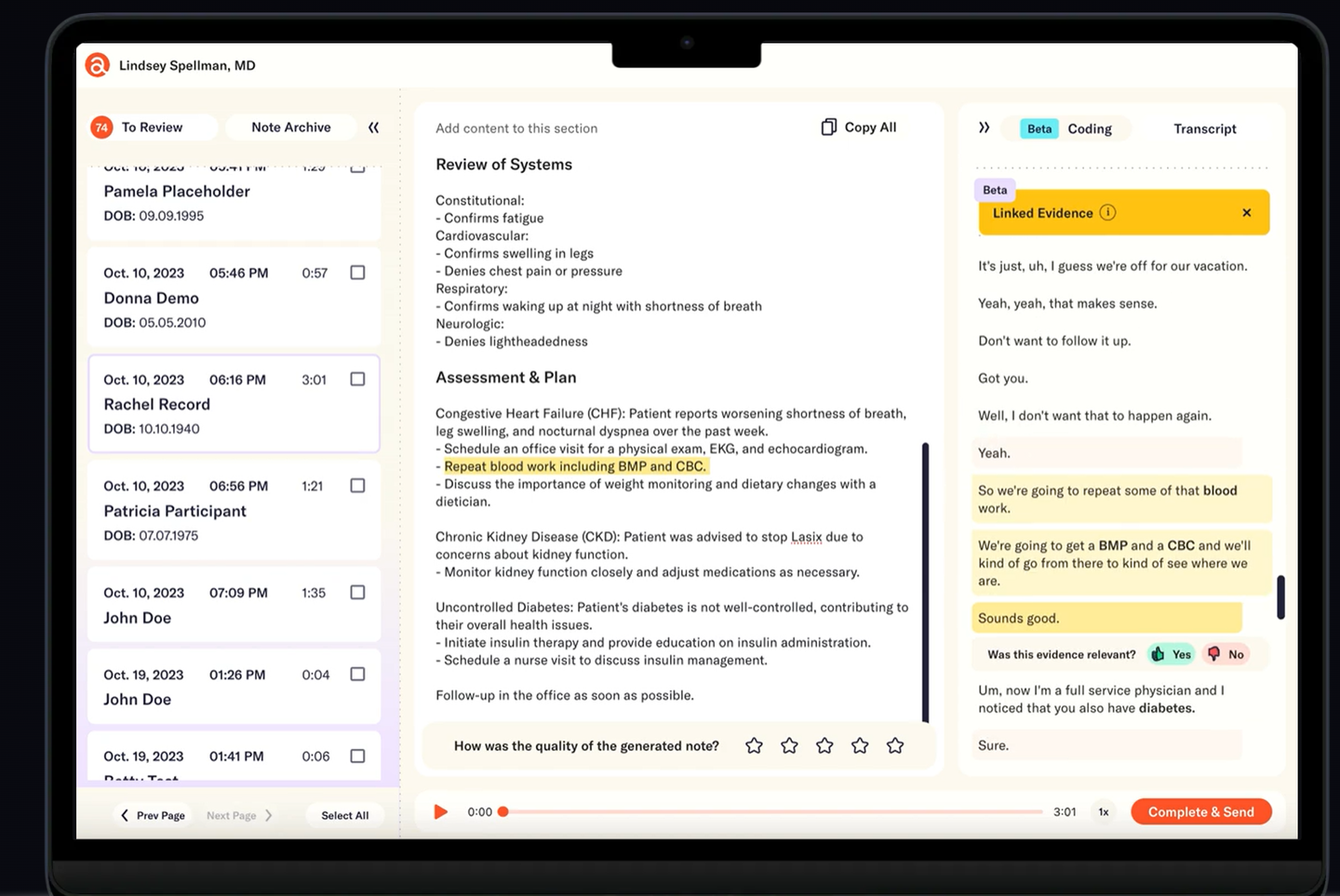
6. Abridge — Enterprise Epic plug-in psychiatrists like in big systems
"If you're in a big system, my colleagues really like Abridge..." – u/anhydrous_echinoderm
Caveats
- 30-day cloud retention window; can be a non-starter for strict orgs.
- Sold to health-system IT; no solo sign-up.
- English & Spanish only
Psychiatry perks
- One-tap launch inside Epic's Haiku/Canto apps.
- Auto-creates patient-friendly visit summaries—great for psycho-education.
- Time-to-note often under two minutes.
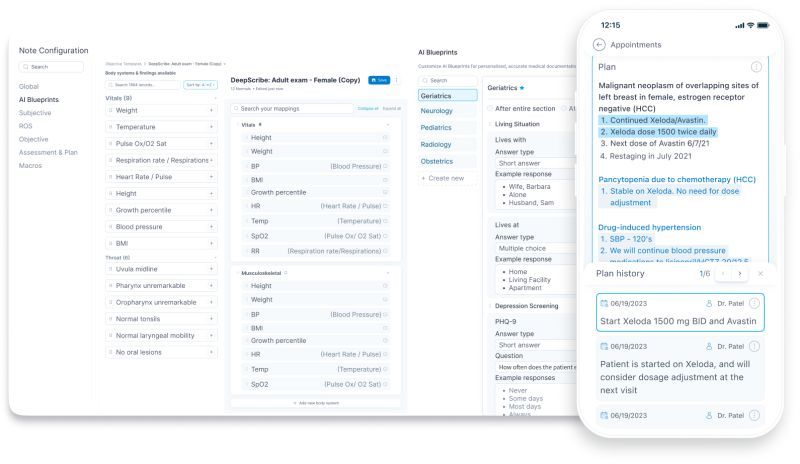
7. DeepScribe — Human-QA safety net (but painfully slow)
"I wouldn't recommend DeepScribe ... note ready only after several hours." — u/Vegetable_Cry133 Reddit
Caveats
- Turnaround depends on a human reviewer—hours, not minutes.
- Notes tend to be verbose; expect pruning.
Psychiatry perks
- An optional human "second set of eyes" for compliance or forensic cases.
- Ambient capture tags interventions and medication changes automatically.
Psychiatrist's quick-pick cheat-sheet
Your non-negotiable | Best bets |
|---|---|
Robust MSE fields | Twofold, Nabla |
Epic Ambient workflow | Abridge, DAX |
Zero long-term audio | Twofold, Freed |
Shoestring budget | Twofold, Mentalyc (mini) |
Human QA safety net | Deepscribe |
Mobile first/on the go dictation | Twofold, Suki |
Fast onboarding/ minimal setup | Twofold, Mentalyc |
Multi-provider/ team collaboration | Freed, Abridge |
Affordable scalability (growing practice) | Twofold, Mentalyc |
Minimal editing required | Twofold, Deepscribe |
Last verified January 2026
Final Verdict for busy psychiatrists
If you juggle complex psychopharmacology, suicide‑risk assessments, and psychotherapy progress in the same visit, Twofold Health stands out: psychiatry‑specific templates, < 30 s drafts, and flat pricing with no long‑term audio storage.
Freed or Nabla shine when cost is king; Abridge and DAX rule Epic‑heavy institutions; Upheal offers rich affect analytics; and Mentalyc wins on iron‑clad privacy. But for most private‑practice psychiatrists searching for the best AI notes psychiatry solution, Twofold remains the safest first pilot.
Can an AI scribe write the mental status exam (MSE)?
Yes — this is exactly where psychiatry‑capable scribes separate from generic ones. Twofold drafts the MSE from observed cues in the session and clinicians report it captures appearance, affect, speech, and thought process reliably; Nabla auto‑generates an MSE that usually needs edits. Generic medical scribes often omit or flatten the MSE entirely, so test this section specifically during a trial before committing.