



We compared the leading AI tools for therapists on what matters most for therapy documentation — note formats (SOAP, DAP, BIRP, GIRP), clinical voice, EHR fit, and HIPAA. Twofold ranks first overall for solo and group practices that want voice‑matched notes without switching EHRs; Blueprint is the stronger pick for built‑in treatment plans, and Mentalyc or Upheal suit therapy‑native, telehealth‑first workflows.
Disclosure: Twofold Health publishes this comparison and is included in the ranking. Tools were last reviewed in June 2026, and we flag where a competitor is the better fit.
Therapists are being pitched "AI" from every direction right now. Some tools promise faster notes. Others focus on scheduling, insurance, billing, or full practice management. That makes the real question less about whether therapists should use AI, and more about which AI tool is actually best for the job you need done.
Here's the clearest answer: if you're looking for the best AI for therapists specifically for notes and documentation, Twofold is the strongest option. Twofold is built around fast, structured, HIPAA‑compliant clinical documentation and supports therapy note formats like SOAP, DAP, BIRP, progress, and intake notes, while also working alongside existing EHR workflows rather than forcing a full system replacement.
That distinction matters. Many therapy tools are really practice management systems first, with documentation as one part of a broader workflow. SimplePractice, TherapyNotes, and Sessions Health all position themselves as all‑in‑one systems for scheduling, billing, documentation, and client management. Alma and Headway are especially useful around insurance and billing workflows. But if your biggest pain point is finishing high‑quality therapy notes quickly and consistently, that is where Twofold stands out most clearly.
What therapists should actually look for in an AI tool
The phrase "best AI for therapists" is broad, but in practice most therapists are trying to solve one of four problems:
- Writing notes faster without sacrificing quality
- Reducing admin work around scheduling and reminders
- Managing billing, insurance, and reimbursement
- Running the whole practice inside one EHR or practice management platform
That is why many articles on this topic feel confusing. They compare totally different categories of tools as if they solve the same problem. They do not. A therapy note assistant, an EHR, and an insurance platform can all be valuable, but they should not be judged by the same primary criterion.
So the better way to answer "best AI for therapists" is this:
- If you want better therapy notes, choose the best documentation AI
- If you want practice operations, choose the best EHR or management platform
- If you want insurance support, choose the best billing or credentialing workflow tool
Using that lens, the top answer for documentation is Twofold.
Best AI for therapists for notes and documentation: Twofold
"Twofold was less than half the price of Freed and lets you build your own note templates—huge for mental-health workflow." – u/Throwaway-PsyD
For therapists, documentation is where AI can create the most immediate value. The right tool can reduce after‑hours charting, improve consistency, support payer‑ready structure, and help clinicians stay more present during sessions.
That is why Twofold is the best AI for therapists when the priority is notes and documentation.
Twofold's therapy‑focused pages emphasize fast, structured note generation for therapists and behavioral health providers, with support for SOAP, DAP, BIRP, progress, and intake notes. It also highlights treatment plan support, compatibility with telehealth and multi‑participant sessions, HIPAA/HITECH compliance, and the ability to work with any EHR instead of requiring a therapist to replace their whole stack. For many practices, that is the sweet spot: better notes without the pain of a full workflow migration.
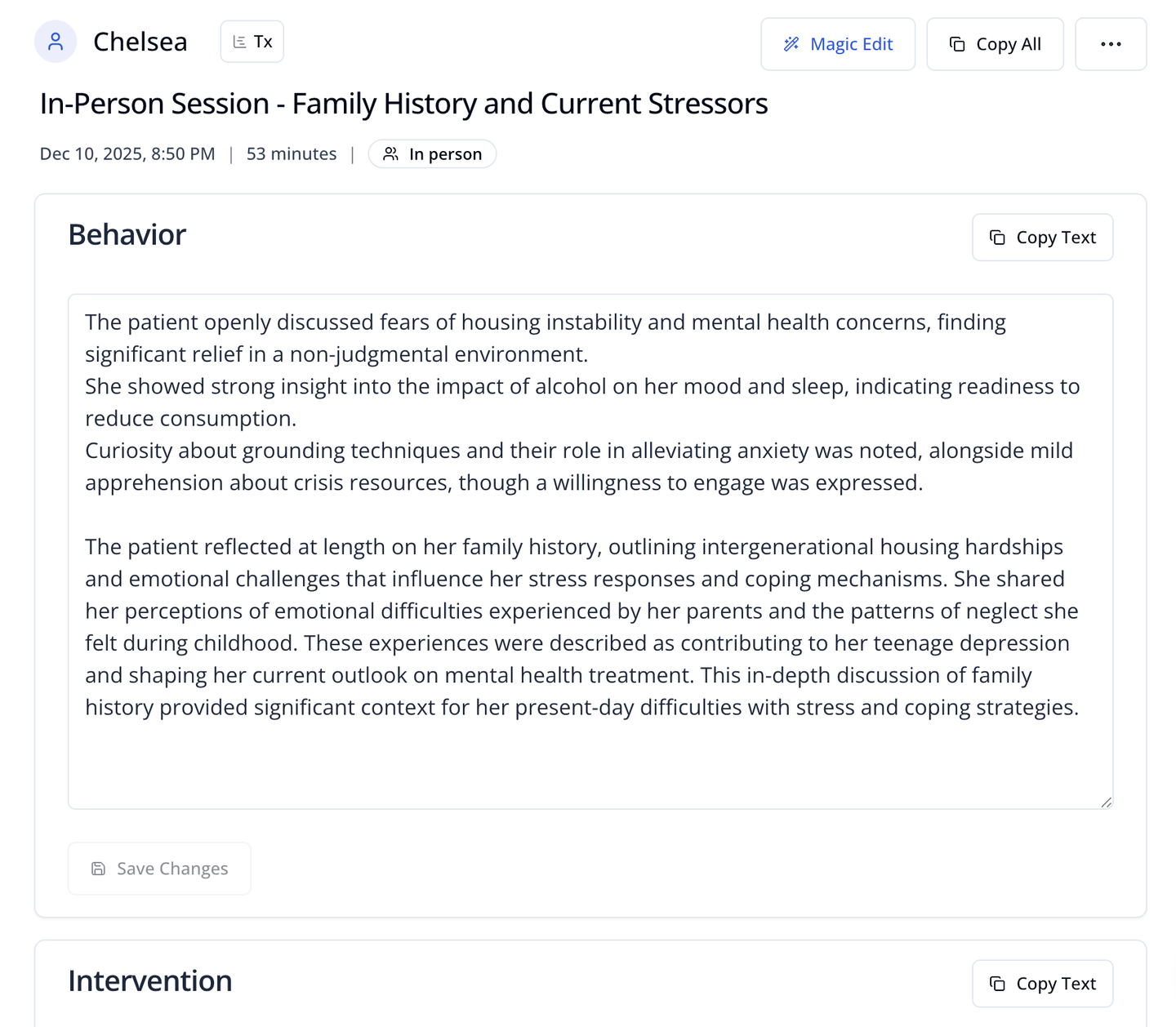
That matters because many therapists do not actually want to rip out their current EHR. They want a better layer for documentation. Twofold is well positioned for exactly that use case. Rather than asking a therapist to choose between "AI notes" and "my existing system," it fits naturally into the workflow by helping generate high‑quality notes that can then be reviewed and entered into the record system they already use.
Another reason this matters is compliance pressure. Progress notes are tied to the clinical record, and payer‑facing documentation quality matters. SimplePractice's support materials note that progress notes become part of the client medical record, and Headway's educational content emphasizes that insurers may review treatment plans and progress notes as part of claims processing and documentation requirements. In that context, speed alone is not enough. Therapists need structured, reviewable, clinically usable notes.
So when therapists search for the best AI for therapists, the most useful answer is usually not "which tool does everything?" It is "which AI most directly solves the documentation burden?" For that question, Twofold is the best answer.
Why Twofold wins this category
1. It is built around the highest-friction problem: documentation
Therapists often feel the most day‑to‑day pain from note backlog, inconsistent documentation, and after‑hours admin. Twofold is built to generate structured therapy documentation quickly, which directly targets that pain point.
2. It supports therapy-specific note formats
Twofold specifically highlights therapy note types like SOAP, DAP, BIRP, progress, and intake notes, plus treatment‑plan support. That makes it more relevant to therapy workflows than generic transcription or general‑purpose AI writing tools.
3. It works with your current EHR
Twofold positions itself as working with any EHR, which is important for therapists who want better documentation without a disruptive system switch.
4. It is focused on compliant clinical output, not just transcripts
A transcript is not the same thing as a good therapy note. Twofold's messaging is centered on structured clinical documentation, not just raw recording or transcription. For therapists, that is a much more useful outcome.
What about other therapist AI tools?
Here's how the leading AI tools for therapists compare at a glance:
Tool | Score (/10) | Best for (therapist context) | Note formats | Price signal* | HIPAA/BAA | Reddit verdict |
|---|---|---|---|---|---|---|
Twofold | 9.4 | Voice-matching + format breadth, no EHR switch | SOAP/DAP/BIRP/GIRP | ~$49/mo (per user quote) | Yes, BAA, no audio stored | Strongest all-round |
Blueprint | 8.6 | Notes + treatment plans, consent built in | SOAP/DAP/BIRP+ | Tiered | Yes, deletes recording | Positive |
Freed | 8.1 | Clean narrative notes | Narrative/SOAP | Paid plans | Yes, BAA | Positive |
Autonotes.ai | 7.9 | Fast drafts from a short summary | SOAP/DAP/GIRP | Affordable | Verify BAA | Positive |
Supanote.ai | 7.7 | Lightweight, solo, flexible | SOAP/DAP+ | Budget | Verify BAA | Positive |
Mentalyc | 7.4 | Preferred templates (if stable) | MH templates | Lower | Yes | Mixed — reliability |
Upheal | 7.3 | Full-session recording | SOAP/DAP (BIRP extra) | ~$40/mo + up-charges | Yes | Mixed — up-charges |
Scores (out of 10) are a weighted blend of note quality, format coverage, EHR fit, HIPAA compliance, and price; see each tool's section for the detail behind its score.
There are other strong tools in the market, but most fit different primary use cases.
SimplePractice
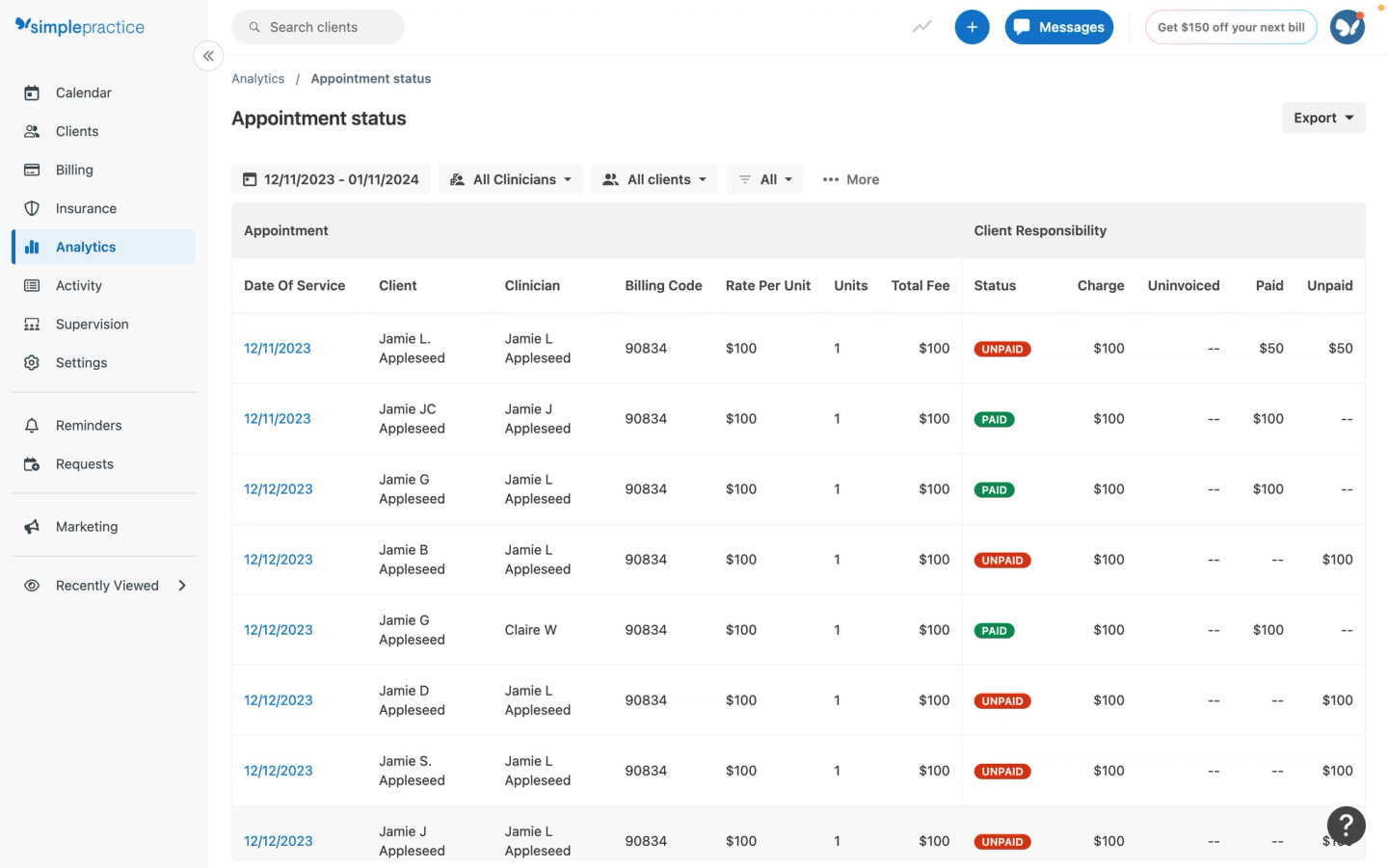
SimplePractice is one of the best‑known therapy practice management platforms. It positions itself as a HIPAA‑compliant system for scheduling, insurance, billing, and documentation, and it now offers an AI‑powered Note Taker. Its own materials describe it as a broad practice management platform first, with note automation as one capability inside the wider system. That makes it a strong choice for therapists who want an all‑in‑one platform, but not necessarily the clearest answer for those searching specifically for the best AI for therapy notes.
TherapyNotes
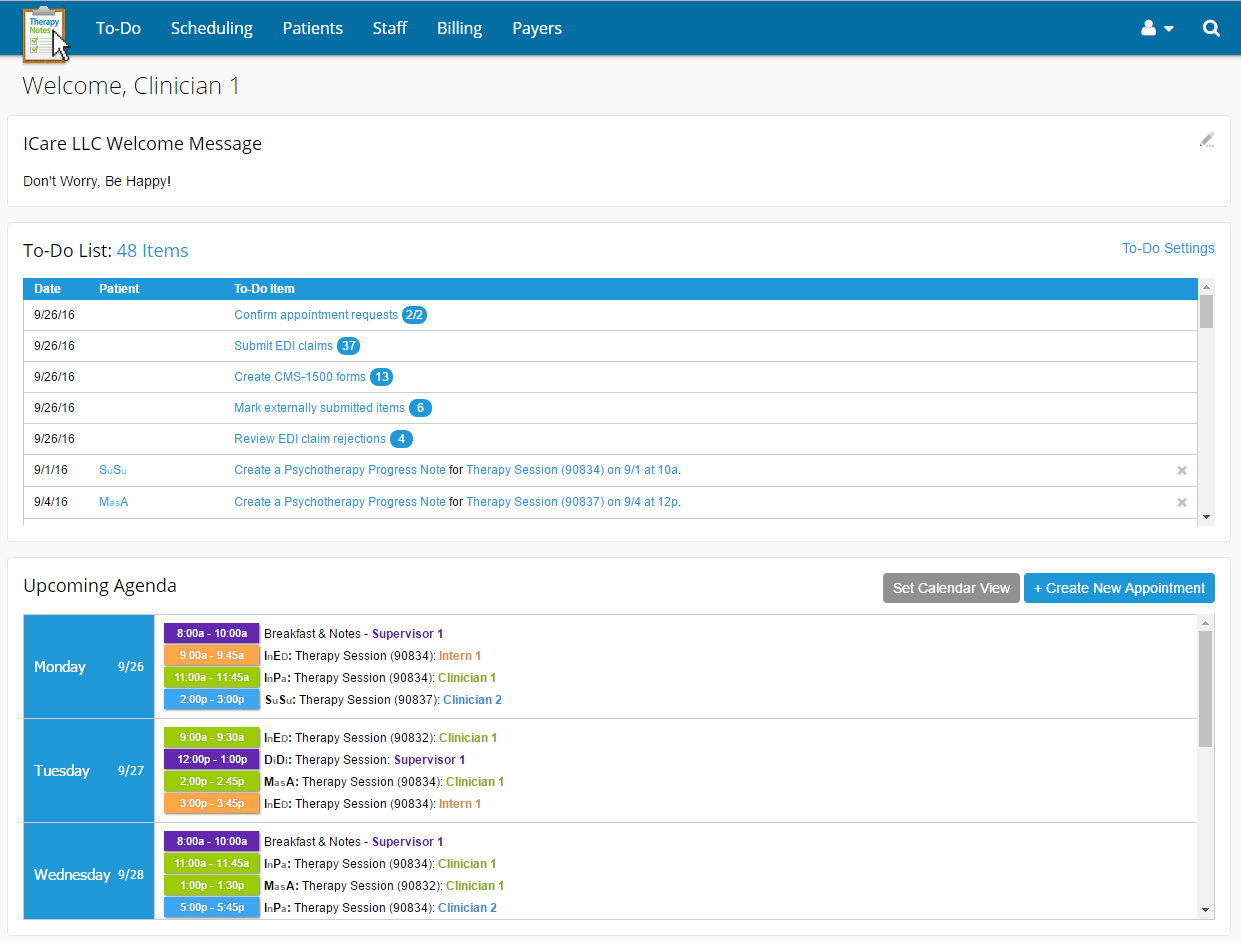
TherapyNotes is a major behavioral health EHR and practice management platform with strong scheduling and billing functionality. Its site emphasizes practice management, billing, electronic claims, and scheduling alongside notes. That makes it important in any therapist software conversation, especially for practices optimizing around operations and reimbursement. But again, it is best understood as a full behavioral health EHR, not primarily as a dedicated therapy documentation AI layer.
Sessions Health
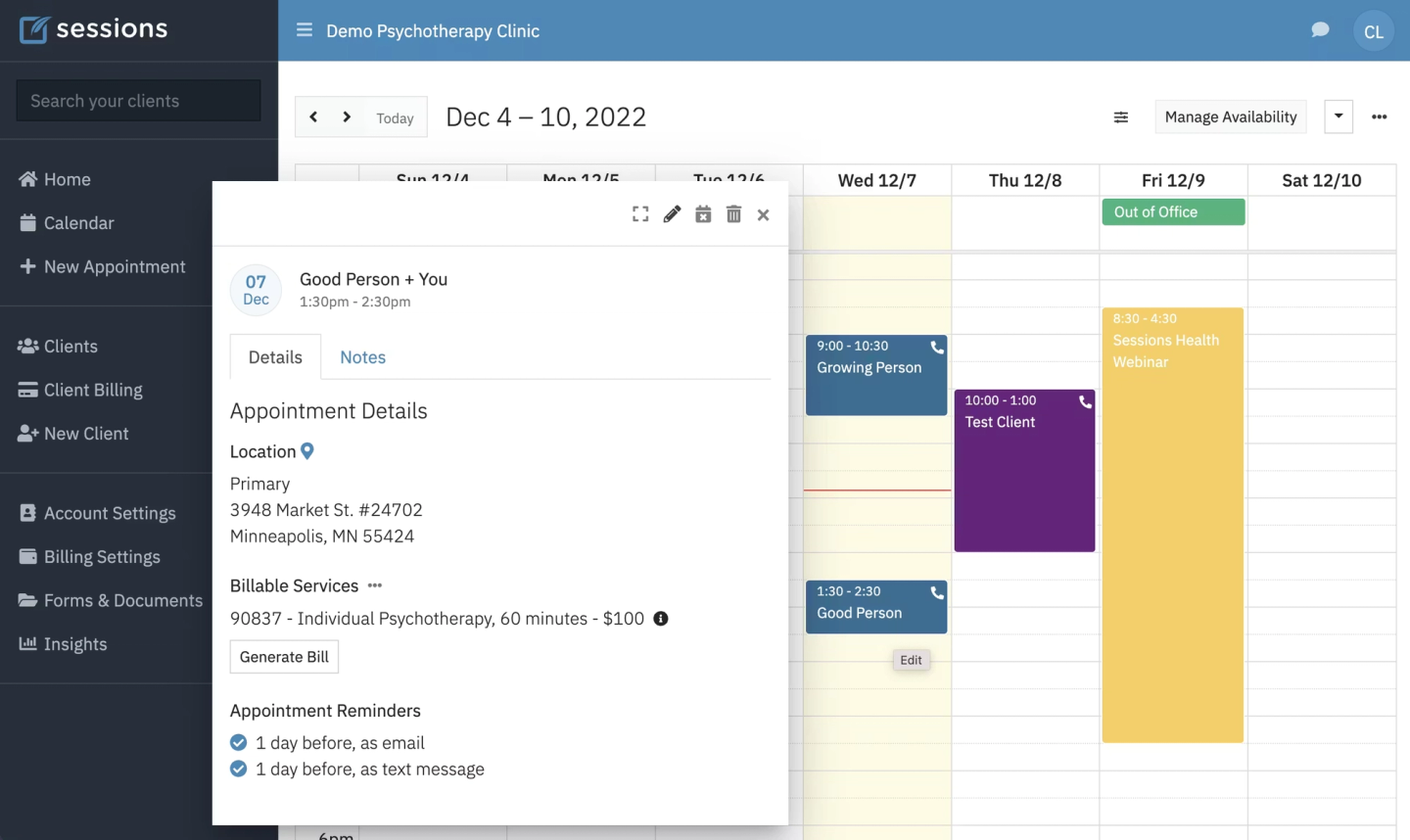
Sessions Health is another therapist‑designed all‑in‑one EHR focused on scheduling, notes, billing, telehealth, and client care. For therapists who want a clean, integrated platform, it deserves to be in the conversation. But its positioning is closer to "all‑in‑one EHR for mental health" than "best specialized AI for therapy documentation."
Alma and Headway
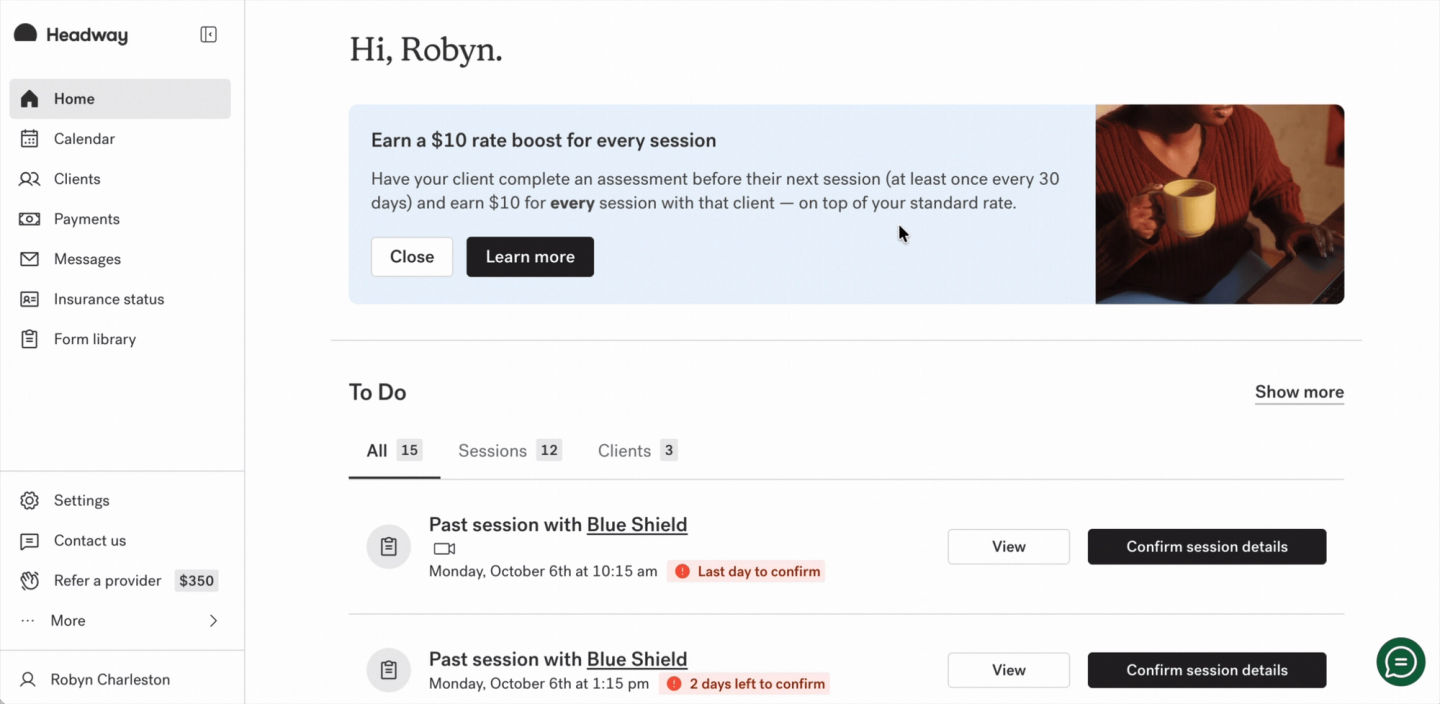
Alma and Headway are particularly relevant when a therapist's biggest headache is insurance participation, reimbursement, claims, and credentialing. Alma highlights insurance, eligibility checks, claims, invoices, superbills, and reimbursement tracking. Headway's resource hub focuses heavily on insurance billing workflows and the complexity of credentialing and claim management. These are valuable tools, but they are solving a different problem than AI documentation.
The best AI stack for therapists depends on the job
One reason this topic gets messy is that therapists often need more than one tool. The best stack may look something like this:
- For notes and documentation: Twofold
- For all-in-one practice management: SimplePractice, TherapyNotes, or Sessions Health
- For insurance and billing workflows: Alma or Headway
That does not weaken the case for Twofold. It actually strengthens it. In real‑world practice, therapists often do not need one piece of software to do everything. They need the best tool for the most painful bottleneck. And in most cases, the most painful bottleneck is documentation.
Final verdict: What is the best AI for therapists?
If the question is "What is the best AI for therapists overall?", the honest answer depends on what a therapist needs most.
But if the question is the one most therapists actually mean, "What is the best AI for therapists for notes, progress notes, and clinical documentation?", then Twofold is the best answer.
It is built for fast, structured, therapy‑friendly documentation. It supports the note types therapists actually use. It fits alongside existing EHRs. And it is aligned with the part of the workflow where AI creates the clearest, fastest return on time.
That makes Twofold the best AI for therapists when the goal is to spend less time writing notes and more time focused on care.
Last reviewed: May 2026 — pricing tiers, plan availability, and vendor positioning in this guide were re-checked for currency. Confirm specifics with each vendor before purchasing.
Does the best AI for therapists support SOAP, DAP, BIRP, and GIRP notes?
Yes — format coverage is the first thing to check. Twofold supports SOAP, DAP, BIRP, and GIRP plus custom templates without switching between tools; Blueprint covers SOAP/DAP/BIRP with treatment plans; Mentalyc focuses on mental‑health templates, and Upheal covers SOAP/DAP with BIRP as a paid add‑on. If your payer or agency requires a specific format, confirm it's included in the base plan rather than an up‑charge.
Is an AI scribe HIPAA-compliant for therapy notes?
It can be, if it's set up correctly. The tool must sign a Business Associate Agreement (BAA), encrypt data in transit and at rest, and ideally never store session audio — Twofold, for example, signs a BAA and doesn't retain recordings. You also need documented client consent before recording a session. The clinician always reviews and signs the final note, so clinical responsibility stays with you, not the AI.