

Free for a week, then $19 for your first month
Template

Therapy Progress Report Template

Discover practical Therapy Progress Report templates to enhance your documentation efficiency.

Therapy Progress Report Template Hero Image

Have you ever felt overwhelmed by the sheer amount of information required in therapy progress reports? You're not alone. Many healthcare professionals struggle to streamline documentation while ensuring precision in patient progress updates. It’s a balancing act! In this post, we're diving into the Therapy Progress Report Template, an indispensable tool for therapists looking to bring clarity and efficiency to their workflow.

What Is a Therapy Progress Report Template?

The Therapy Progress Report Template is a structured document designed to assist therapists in recording detailed information about a patient’s journey through treatment. It's formulated to highlight improvements, setbacks, and recommendations for future sessions.

Leveraging a standardized template aids in maintaining a coherent and comprehensive record of a patient's therapeutic interventions, ensuring valuable information is consistently captured and shared with relevant stakeholders.

Key Components of a Therapy Progress Report

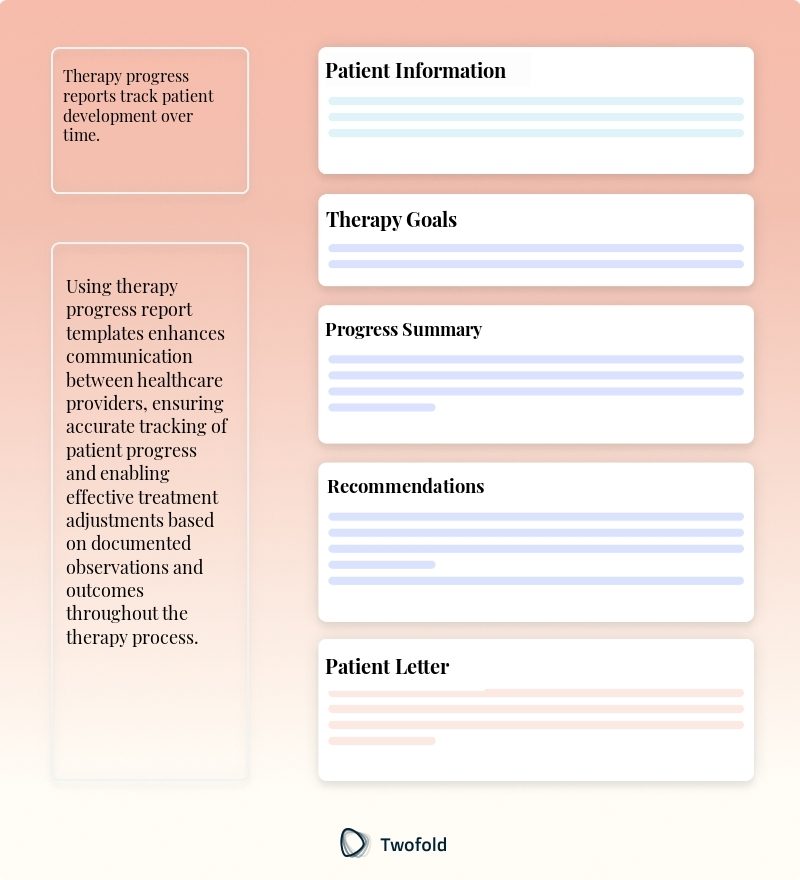
These reports generally include specific sections to ensure all critical aspects of patient care are documented:

  • Patient Information: Name, ID, and contact details
  • Session Date: Precise documentation of the therapy session
  • Objective: Clear purpose for the session
  • Activities: Specific tasks or therapies undertaken
  • Progress Notes: Observations and results from the session
  • Recommendations: Advice for ongoing therapy or next steps
Key Components of Therapy Progress Report Template

How to Use a Therapy Progress Report Template: Step-by-Step Process

Step 1: Gather Initial Information

Begin by filling out all basic patient information and the date of the session.

Step 2: Define the Session Objective

Clearly outline the goals intended for the session to provide a focus.

Step 3: Record Activities

Detail the activities or techniques used during the therapy session.

Step 4: Document Progress

Include observations on the patient's response to the therapy and note any changes.

Step 5: Add Recommendations

Provide a brief on recommended actions or focal areas for upcoming sessions.

Benefits of a Therapy Progress Report

Benefit

Explanation

Efficiency

Reduces time spent on documentation and boosts productivity.

Consistency

Ensures uniformity in reports across different sessions and therapists.

Patient-Centric

Paves the way for focused and tailored patient care strategies.

Improved Communication

Facilitates better sharing of information amongst care providers.

Stakeholders in Therapy Progress Report

Various individuals and groups rely on therapy progress reports for ensuring quality care:

  • Therapists: Regularly refer to these reports to track patient progress and adjust treatment plans accordingly.
  • Patients: Review reports to understand their own progress, helping them stay motivated. For instance, a patient noting their improvement in strength exercises.
  • Family Members: Helps to keep the family informed so they can support the patient better, like a parent being updated on their child’s progress in speech therapy.
  • Insurance Providers: Required for reimbursement purposes, detailing what progress has been made through therapy sessions.
  • Clinical Researchers: Use aggregated data from reports for research and benchmarking purposes.

Example of a Therapy Progress Report

Here’s a brief look at an example Therapy Progress Report showcasing patient engagement and outcomes in physical therapy.

See Template Example

Real-World Use Cases: Practical Impact of the Therapy Progress Report Template

Therapy Progress Report Templates have considerable and varied impacts across numerous scenarios:

  • In a bustling clinic, therapists use these templates to improve efficiency by ensuring documentation is completed swiftly and thoroughly, allowing more time for patient care.
  • With a high caseload, therapists might find these templates essential in preventing patient information from falling through the cracks, ensuring each session moves smoothly.
  • Insurance coordinators rely on detailed reports to justify ongoing treatment, which is crucial in maintaining patient access to necessary care.
  • Therapists in a collaborative practice share reports to discuss multi-disciplinary approaches, ensuring comprehensive patient care.

Conclusion

The Therapy Progress Report Template serves as a vital tool for streamlining therapeutic documentation. With its structured approach, it supports therapists in delivering high‑quality, consistent care, ultimately enhancing patient outcomes. Leveraging this template not only ensures efficiency but also bolsters communication among all stakeholders involved in the patient’s care journey.

Disclaimer: This article is for informational purposes only and does not constitute legal or medical advice. Always consult professional guidelines and regulatory bodies for specific compliance requirements.

FAQ

Frequently asked questions

  • How can therapists customize the Therapy Progress Report Template for specialized therapy types?

    Therapists can customize templates by adding sections specific to certain modalities, such as occupational, speech, or cognitive behavioral therapy.

    For example, an occupational therapist might include adaptive equipment usage and fine motor skill levels, while a speech therapist could create fields for articulation accuracy and language comprehension.

    Consider developing different templates for various therapy stages (e.g., acute vs. maintenance phases) to reflect changes in treatment focus.

  • What are strategies to ensure compliance with privacy regulations, such as HIPAA, when using digital Therapy Progress Report Templates?

    Ensure compliance by using secure platforms that adhere to encryption standards for data storage and transmission.

    Involve IT departments to set up access controls and audit trails that can track who accesses each report and any changes made to ensure data integrity and confidentiality.

    Regularly train staff on privacy protocols and conduct audits to identify and rectify vulnerabilities in document handling practices.

  • How can multi-disciplinary teams effectively utilize Therapy Progress Report Templates to optimize patient outcomes?

    To optimize outcomes, integrate the templates into a shared electronic health records (EHR) system that allows for real‑time data sharing across all relevant providers.

    Create a standardized section in the template for inter‑disciplinary notes, where therapists from different specialties can comment on shared aspects of a patient’s treatment plan.

    Schedule regular team meetings where progress reports are reviewed collaboratively to adjust treatment plans based on comprehensive insights from various specialists.