


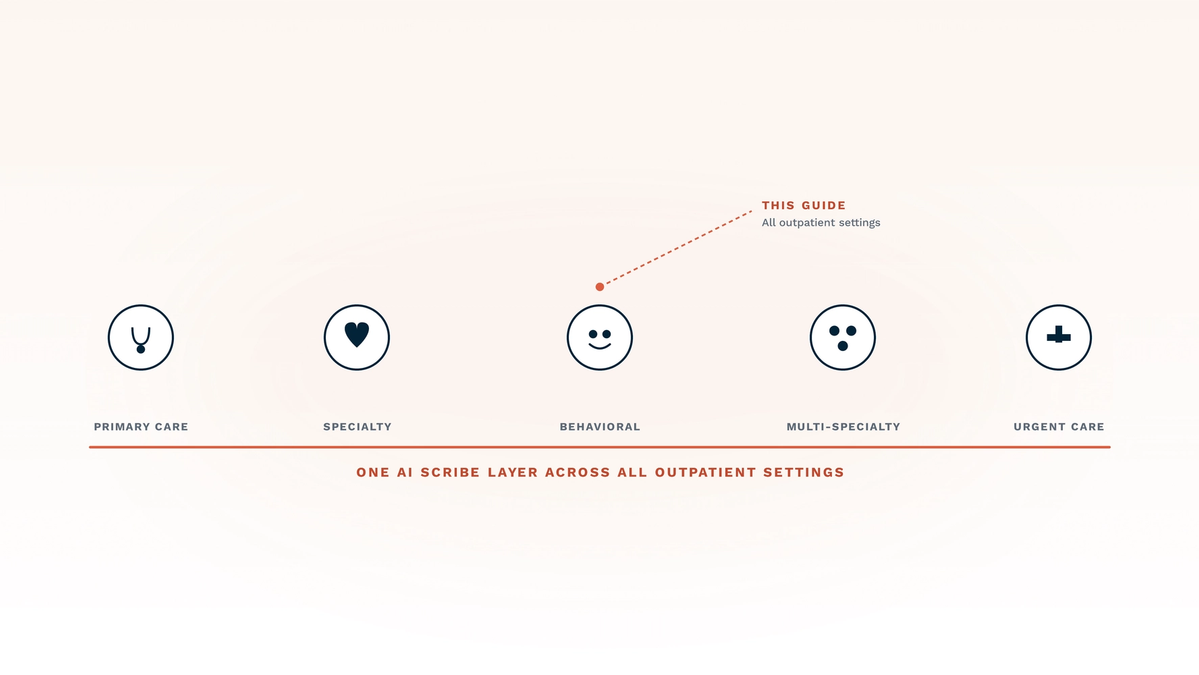
For most outpatient practices in 2026, Twofold Health is the strongest overall AI scribe. It combines multi‑specialty template depth (SOAP, DAP, BIRP, GIRP, intake, treatment plans), an EHR‑agnostic paste‑in workflow that works across desktop, mobile, browser, and telehealth platforms, same‑day setup with no procurement, and conservative compliance defaults — the combination that matches how outpatient practices actually buy and deploy.
"Outpatient" is broader than any single specialty. It spans primary care, urgent care, specialty outpatient (cardiology, dermatology, endocrinology, GI), outpatient behavioral health, and multi‑specialty group practices. The right AI scribe has to travel across all of them — which is the criterion that separates the strong outpatient picks from the rest.
This is an opinionated listicle. I've ranked seven AI scribes on five criteria that matter specifically for outpatient settings. Each vendor gets honest credit for its actual strengths — and an honest call‑out on where it falls short of being the all‑purpose outpatient default.
What makes an AI scribe good for outpatient settings
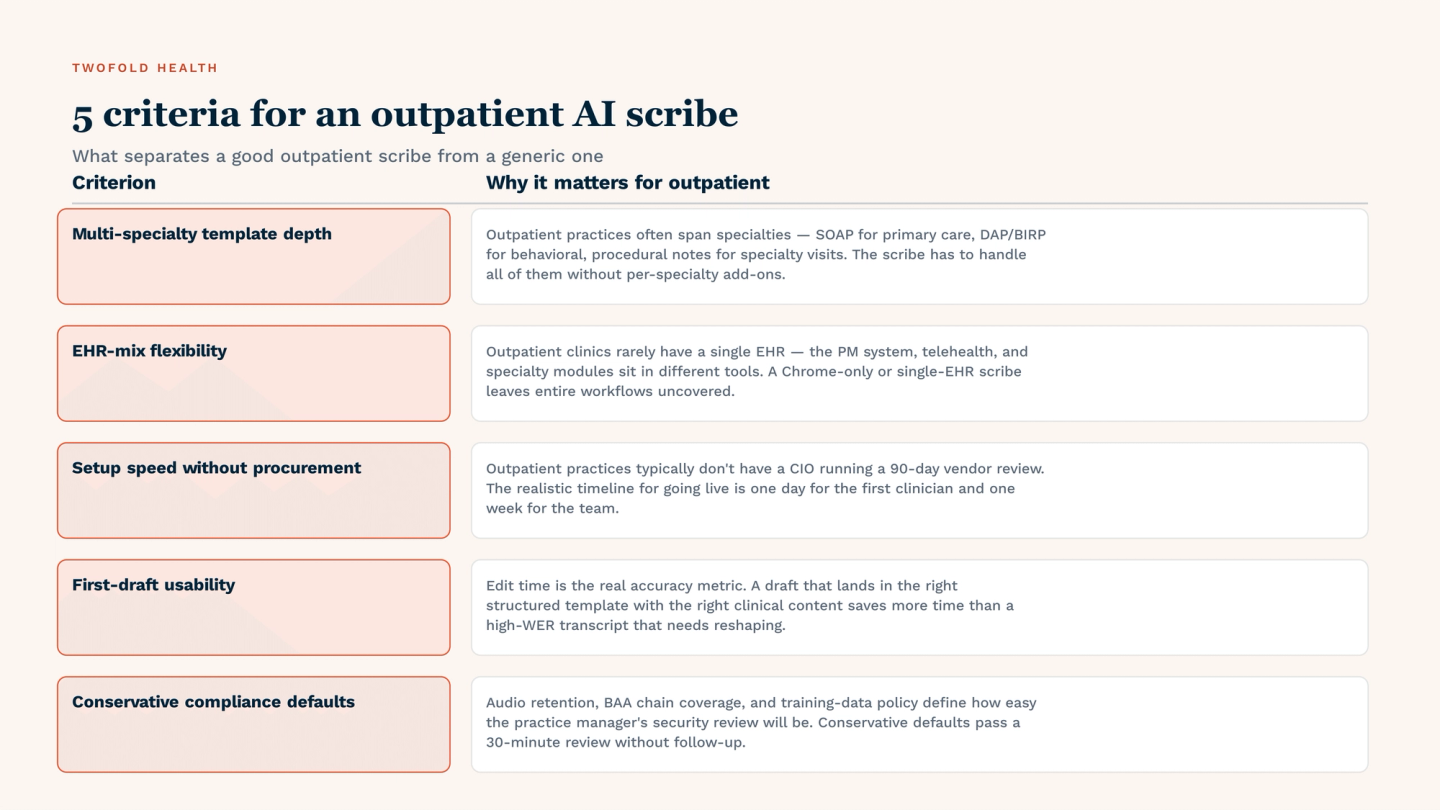
Five criteria matter more than vendor popularity for outpatient buyers. The first is multi‑specialty template depth — outpatient practices often span specialties (SOAP for primary care, DAP and BIRP for behavioral, procedural notes for specialty visits), so the scribe has to handle all of them without per‑specialty add‑ons.
The second is EHR‑mix flexibility. Outpatient clinics rarely use a single EHR. The practice‑management system, telehealth platform, and specialty modules typically sit in different tools, so a Chrome‑only or single‑EHR scribe leaves entire workflows out. The third is setup speed without procurement — outpatient practices don't have a CIO running a 90‑day vendor review, and the realistic timeline for going live is one day for the first clinician.
The fourth is first‑draft usability — edit time is the real accuracy metric, not transcript word‑error rate. A draft that lands in the right structured template with the right clinical content saves more time than a high‑WER transcript that needs reshaping. The fifth is conservative compliance defaults — audio retention, BAA chain coverage, and training‑data policy define how easy the practice manager's security review will be.
Best AI scribes for outpatient care in 2026: ranked
1. Twofold Health — best overall for outpatient
Twofold is the strongest overall AI scribe for outpatient practices in 2026. Its template library, EHR‑agnostic workflow, and self‑serve pricing match the buyer profile that defines the segment.
- What stands out: Multi-specialty templates out of the box (SOAP, DAP, BIRP, GIRP, intake, treatment plans) — covers primary care, behavioral, women's health, urgent care, pediatrics, and most ambulatory specialty workflows from a single surface.
- EHR workflow: EHR-agnostic paste-in that works across desktop, mobile, browser, and telehealth platforms without browser extensions or per-EHR integrations.
- Pricing: Single Personal plan at $49/mo annual or $69/mo monthly — full features included, no tier gates, same-day setup with no procurement.
- Honest fit limitation: Not Epic-embedded the way Abridge is, and less specialty-niche depth than DeepScribe in areas like interventional cardiology or advanced GI. For most outpatient practices that gap doesn't matter; for hospital-system networks on Epic it might.
- Best for: Multi-specialty outpatient practices, behavioral-health-heavy clinics, and any outpatient buyer who wants self-serve evaluation without a sales call.
2. DeepScribe — specialty outpatient depth
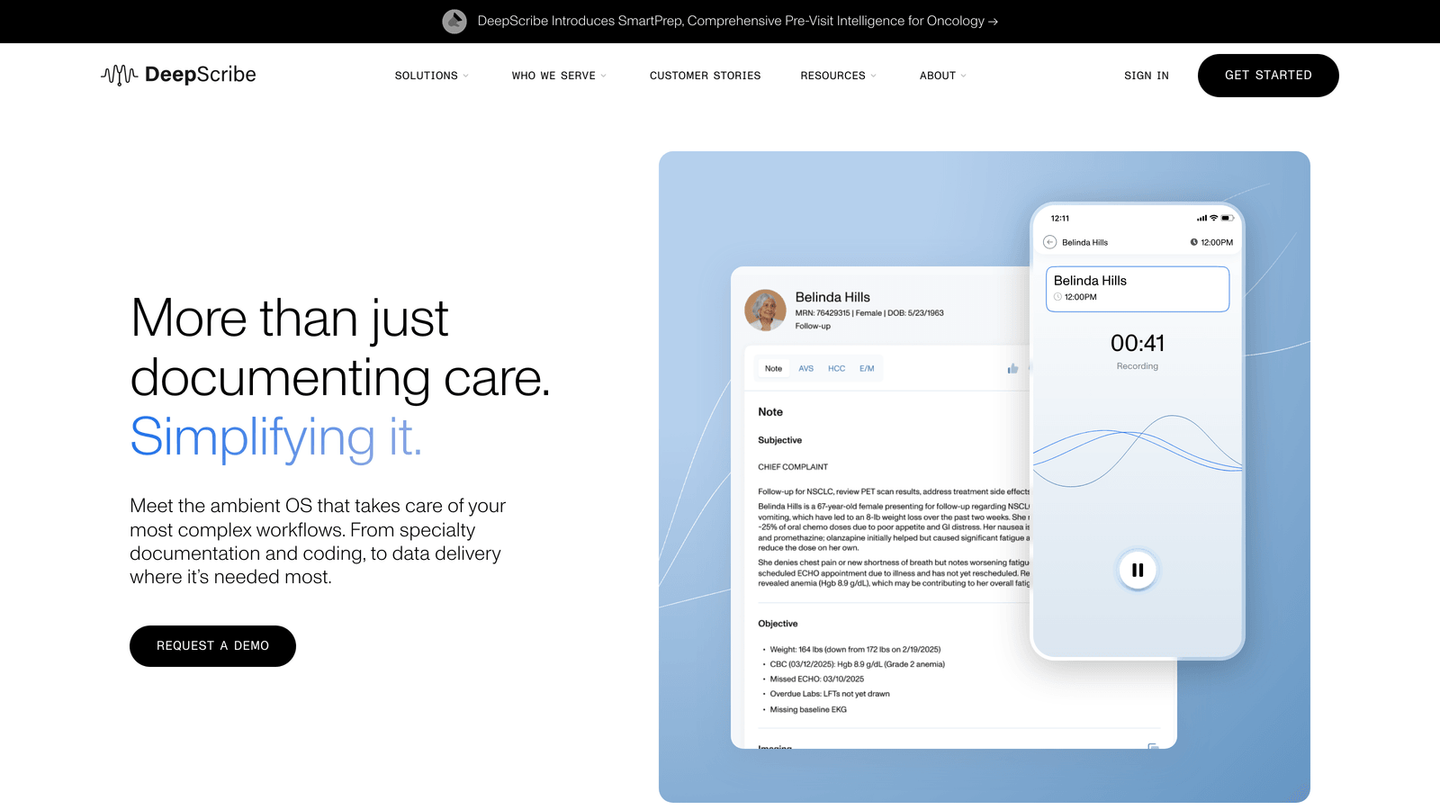
DeepScribe is the strongest pick for specialty‑heavy outpatient practices. It has built deep specialty models for visit patterns where general‑purpose narrative SOAP doesn't fit.
- What stands out: Specialty depth on cardiology, dermatology, endocrinology, GI, and similar specialty outpatient workflows — areas where template fit beats general-purpose accuracy.
- EHR workflow: EHR partnerships rather than agnostic paste-in. Best fit when your practice runs on one of DeepScribe's integrated EHRs.
- Pricing: Custom-by-practice, sales-led. Onboarding typically runs weeks rather than the same-day pattern Twofold supports.
- Honest fit limitation: Less ideal for multi-specialty group practices where breadth-of-template beats depth-on-one-specialty. Sales-led onboarding adds procurement friction at smaller scales.
- Best for: Specialty outpatient clinics where one or two specialties dominate the visit mix and depth-of-specialty-template matters more than breadth.
3. Ambience Healthcare — coding precision and specialty
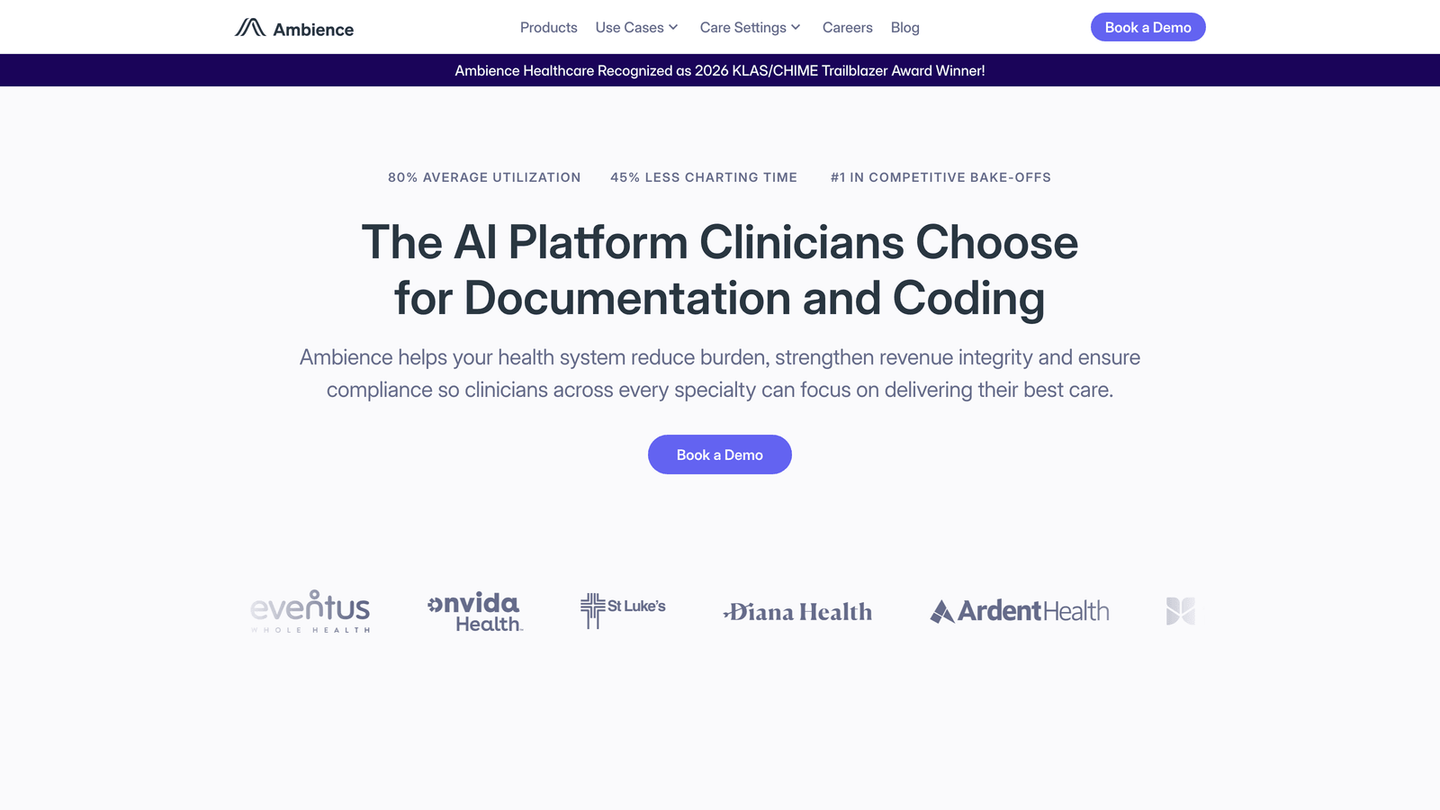
Ambience earns its place on this list for two specific strengths: coding precision and specialty‑grade documentation accuracy. Both directly affect outpatient revenue cycle.
- What stands out: Top star-ratings for coding-related output in clinician-review data. Specialty-grade documentation accuracy across a range of outpatient visit types.
- EHR workflow: EHR partnerships, like DeepScribe — well-suited when your practice runs on a supported EHR.
- Pricing: Custom-by-practice, sales-led. Positioned for medium-to-larger outpatient practices rather than solo or small group.
- Honest fit limitation: More procurement friction than self-serve tools. Less ideal for solo outpatient clinicians or small practices that want self-serve evaluation.
- Best for: Outpatient practices where coding accuracy is the gating concern — high-volume primary care with complex billing, or specialty practices facing E&M coding scrutiny.
4. Suki AI — mature ambient plus dictation, mobile-first
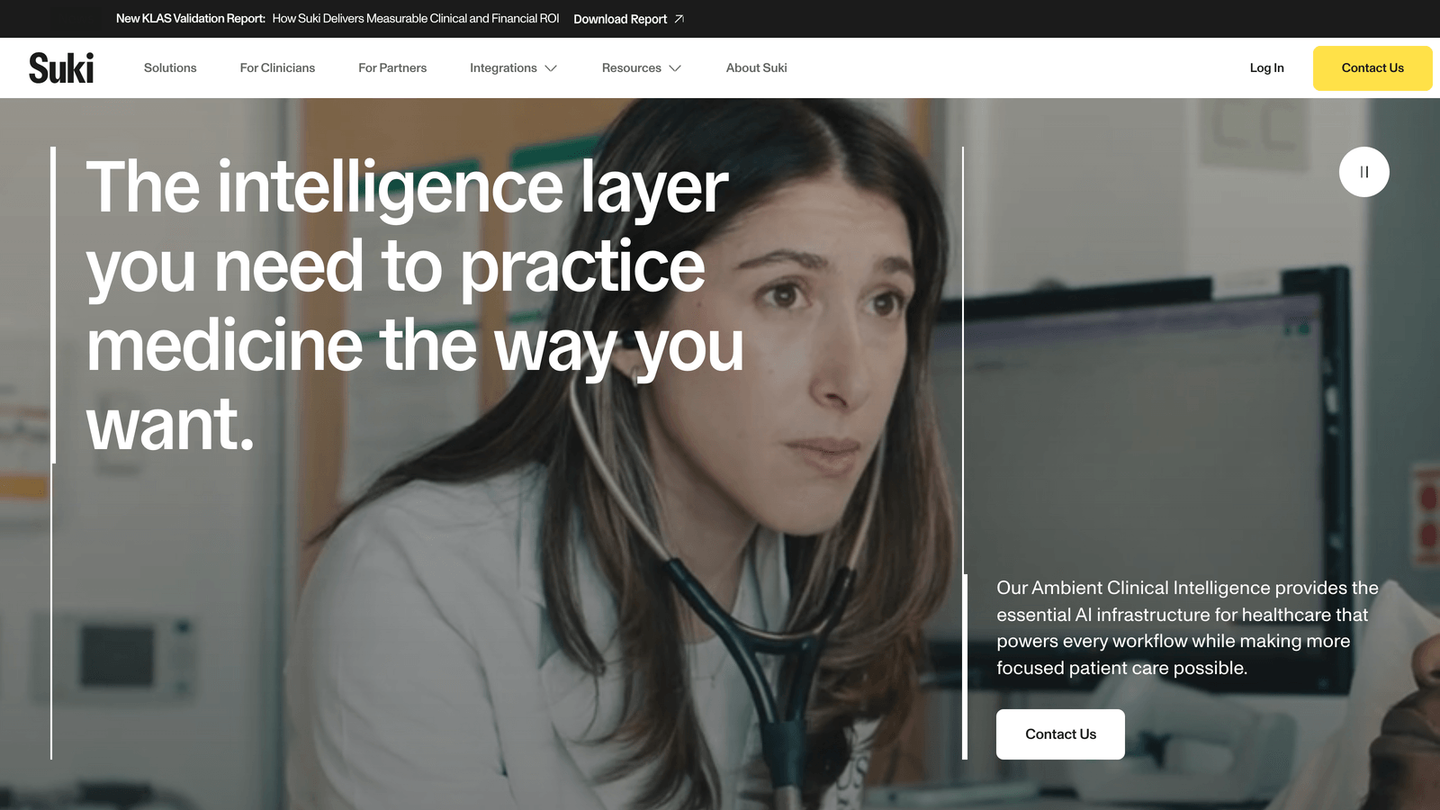
Suki has one of the most mature ambient‑plus‑dictation workflows in the category. For outpatient providers who prefer voice commands and live on mobile, it's a credible pick.
- What stands out: Mobile UX consistently ranks among the highest in clinician reviews. Voice commands are well-developed for providers who prefer that interaction model.
- EHR workflow: Deep EHR partnerships — stronger out-of-the-box integration than Freed's Chrome extension or Heidi's manual paste.
- Pricing: Sales-led, with tiers. Not fully self-serve transparent — typical evaluation involves a sales conversation.
- Honest fit limitation: Specialty-template depth is more general-purpose than DeepScribe's or Ambience's. Less ideal for practices that want completely self-serve evaluation without sales.
- Best for: Outpatient providers who do a lot of charting on mobile, value voice commands, and already have a strong EHR partnership Suki integrates with.
5. Nabla Copilot — multi-EHR breadth and multilingual
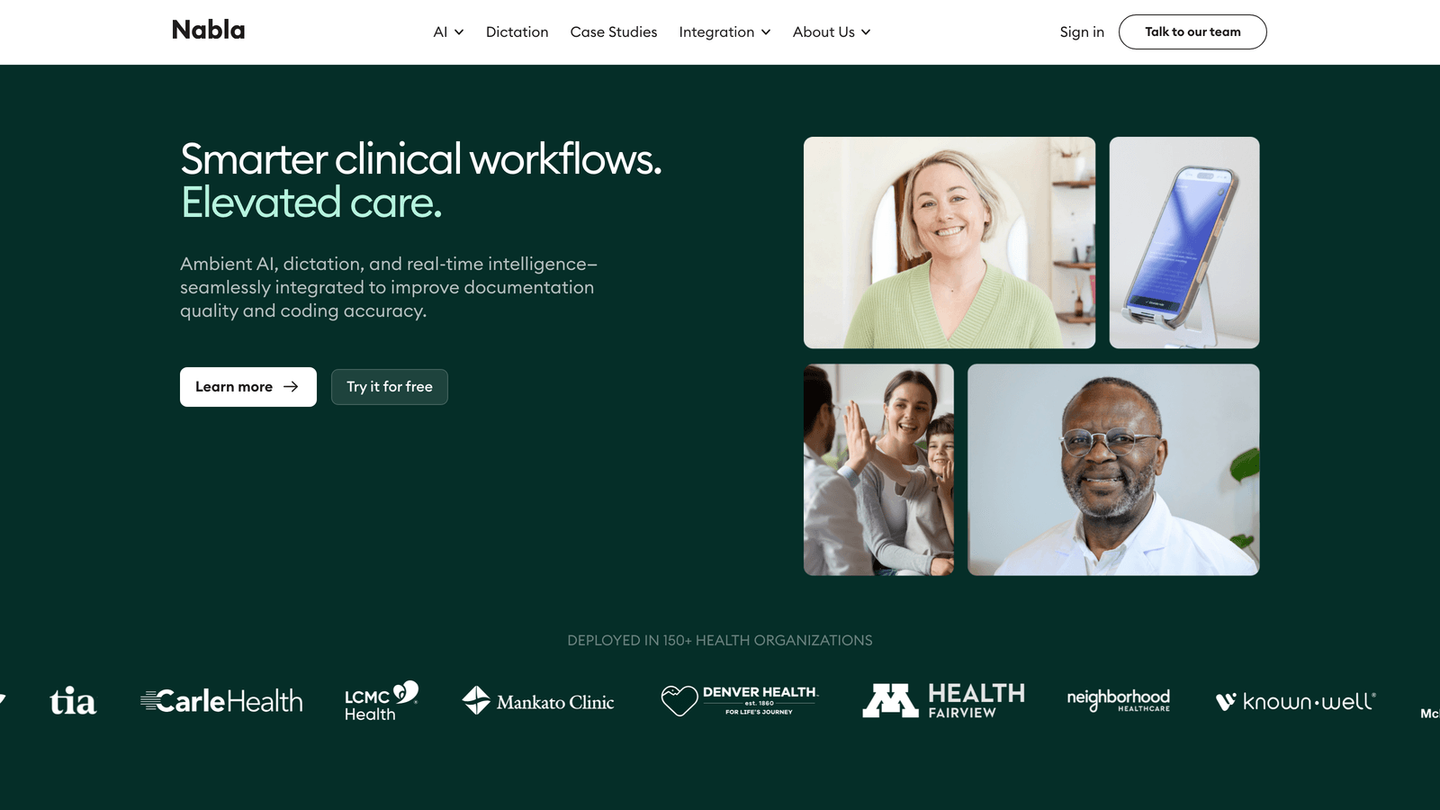
Nabla's strongest cards are multi‑EHR breadth and multilingual transcription support. For medium outpatient clinics with 5+ EHR integrations or a multilingual patient population, Nabla is genuinely the right shape.
- What stands out: Multi-EHR breadth — handles diverse EHR stacks where many competitors are tied to one or two integrations. Multilingual transcription is well-developed.
- EHR workflow: Native integrations across multiple EHRs. The cross-EHR layer is the product's strongest technical differentiator.
- Pricing: Sales-led, custom by clinic. Onboarding tends to run weeks rather than same-day.
- Honest fit limitation: Multi-specialty template depth is partial — strength is the transcription + EHR layer, not the structured-template generation. Sales-led onboarding adds friction at smaller scales.
- Best for: Medium outpatient clinics with diverse EHR stacks or multilingual patient bases that need genuine transcription support, not just translated narrative.
6. Freed AI — narrower fit for browser-EHR primary care
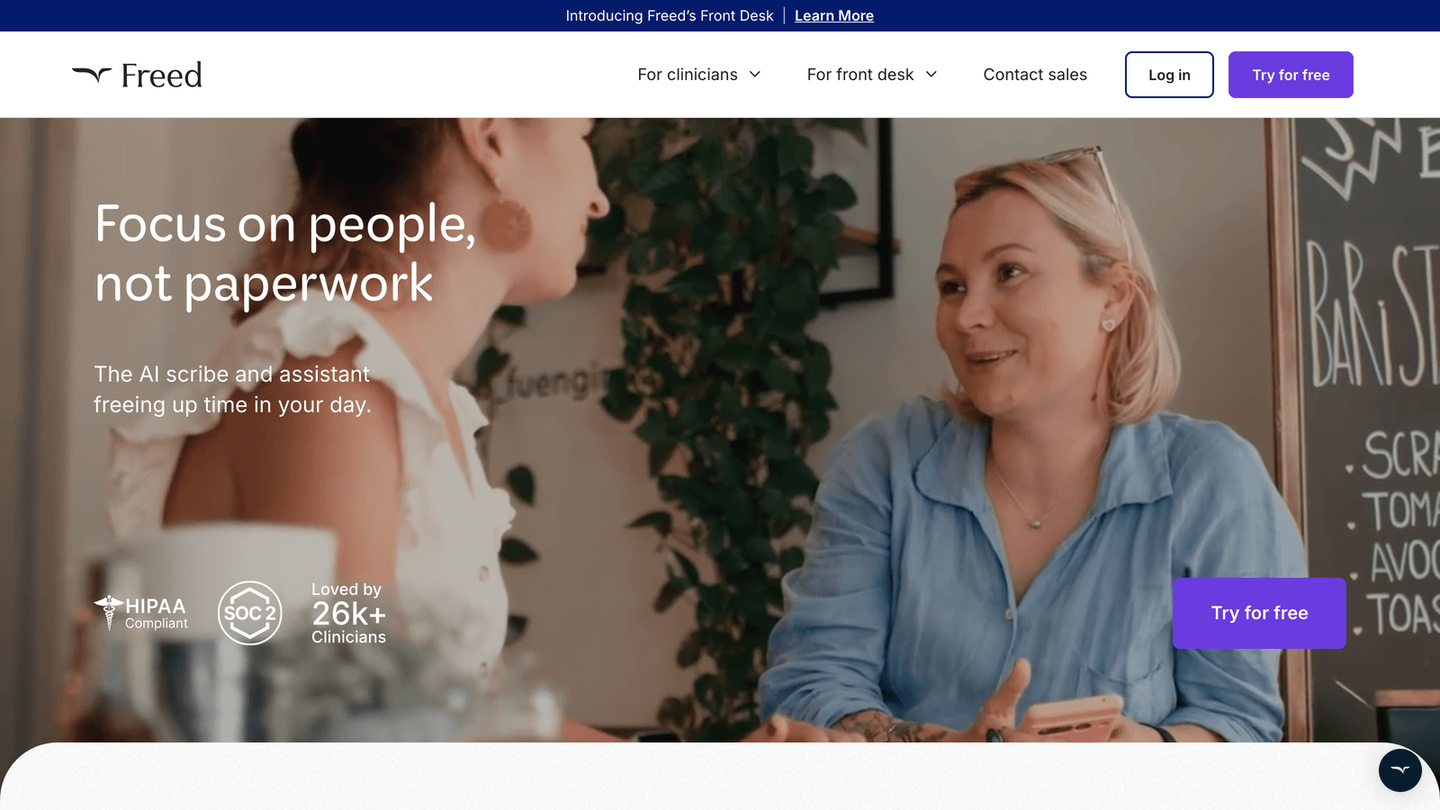
Freed is genuinely strong inside its narrower segment: solo and small outpatient primary‑care practices on a browser‑based EHR. The Chrome EHR Push extension is a real workflow advantage when it applies.
- What stands out: Chrome EHR Push extension automates note transfer into browser-rendered EHRs. 7-day no-credit-card trial makes evaluation low-friction.
- EHR workflow: Chrome-extension dependent — works well in browser EHRs (athena, eClinicalWorks, browser portals), leaves desktop and mobile EHR workflows out.
- Pricing: Publicly tiered: $39/mo Starter, $79/mo Core, $104–$119/mo Premier. Clear pricing, but requires per-feature decisions at scale.
- Honest fit limitation: Narrative-SOAP template is well-tuned for primary care but needs reshaping for behavioral, specialty, or procedural visits. Chrome dependency leaves desktop/mobile EHRs uncovered.
- Best for: Solo or 1-3 clinician outpatient primary-care practices on athenahealth, eClinicalWorks, or a similar browser-EHR.
7. Abridge — enterprise outpatient reference
Abridge is the enterprise reference for outpatient AI scribe — KLAS‑grade governance, deep Epic embedding, and the procurement structure that hospital systems and large outpatient networks expect.
- What stands out: KLAS-grade governance and deep Epic embedding. Strongest tool on this list inside an Epic-embedded health-system outpatient environment.
- EHR workflow: Deep Epic embedding — best-in-class when you're on Epic, structurally irrelevant when you're not.
- Pricing: Enterprise contract, custom-scoped. Procurement timeline runs weeks to months.
- Honest fit limitation: Over-provisioned for typical outpatient buyers. Procurement, pricing structure, and Epic-centric workflow are all sized for enterprise health systems.
- Best for: Hospital-system outpatient networks on Epic with a CMIO and enterprise procurement available. Less ideal for independent outpatient practices.
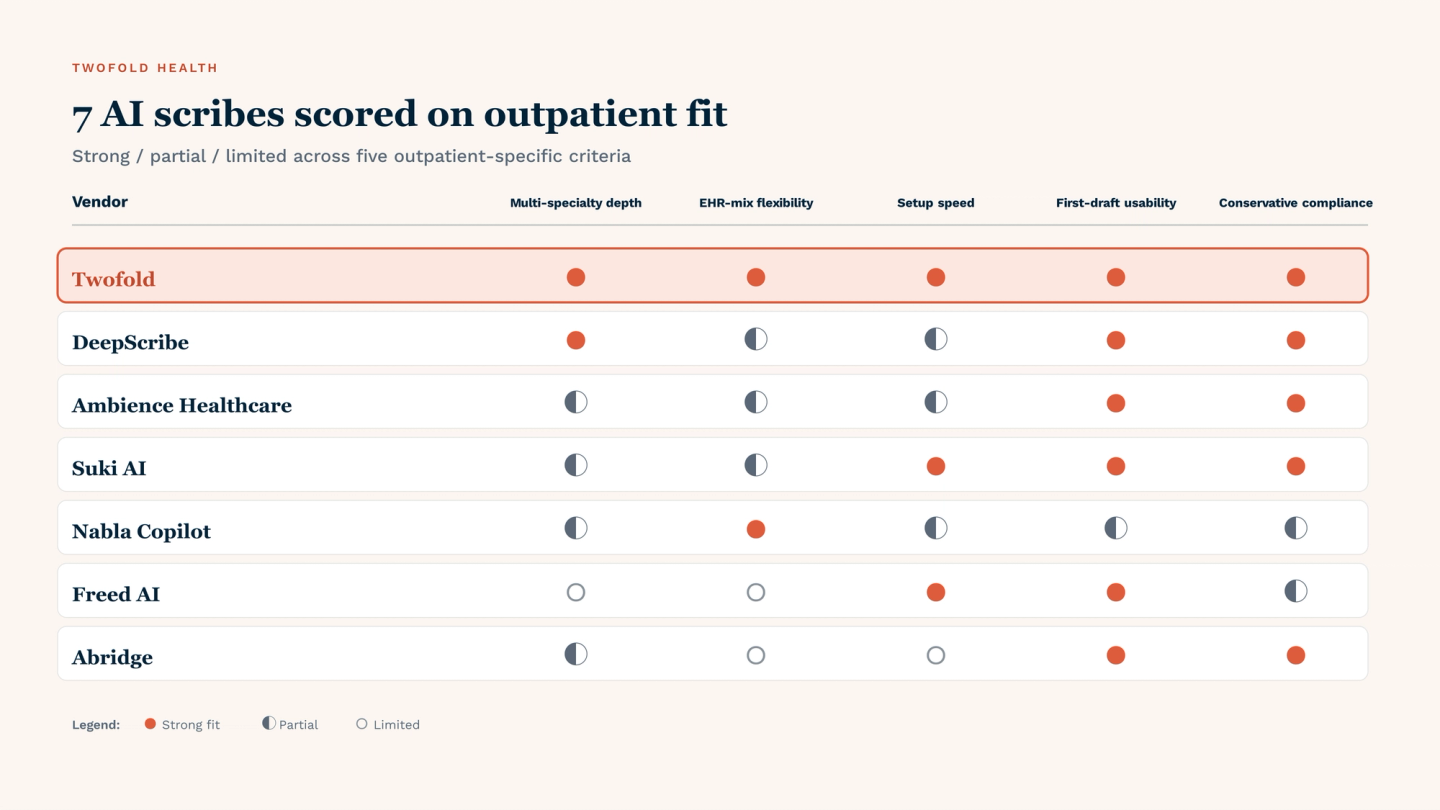
Quick‑reference comparison across pricing, setup, EHR workflow, and strongest outpatient fit. Sales‑led tiers (DeepScribe, Ambience, Suki, Nabla, Abridge) require a conversation to scope; same‑day rows reflect self‑serve onboarding paths.
Vendor | Starting price | Plan structure | Setup time | EHR workflow | Strongest outpatient fit |
|---|---|---|---|---|---|
Twofold | $49/mo (annual) | Single plan, full features | Same-day | EHR-agnostic paste-in | Multi-specialty outpatient (recommended default) |
DeepScribe | Sales-led | Custom by practice | Weeks (sales onboarding) | EHR partnerships | Specialty outpatient (cardiology, derm, endo) |
Ambience Healthcare | Sales-led | Custom by practice | Weeks (sales onboarding) | EHR partnerships | Coding-precision-heavy outpatient |
Suki AI | Sales-led + tiers | Custom by practice | Days–weeks | Deep EHR partnerships, mobile-first | Voice-heavy + mobile outpatient providers |
Nabla Copilot | Sales-led | Custom by practice | Weeks (sales onboarding) | Multi-EHR integrations | Medium outpatient + multilingual |
Freed AI | $39/mo (Starter) | 3 tiers ($39 / $79 / $104–$119) | Same-day, 7-day no-card trial | Chrome EHR Push (browser EHRs) | Solo/small browser-EHR primary care |
Abridge | Enterprise | Custom contract | Weeks–months (procurement) | Deep Epic embedding | Hospital-system outpatient networks |
How to choose the right AI scribe for your outpatient practice
The decision framework I use for outpatient buyers: start with how many specialties your practice spans. If you're multi‑specialty or doing behavioral + primary together, Twofold is the default because the template library covers the range. If you're heavily one specialty (cardiology, derm, endo), DeepScribe earns evaluation for specialty depth.
Then check your EHR mix. If you're on a browser‑based EHR and stay there for everything, Freed's Chrome workflow can be efficient. If you span desktop, mobile, browser, and telehealth (most outpatient practices), Twofold's EHR‑agnostic paste‑in is the more durable choice. If your practice has 5+ EHR integrations and multilingual patients, Nabla is worth a sales conversation. For an even closer look at the 2‑25 clinician segment specifically — a typical outpatient profile — our buyer's guide for small and medium clinics walks through that decision in more detail.
Finally, decide whether you want self‑serve evaluation or a sales conversation. Twofold, Freed, and Suki all support a meaningful self‑serve trial. DeepScribe, Ambience, Nabla, and Abridge typically run sales‑led — which can be the right call for larger outpatient networks but adds procurement weight at smaller scales.
Final verdict: best AI scribe for outpatient care in 2026
Twofold Health is the strongest overall AI scribe for outpatient care in 2026 — because it's the most directly aligned with the buyer profile that defines the segment: multi‑specialty practice mix, mixed EHR stack, practice manager (not CIO) running procurement, and self‑serve evaluation. Honest credit to DeepScribe for specialty depth, Ambience for coding precision, Suki for mobile + voice maturity, Nabla for multi‑EHR breadth, Freed for browser‑EHR primary care, and Abridge for enterprise outpatient networks. For a wider scan beyond this care‑setting cut, our broader AI medical scribe roundup covers the same vendors across solo, ambulatory, and enterprise lenses.
The recommendation isn't that Twofold is best at every single criterion — it isn't. DeepScribe has deeper specialty templates on a few niche specialties, Ambience has higher coding‑precision scores, Abridge has tighter Epic embedding. The recommendation is that Twofold combines the five criteria that matter most for outpatient — multi‑specialty depth, EHR‑mix flexibility, setup speed without procurement, first‑draft usability, and conservative compliance defaults — in a packaging that doesn't require a CIO, a sales call, or a 90‑day security review to evaluate.